Escape to Kampot

Kampot

Kampot is a city on the Preaek Tuek Chhu River in Southern Cambodia. It’s known for its pepper plantations and salt fields. When we first came many years ago it was very quiet, almost deserted, so much so we turned around and left. In the last few years it has become a very hip and trendy spot. It now has hundreds of restaurants and hotels and a mix of nationalities. It’s buzzing.

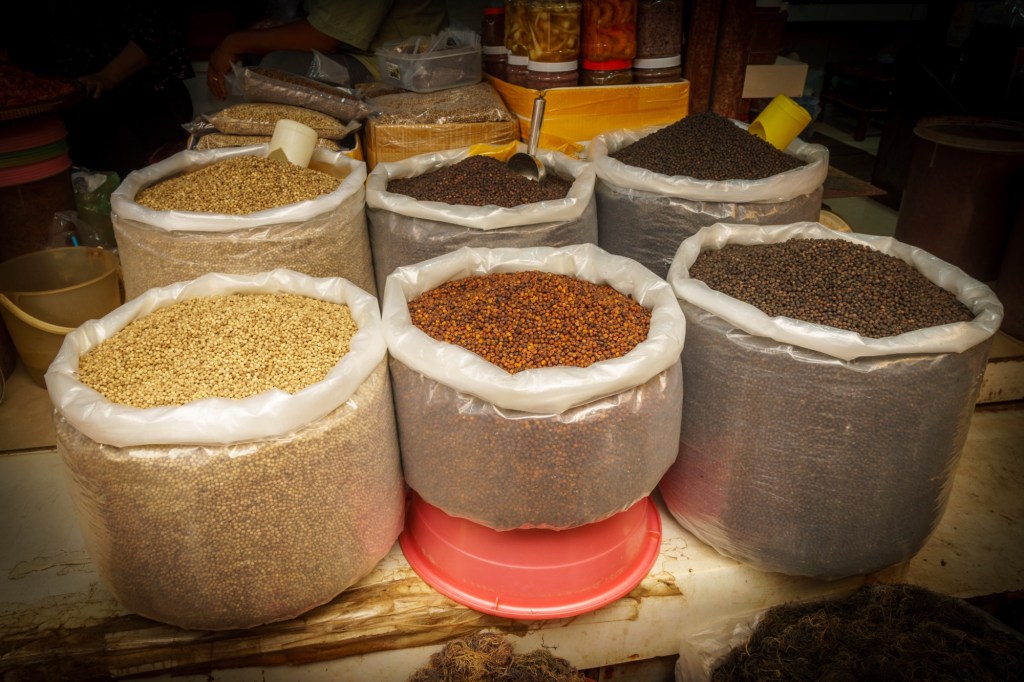
Black, red, green and white pepper

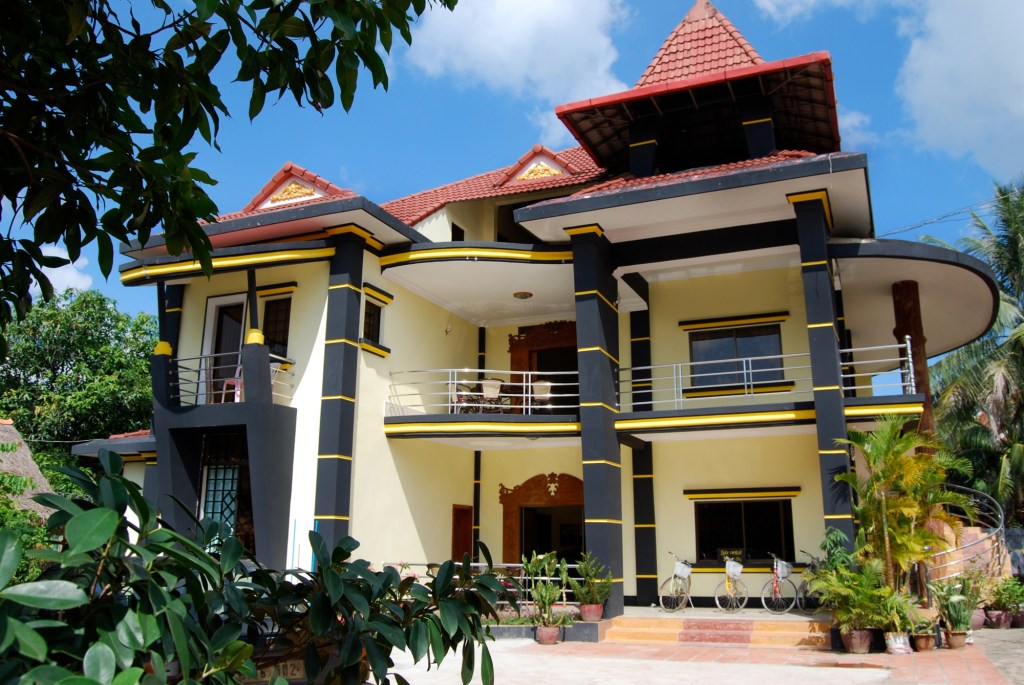
We booked into a guest house called ‘Magic Sponge’ a lovely house just 5 minutes from the centre. It’s owner William, from Alaska, welcomed us with a beer and a very friendly disposition.

We hired a motorbike and our first trip out was to Kep on the coast an hours drive away.

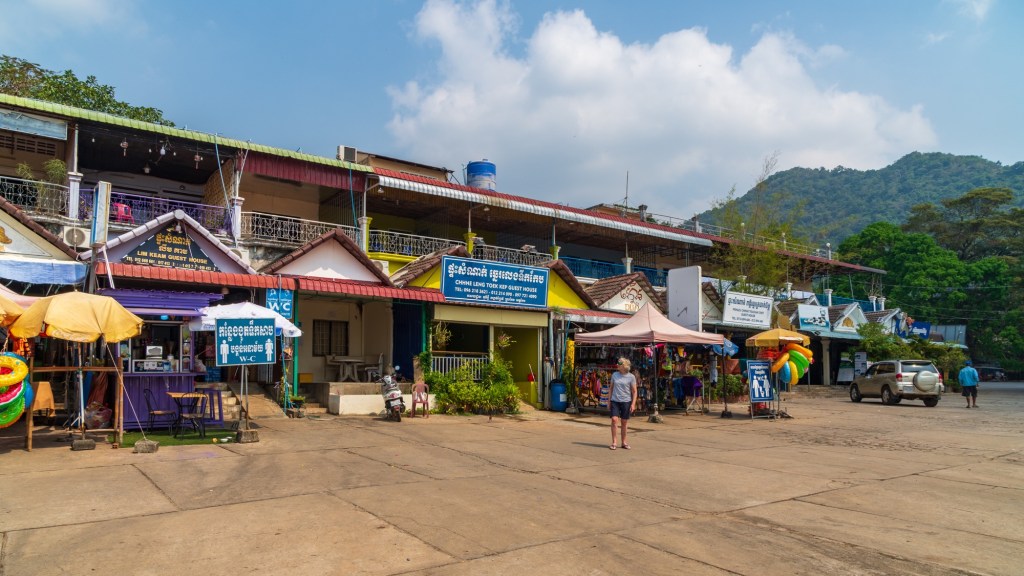
Again as all over Cambodia, major building work is happening and we couldn’t believe how the once sleepy hamlet has blossomed. There were only 4 tiny guesthouses in the square 15 years ago and now there are hundreds and some very upmarket places to stay and eat.

Kep square

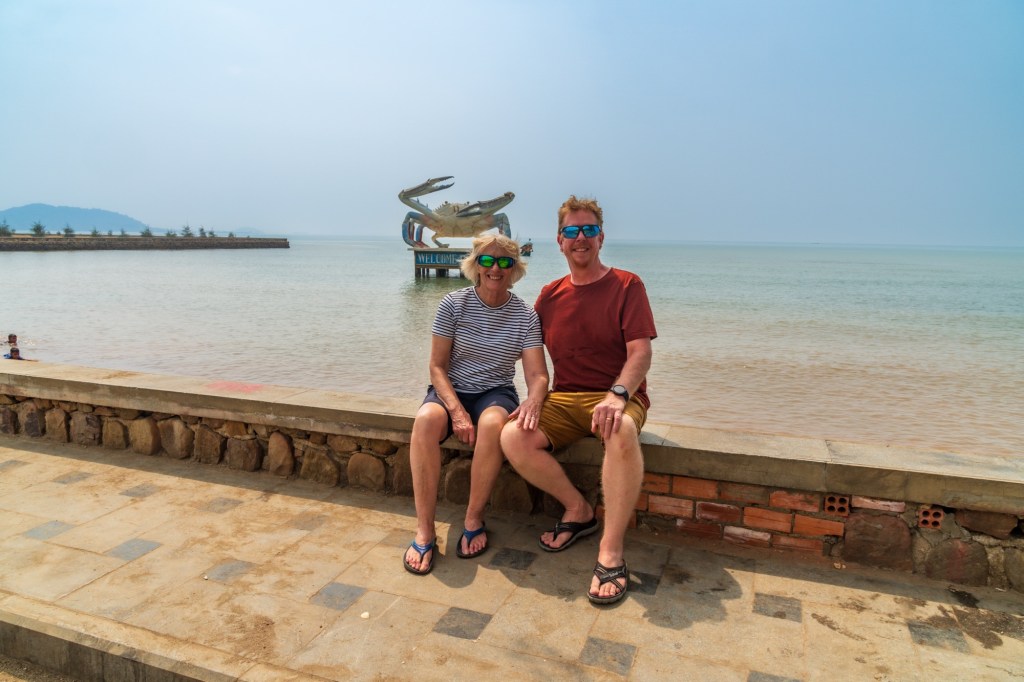
Even the beach has grown…it has fabulous seafood and a small fleet of fishing boats.

Bokor National Park borders Kampot and has a mountain in the middle of it. We left early.

Monkeys sitting on the steel barriers on the road up like sentry’s equally spaced, eyebrows lifting hopeful for a snack. It got cooler the higher we got, it’s 1000 m (like Snowdon) and the Cambodians had jackets , woolly hats, gloves. We relished the coolness and the goosebumps, it’s been very hot in the mid 30’s.

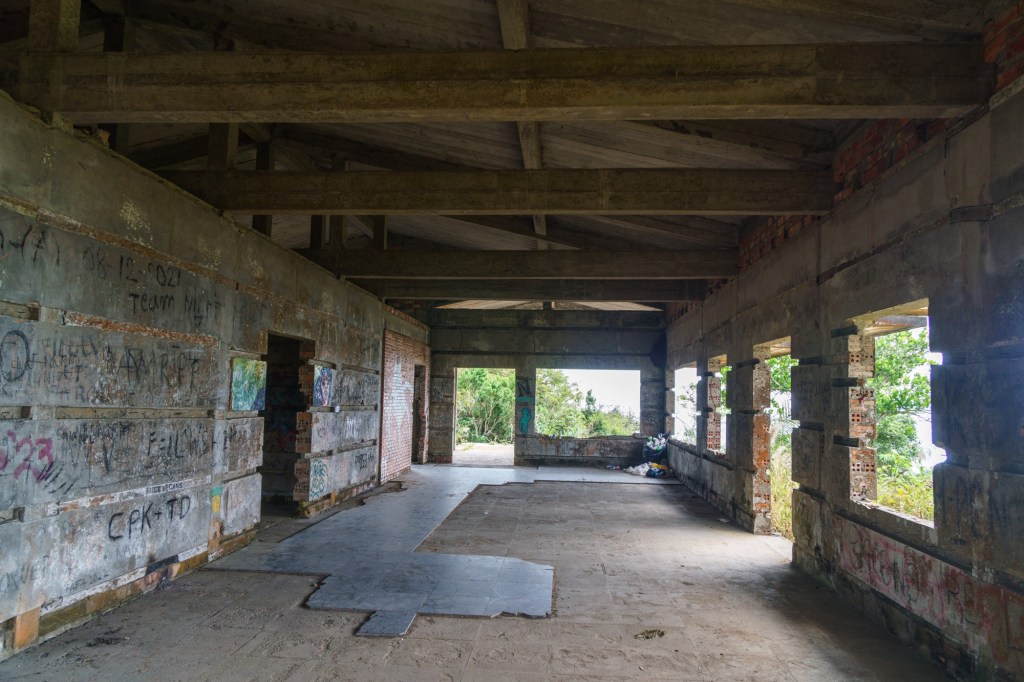
There is an abandoned palace which was built in the 1930’s for King Sihanouk overlooking his lands below. We met a guide who told us he often had 100 women, and just the King at his party’s which were legendary. It was now full of graffiti and rubbish.

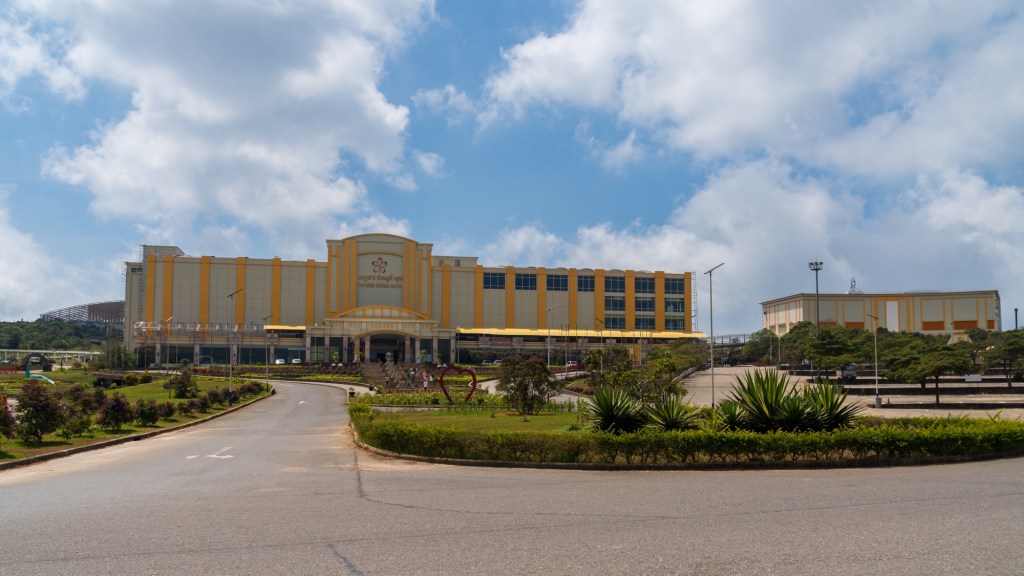
Right at the top there is an enormous new Chinese built Hotel and casino and a car park for thousands of cars, one car was there.

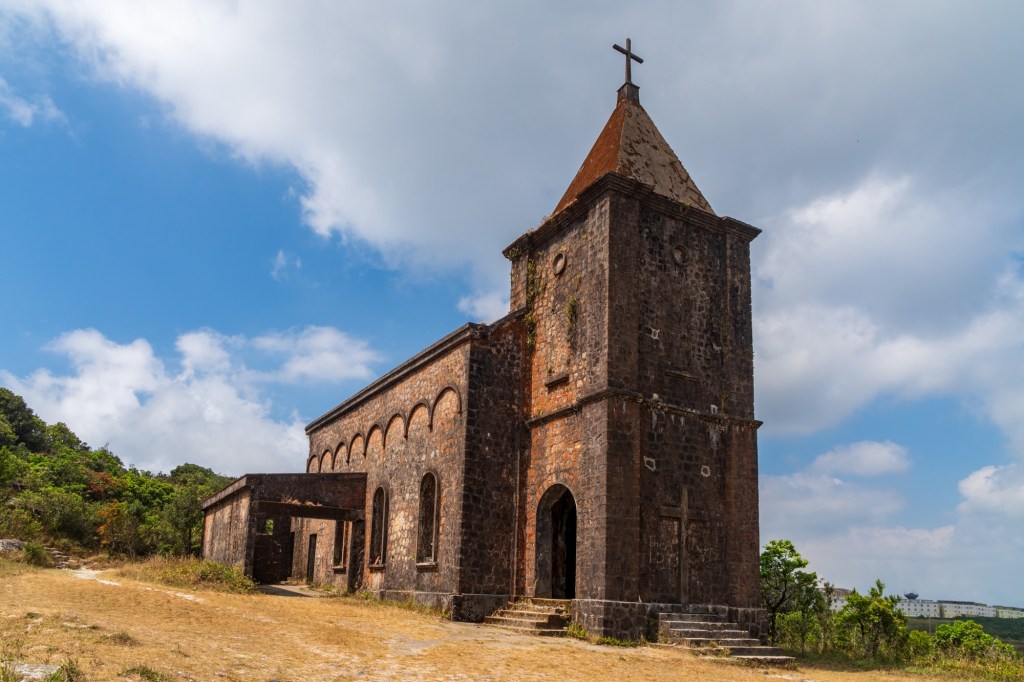
A Catholic Church built in the 1920’s, a hill station and a reservoir were used by the French community perhaps to escape the searing heat of a Cambodian summer. Most of the buildings are derelict, it’s a strange place. There is always a big statue.

There is no infrastructure but again we passed maybe a thousand new houses being built. It’s miles from anywhere.

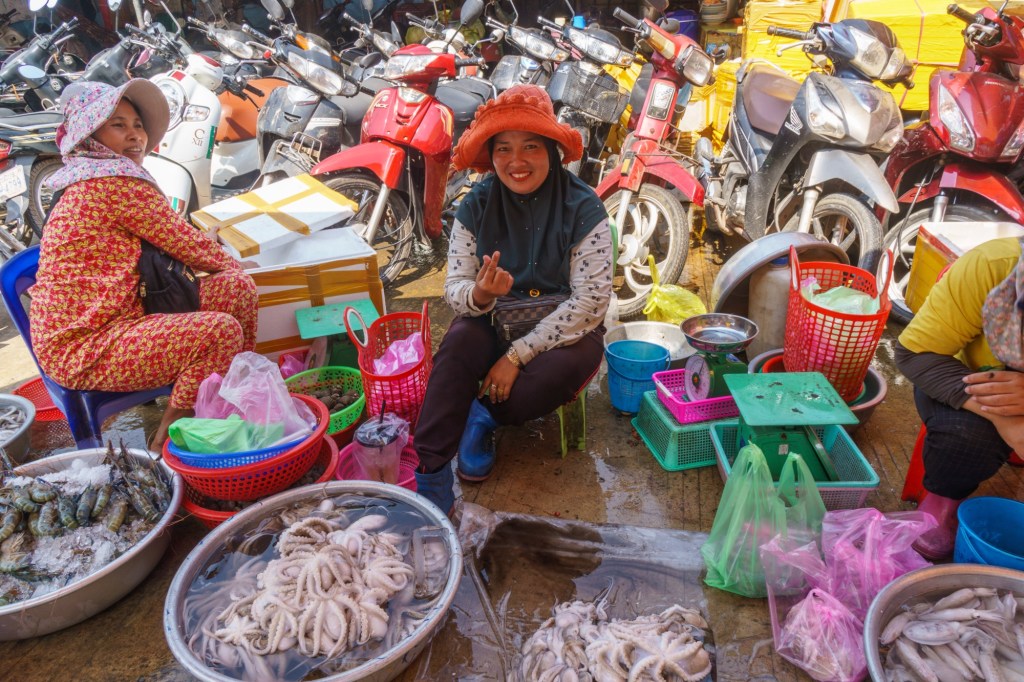
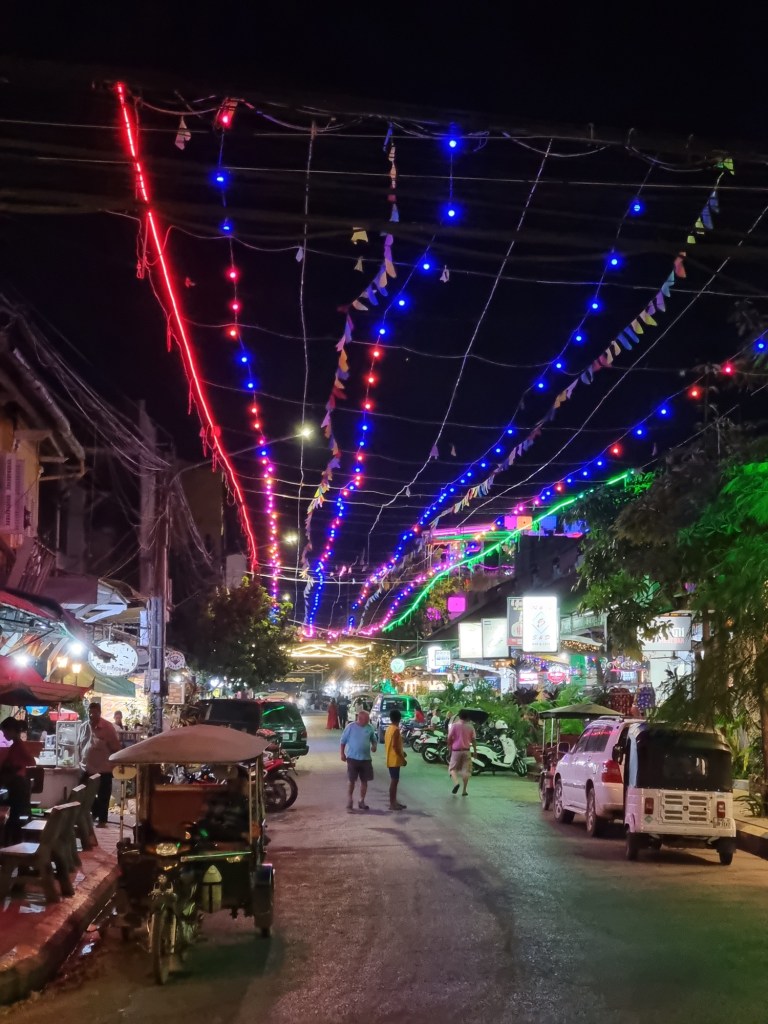
There are 2 markets in Kampot, a day and a night market.

Jewellers making rings

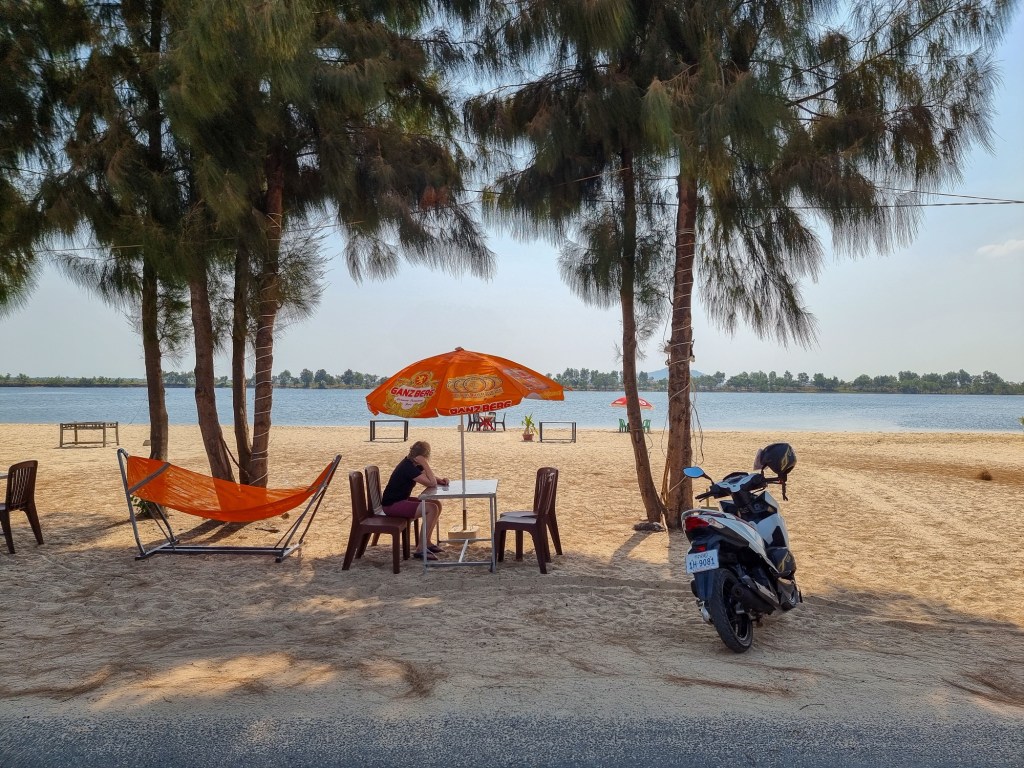
Kampot has a long boulevard alongside the river just like Phnom Penh. If you head towards the sea along the river there is a small clean river beach with a few beach bars.

It has been fun coming back. We’ve met some interesting folk, you always do when there’s cheap beer, cheap accomodation and long hot nights. It’s a mix of older single men, lots of French tourists, backpackers and young couples opening businesses. There are lots of ‘full on’ travellers. One guy on his bike had just cycled from Saigon and last year rode from Paris to Oman, he was 75 from Colorado. Not everyone here is crazy but it does seem to help!

It’s different to Thailand because, as a foreigner, you can actually buy land and property here. Can’t imagine what it will be like in another 15 years.

We’re off next to Phu Quoc a Vietnamese island just off the coast of Cambodia.

Escape to Phnom Penh

Arriving in PP on the bus from Siem Reap, even a few miles out of the city, the building work is immense. Thousands of newly built condo’s, acres of them all the way into the city, cranes towering over the skyline, skyscrapers everywhere, it’s now huge. It’s 8 years since we were last here.

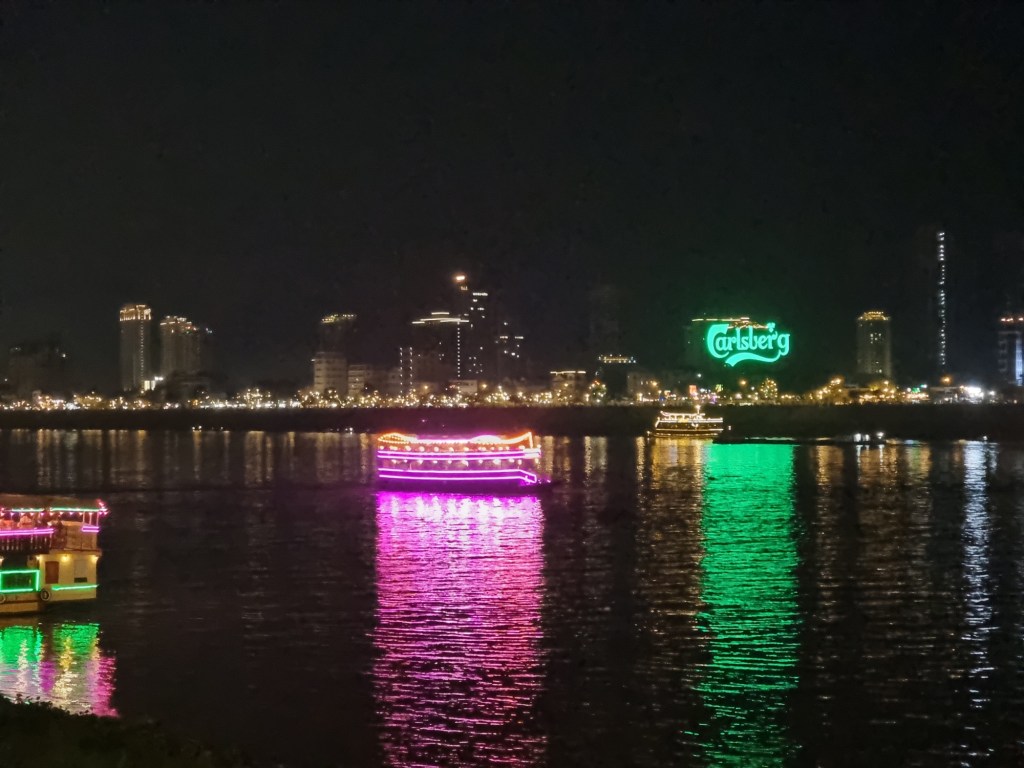
We are staying near Sisowath Quay which is the part of the city on the riverside at the confluence of the Tonle Sap and the mighty Mekong River. It’s where most tourists stay. It has a 3k long boulevard, great for people watching and lined with bars and restaurants.

Interestingly the Tonle Sap river is the only river that once a year flows backwards turning the Tonle Sap lake into the largest freshwater lake in SE Asia. It’s no surprise they built Angkor Wat next to it as it’s one of the most productive fishing lakes in the world and it supplies 3 million Cambodians with 75% of their annual fish catch.

There is a lot of things to do in PP. There are river cruises, the National Museum, a Royal Palace and of course all the history of Pol Pot.

The Royal Palace

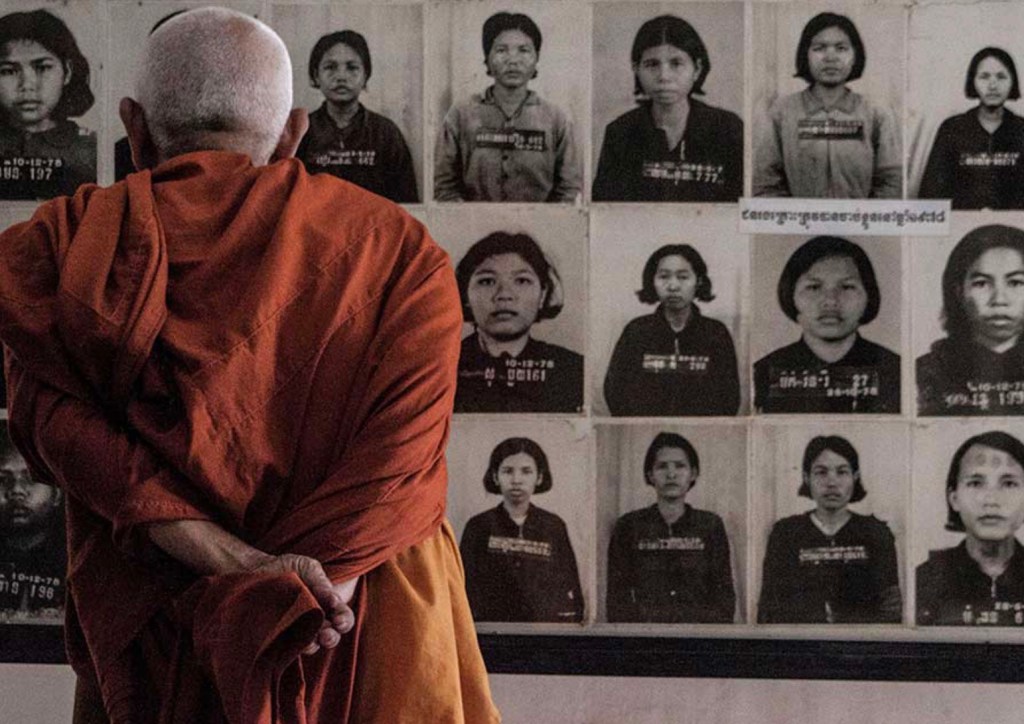
The ‘killing fields’ and the school, S21 where Pol Pot leader of the Khymer Rouge and his henchmen tortured and killed thousands of people needs to be seen. We have been twice and if I close my eyes I can still see the faces of the people in the school, it’s too painful to go again.

Everyone had their picture taken. A look of palpable terror in their eyes. Haunted and despondent, fear etched into pale faces totally crushed with no hope. 20,000 people were imprisoned, tortured and killed only 12 lived. It was only 1976…….there are very few older adults in Cambodia, it has a very young population due mainly to Pol Pot killing approximately 2 million Cambodians. We asked our guide how he felt about the now ex Prime Minister as he was one of Pol Pots right hand men. His answer was; ‘’The person that sets fire to your house eventually brings water to put it out’’ That’s one way of looking at it. The economy is booming and the young people just want to look forwards leaving Pol Pots dark legacy behind them.

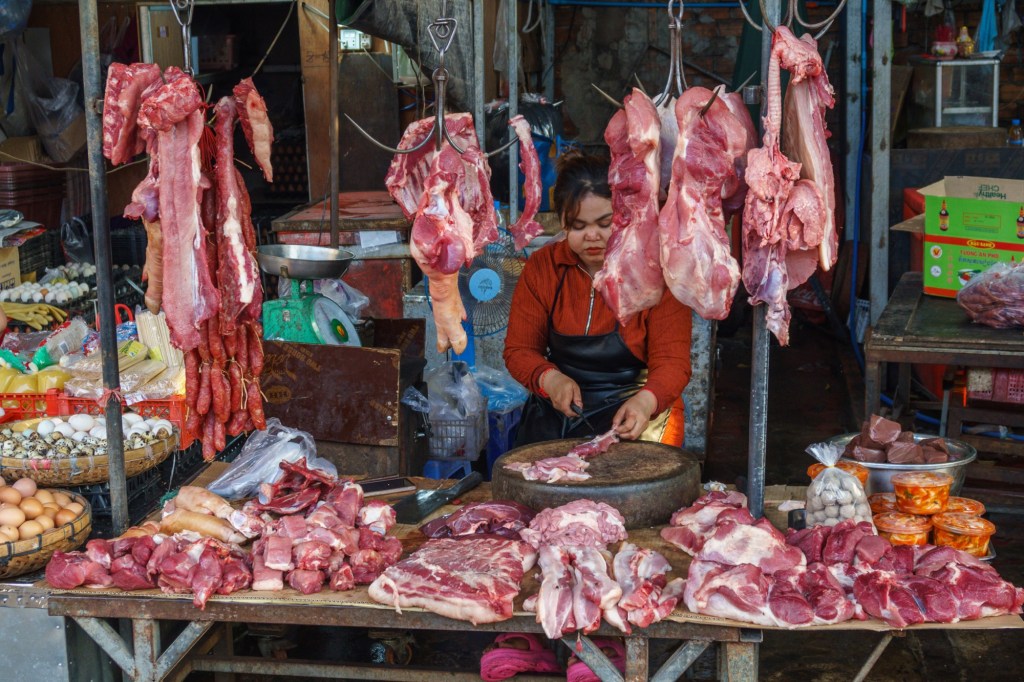
The road parallel to the quay has a bustling daily market.

There is also a night market selling the normal t shirts and souvenirs but our favourite market is an Art Deco covered market.

It’s an amazing building, built to be cool with all the air vents.

Wat Phnom is set on top of a 27m high hill and built in 1372. It’s a very pretty Wat used daily by the people of PP.

It must have been a special day. Everyone brought fruit or lotus flowers to make merit, hundreds of them and in return got beaten around the head and shoulders by monks with rolled up paper. It was funny to watch.

Now on to Kampot in the very south of Cambodia.

Escape to Siem Reap

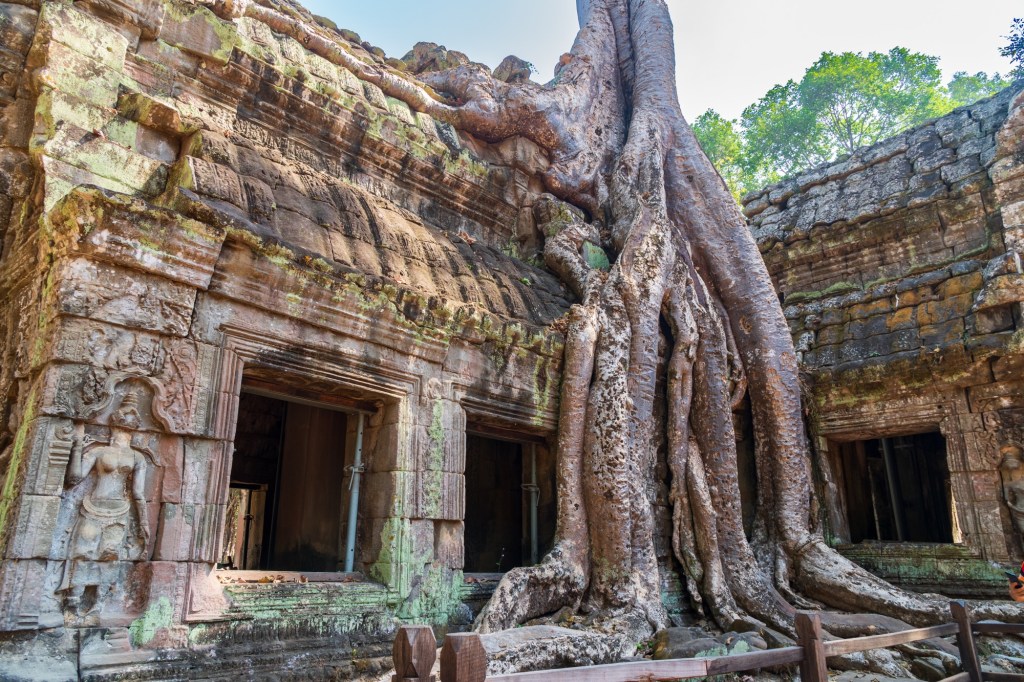
Ta Prohm was rediscovered in the 1860’s by a French archaeologist who wrote a book about his findings. It was built in the late 12th century as a Buddhist monastery and is only 1k from Angkor Wat. When the whole city was abandoned in the 16th century it fully returned to nature and became totally overgrown.

When it was used as a film set for Tomb Raider it suddenly found fame.

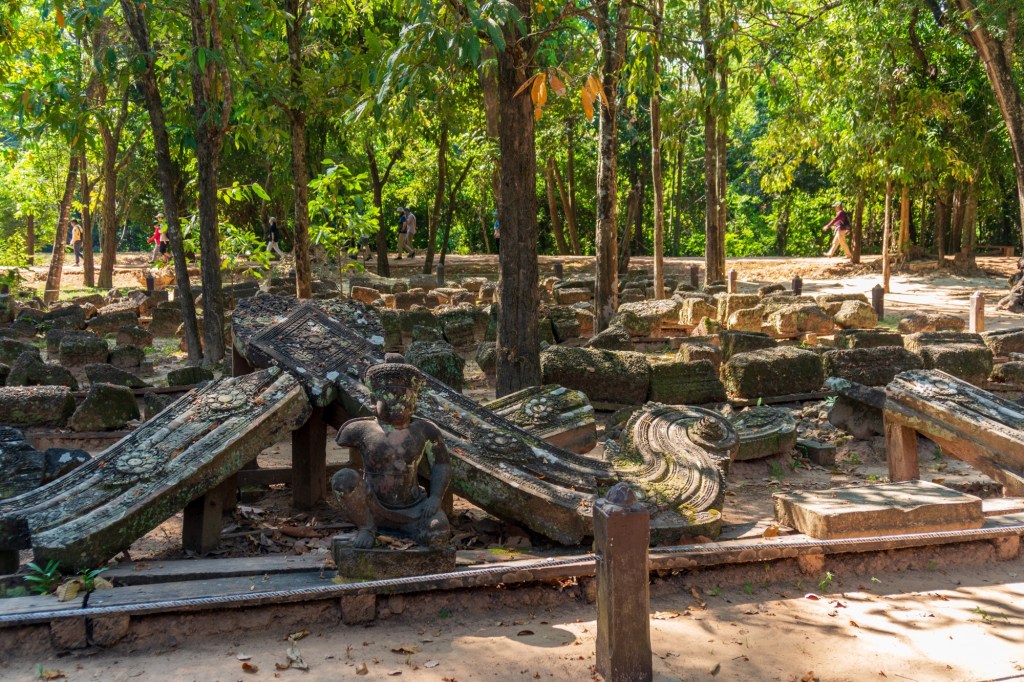
All the temples have ongoing restoration works in progress with many countries participating. Looking at all the stone laid out, numbered, it’s an enormous jigsaw puzzle.

Abandonment, time, nature and Pol Pot didn’t help. He systematically tried to obliterate Buddhism and the temples, looting, destroying and laying land mines.

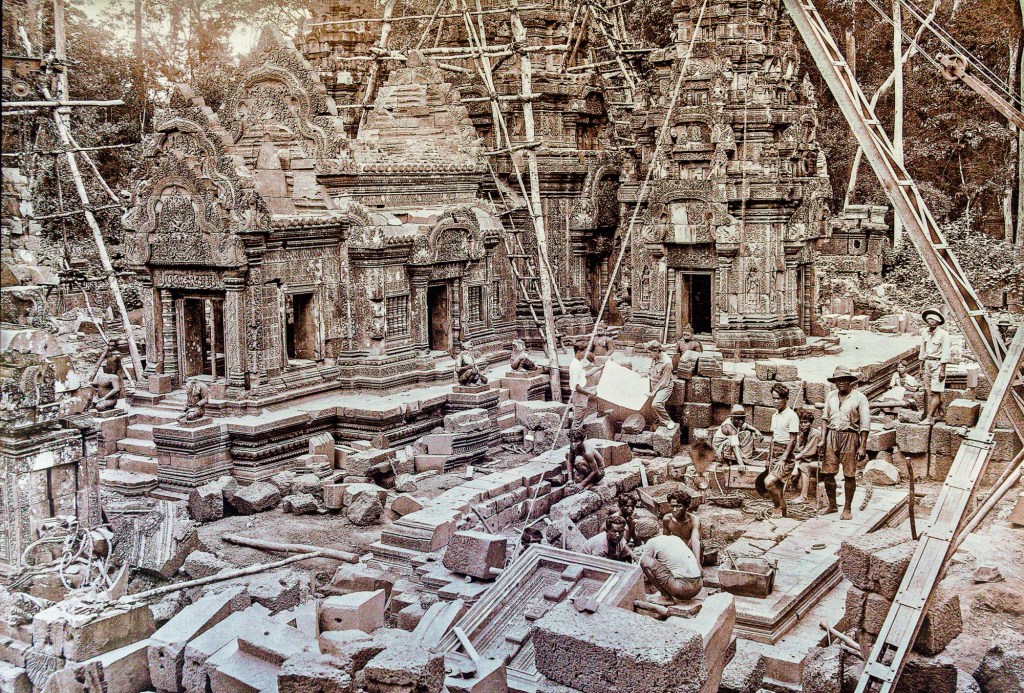
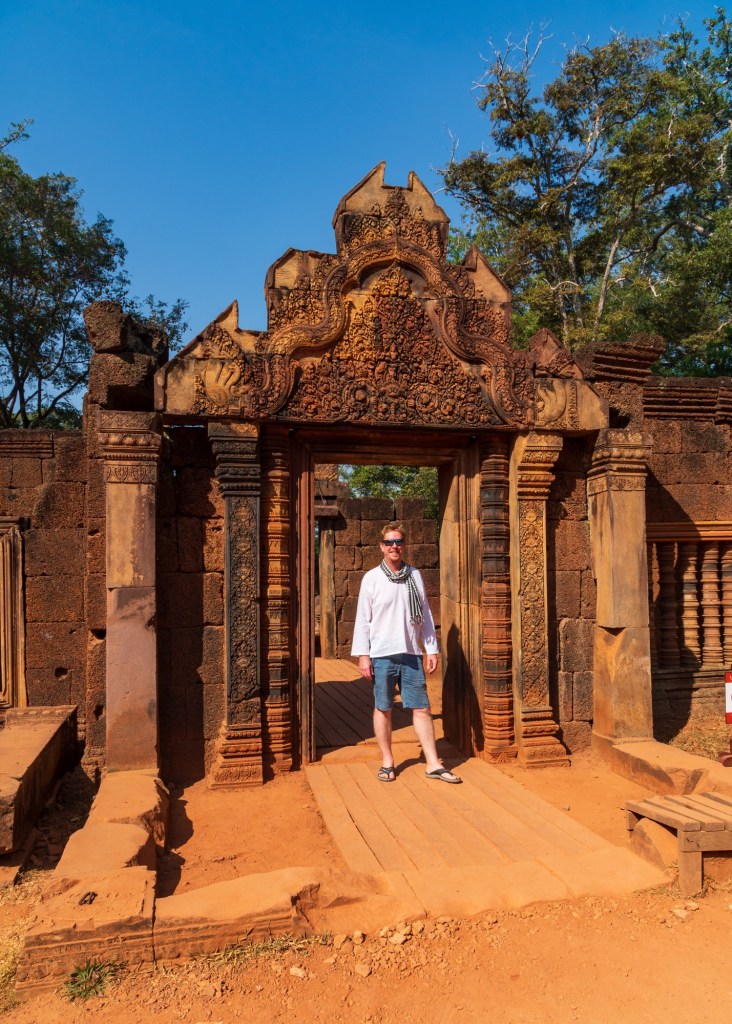
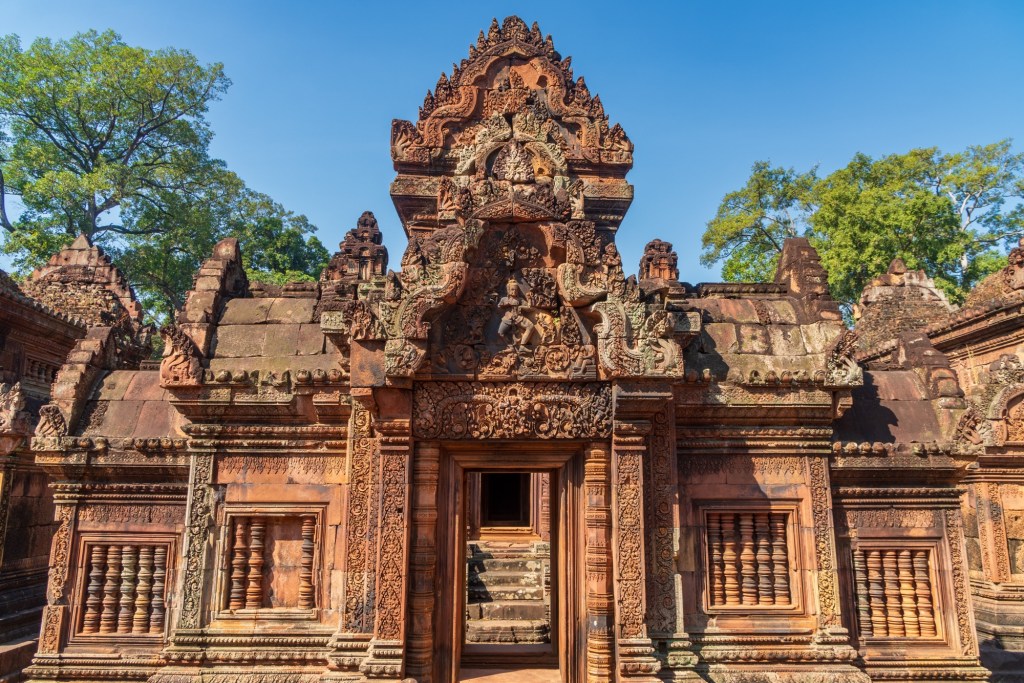
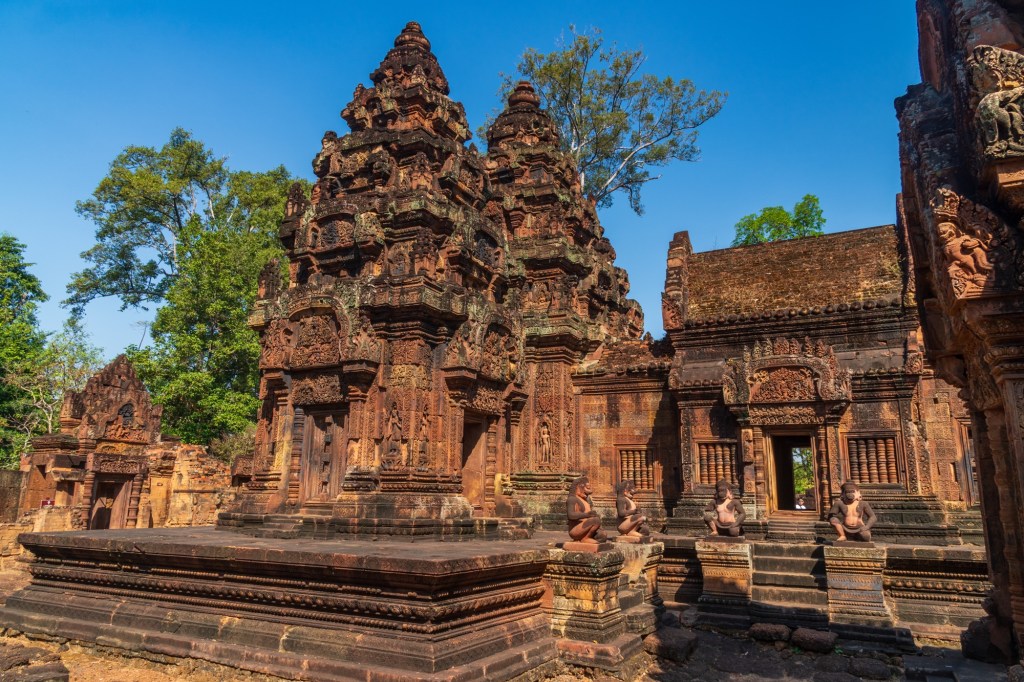
Banteay Srei is 40k out of town. It was built in 967 and has the most exquisite, deep carvings of all the temples. Its known as the ‘Citadel of the ladies’ and is one of the most beautiful ancient temples to be found in Asia, set amongst the charming village and farmlands just below the Kulen Mountain range. It features stunning and well-preserved narrated bas-reliefs with ornate decoration from when craftmanship in the ancient empire was reaching its peak.

This is how it looked in the 1930’s when the restoration works started.

Still lots of ongoing restoration

We are definitely ‘templed out’. We were only going to do one day but did 3 days in all 😊. We’re now travelling to Phnom Penh ‘The pearl of Asia’ the vibrant, bustling capital.

Escape to Siem Reap

Angkor Wat is 5 miles out of town. We have a guide, San and a tuk tuk with driver and decided not to get up at 4:30 for sunrise but have a more leisurely 9am start. You pass through town and on to a brand new road before turning off to buy tickets at a big reception centre. A 1 day pass is $37 whereas a 3 day pass is $62, it’s a no brainer.

Passing through heavily forested roads, the roads dusty and dry. Family groups of long tailed macaques ambling slowly across the roads staring as we pass in the cooler morning air. A constant hum of insects and birdsong as a backdrop, the woody, resinous aromas of the forest …getting excited now. The tuk tuk driver dropped us off.

It’s the first time we have had a guide. It’s $35 for the day and we are looking forward to understanding and getting much more information than you can get from a guide book.

We enter the site from the East side. It’s impressive and best of all very quiet almost feeling we are the only ones admiring it’s sheer majesty, silhouetted against the jungle and clear blue sky. Amazing. We both felt a little emotional….

Angkor Wat is surrounded by a moat and an exterior wall. The causeway made of sandstone is 250m long. It’s a long hot walk.

View from the third level

One of the most celebrated features is the bas-relief frieze that lines the inner walls of the outer gallery and is 520m long.

The classic of Hindu mythology ‘The churning of the sea of milk’ shows Vishnu atop a tortoise with 92 gods and 88 demons using a serpent to churn up the sea to release the elixir of life. It’s easy to tell them apart, the devas (gods) look tranquil and serene holding the head of the serpent and the asuras (demons) holding the tail look ugly, angry and downright miserable. Its like a tug of war, it’s an interesting story.

There are carvings everywhere, lots of apsaras, celestial beings, all different. In doorways, ceilings everywhere you look.

After spending a few hours looking round we moved to the entrance of Angkor Thom which was the name of the entire city, that was built later, next to Angkor Wat.

Angkor Thom was the capital of the Khmer empire. Within it’s immense, fortified walls were the Royal palace, the Royal terraces, the King’s private temple and other temples. The entrance to the city on the South Gate is my favourite.

Researchers have determined the city’s population at its zenith in the 13th century, and the number is impressive: some 700,000 to 900,000 people likely called the Angkor region home, making it one of the world’s largest pre-modern cities

Again God’s and Demons on the bridge.

Gods on the left
Demons

The Bayon temple with 216 carved smiling faces is centred inside the city walls.

We were a little disappointed as now it is very regimented where you can and cannot go. When we first came 15 years ago you could go everywhere, up inside the faces, there were no restrictions we were very lucky you could clamber anywhere you wanted. I can understand why they needed to stop people and restrict access. Just delighted we came many years ago.

15 years ago

There is another long frieze telling the story of the city. The war with the Cham people who were from what is now Vietnam and tales from the lake, work and it’s people. Carved animals, fish, crocodiles tell stories of the life of the city. It was abandoned in the 1600’s

We are going to revisit Ta Prohm the overgrown ‘Tomb Raider‘ temple as we didn’t get very long to look around with the guide, it’s worth a longer look. To be continued…

Ta Prohm

Escape to Siem Reap

It was 2 short flights from Chiang Mai to Bangkok and then to Siem Reap to its new swishy airport. It’s an hour out of town.

We found a hotel 10 minutes from the centre with a pool and the friendliest staff ever.

Siem Reap is home to Angkor Wat the largest and most impressive religious complex in the world, covering 400 acres. It was built in the 12th century and took 37 years. It used 300,000 labourers, 6,000 elephants and 5 million tons of sandstone. It was originally a Hindu temple dedicated to Vishnu, but later converted to a Buddhist temple at the end of the 13th century and is still a place of pilgrimage for both Hindus and Buddhists. It bears the transformation of 2 major religions in Cambodian history.

Our first trip out was to the National museum of Angkor housed in a splendid building near the Royal park and residence.

Just outside the park in the trees were thousands of flying foxes which roost noisily all day and fly off at 6.45 every evening returning in the early morning. We are going to go and watch one evening.

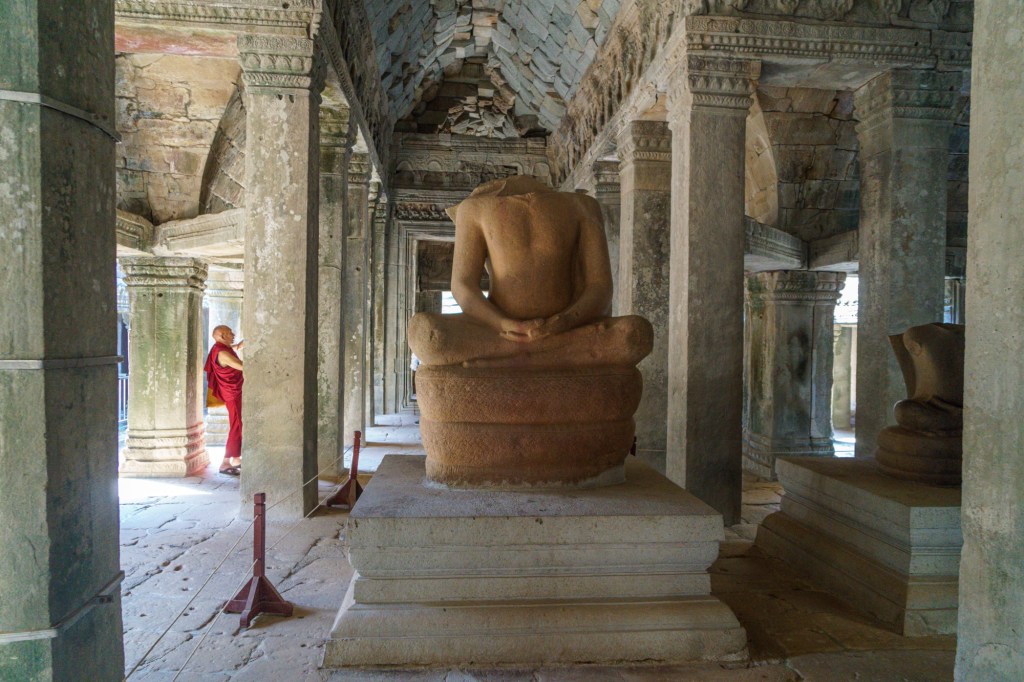
Entrance to the museum is $12. The museum houses thousands of statues retrieved from the many temples surrounding Angkor some from the 6th century along with many other artefacts.

Gallery of the 1,000 Buddhas

It’s stunning in its layout and clever how it takes you through the history of the Khmer people, how Hinduism influenced the building of Angkor Wat and its religious progression to Buddhism.

It’s a 10 minute walk into the centre of town passing many restaurants and bars. The centre has an area called Pub Street which is very busy.

We prefer the little side streets

There is a day and a night market next to the river

There are only a couple of Cambodian dishes Amok and Lok Lak but endless choices of food from Thailand, China, India and lots of western food. It’s hard to choose…..

Next stop is Angkor Wat, Angkor Thom and the Bayon with a guide, can’t wait.

Escape to Chiang Mai

Wat Palad half way up Doi Suthep was the first temple I really fell in love with. It’s 500 years old, was abandoned once but has had a quiet resurgence of late. It was buried in the forest, overgrown, mossy and wonderfully atmospheric. It’s crumbling buildings surrounded by water, faded orange robes all adding to the Indiana Jones feel especially as you approach first the waterfall and then cross the rickety wooden bridge from the monks trail. We have been many times, it used to be called the ‘secret temple’ but no more.

We came first 8 years ago. Every year they have done major building works, more landscaping and really tidied it up. I really liked it how it was and was disappointed when everything became newly refurbished, bright and shiny.

We got to the base of the trail early before it got too hot. Lots of cars and bikes already parked up and soldiers on duty in a hut. It starts at the back of the zoo, never seen it so busy. It was the original path for the monks before the road was built.

It takes an hour walking up rock strewn paths for the first part and then smoother steeper paths inundated with tree roots and hanging vines. It’s straight up through dense green undergrowth. The scuttling lizards and insects rustling in the leaves. Birds heard but never seen, too dense. You eventually emerge, almost into the light, onto a new bridge, the wooden one long gone. Here are a few now and then photos.

Before the building was built around the shrine in 2017
2018
Returning to the forest 2023

I’m pleased to say the newness of the buildings is starting to fade losing its brashness and is returning to the forest. Moss covered statues, streaks of water from rainy season turning it back into an Indiana Jones backdrop once again. I must say the toilet block is way better than it was and the savage temple dogs are less aggressive, older maybe.

Huay Tueng Thao Lake is a big reservoir at the base of the mountains about 20 minutes out of town. Entrance is £1. It’s an enormous site with people fishing, walking, cycling and always eating (all the time 😊 ) There are dozens of restaurants to choose from.

You can hire 4×4’s go up the mountain on a muddy, ridged trail. I did it once on a motorbike, never again……

There are straw animals, enormous, built and rebuilt after every rainy season. We like to come and see what’s new. we weren’t disappointed.

Grrrrrrr

It’s been fun being back in Chiang Mai, now we’re moving on to Siem Reap in Cambodia for the next adventure 🙏

Escape to Chiang Mai

The Samoeng loop is considered to be one of the best motorcycle rides in Thailand. It starts and ends in Chiang Mai, is 80km and takes 2-3 hours. You travel along beautiful, quiet mountain roads all the way around Doi Suthep mountain. We decided to go clockwise on the route which we have done many times. It was early morning and the air felt cool and crisp. At last the hot weather has finally given way to more normal temperatures but you still need a jacket.

Our first stop was Wat Banpong.

Wat Banpong

The road up to the temple is steep and winding and it sits high on a hill overlooking the fertile valley below. We have visited this temple over the last 8 years following its construction and ongoing works and delighted to say it is now magnificently finished. Here are a few before and after photos.

2016
2023

The workmanship is outstanding, all created onsite.

Rather than stay on the main road we take a road that takes you through some of the smaller villages and past orange groves, fields of tomatoes, potatoes and all sorts of different crops. We can take off our helmets and just take in the atmosphere of the villages.

Children playing, dogs just snoozing in the middle of the road and villagers going about their daily life in the fields. Curls of woodsmoke rising above the houses, pungent aromas of garlic cooking making us hungry. Suicidal chickens hurtling across the road and squeals of children chasing each other and best of all lots of smiling faces, it is the land of smiles. I love these journeys off the beaten track. Much more agreeable than diesel fumes and big trucks.

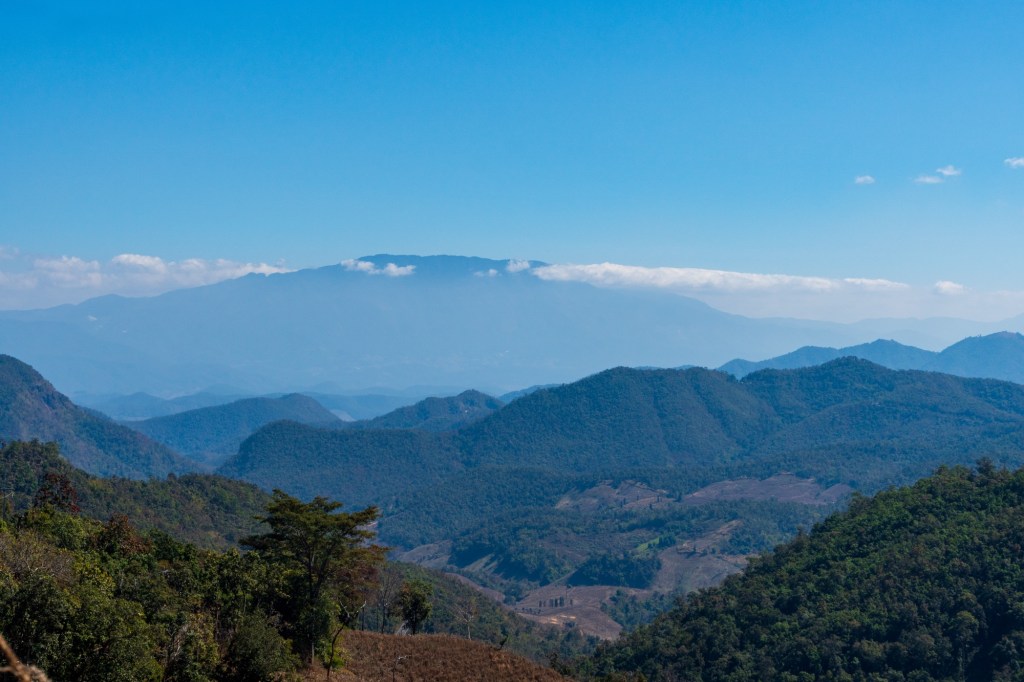
The next stop is the Samoeng viewpoint which overlooks the cascading forest canopy below and miles and miles of mountain tops disappearing into the distance, all the way to Myanmar. Making our way up higher and higher we were so cold, teeth almost chattering (wished I’d worn my jumper) so much so that one of the ladies who sells fruit at the viewpoint gave us some roasted sweet potatoes to warm our hands. We bought oranges, ate the potatoes, chatted in our best Thai to the vendors and carried on.

This is the view when it’s not overcast

We stopped for a coffee as Chris could no longer feel his fingers, he just wanted to hold a hot coffee cup!!

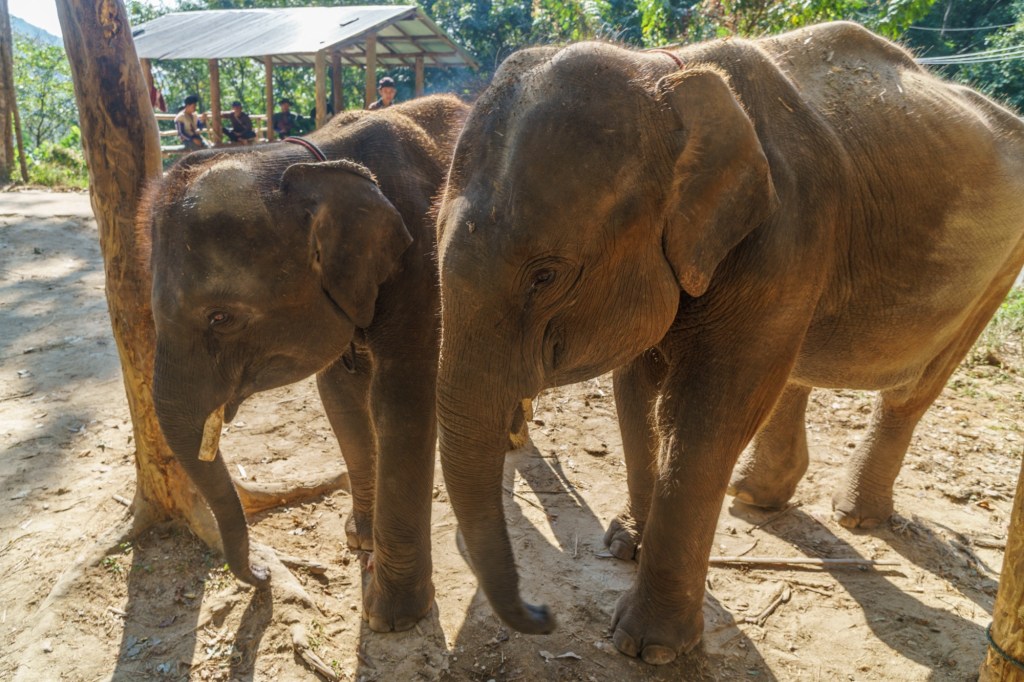
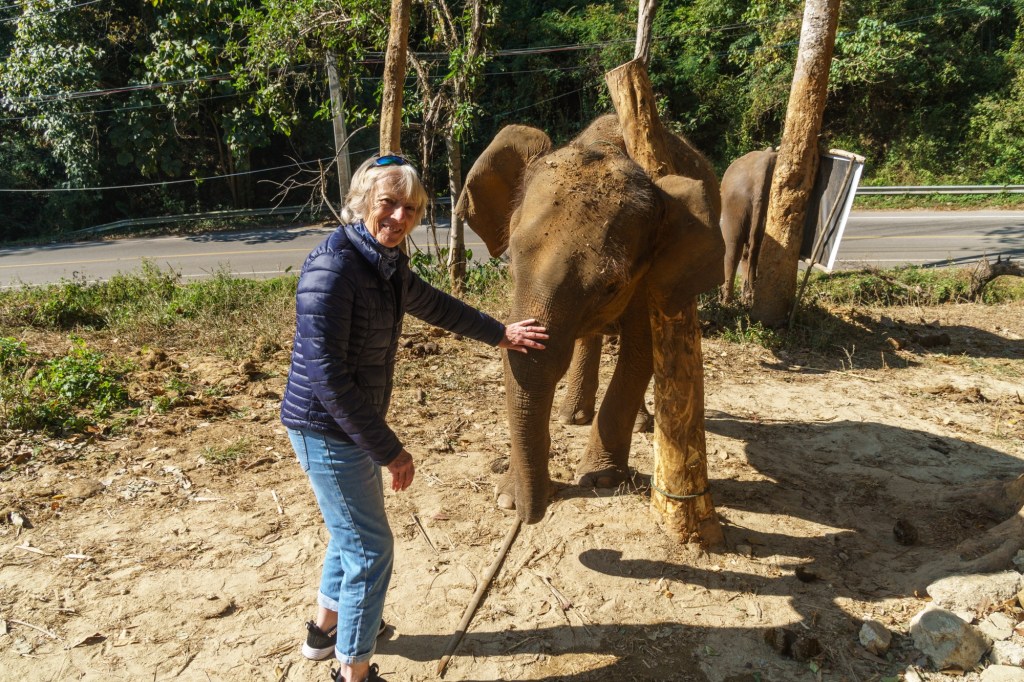
You then pass through the Mae Sae Valley where you can eat on the river on small platforms surrounded by small restaurants. There are a few very touristy elephant camps which I don’t think are very ethical but lots of tour groups visit…

We had decided to go to the Botanical Gardens as the last time we had visited was just after covid and the gardens and especially the greenhouses seemed a little abandoned. We weren’t disappointed it’s back to its former glory, especially the enormous rain forest glass house.

Ouch

Escape to Chiang Mai

Wat Santitham

Well I have almost eaten my fill (for the moment) of Thai food that I have dreamed about often before we arrived in CM.

We have also managed to eat at 3 good Italian restaurants, all local, with friends. Pasta/noodles similar I know…but creamy, tomatoey loveliness. Is there a food theme here ?

I’ve also had a bit of a crush on an excellent French bakery in the village next to our favourite coffee shop, it’s a marriage made in heaven.

45 baht = £1

Croissants and bread as good as any I’ve ever eaten and the best coffee in town.

There is a Thai restaurant 2 minutes from our hotel which we have frequented for many years which is called Santitham Breakfast. Which in itself is a bit of a misnomer as they cook lots of different dishes.

On a Friday and Saturday night he has pizza night. He has built a pizza oven and has found an Italian cheese maker in the mountains locally and a very good cured meat company.

Kong, the owner is meticulous on the quality of ingredients and his Sourdough base all hand made is excellent. He now has an enormous clientele. They are at least 12 to choose from and cost £5-6 . It’s expensive for here but they’re delicious and it’s a good sociable night.

The clientele are mostly an eclectic bunch of European, American, Aussies, Kiwi’s and a few Thais. It’s a fun night and a good change from rice and noodles…

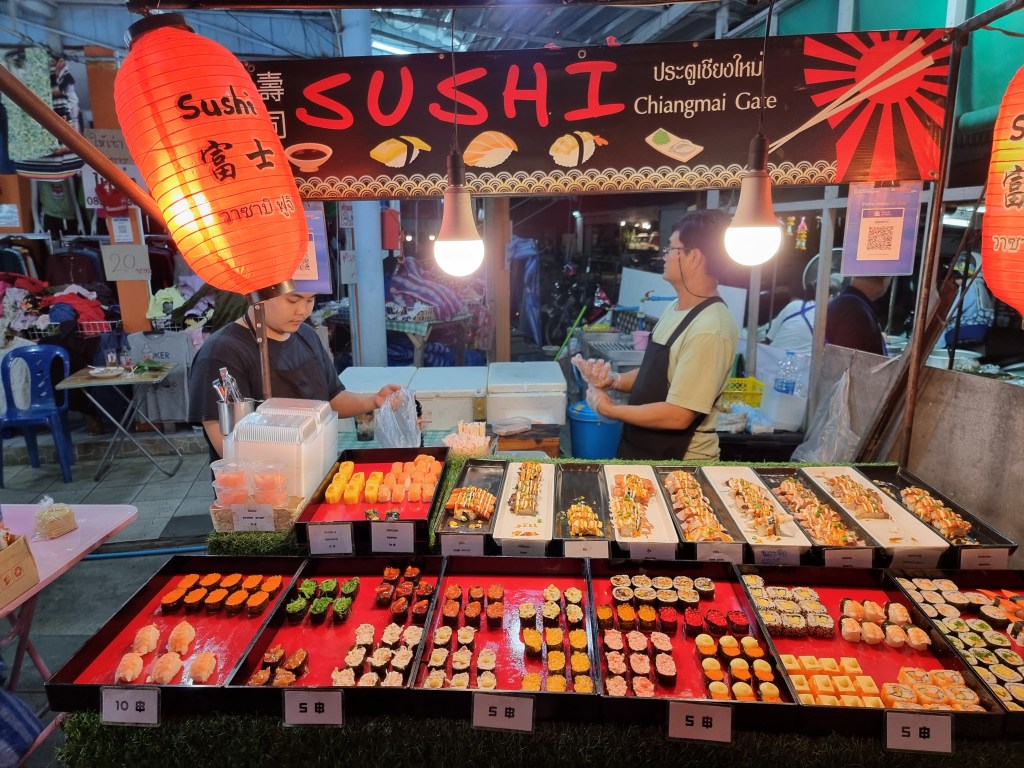
The fruit and vegetables are cheap and organic, mostly out of someone’s garden if you buy locally. A kilo of creamy avocados for 70p, bananas, pineapple cheap and plentiful. Street food like sushi or bbq meats entice you all the time. £1.50 for this snack, yummy.

Sushi and bbq chicken livers

We often have musli with fruit and yogurt or avocado/eggs on toast for breakfast we have a fridge, toaster, kettle all you need really. You can’t eat out all the time.

We go to the zoo every time we’re here. It was opened in the 50’s by an American survival expert who started out by looking after injured animals. It’s really big and spacious, good weather for most of the animals and reasonably well run. It’s on the road up to Doi Suthep the mountain that overlooks CM, just in the foothills.
It’s a really good long hilly walk. It takes 3-4 hours so we went early. It costs 350 baht, around £7. They have made improvements over the years but this year there were so many animals missing. There used to be 3 male lions now only 1. There were 5 female lions, now 2. All the small forest and jungle cats are no longer there.

Black panther

No fenic fox, meerkats and only 4 otters, used to be 30ish…

shrinkflation is happening everywhere! Apart from Parrots….these were really cute.

Binterong. Face of a cat, body like a bear, my favourite

At least all this walking might appease my hunger or at least stop me from coming back looking like a beached whale!

It’s Friday, we’re off for a pizza 😊 🐳

Escape to Chiang Mai

We’re back at last to our spiritual home Chiang Mai and delighted to be here. The journey was long and arduous and it takes longer every year to get over the flights but after lots of sleep we’re raring to go.

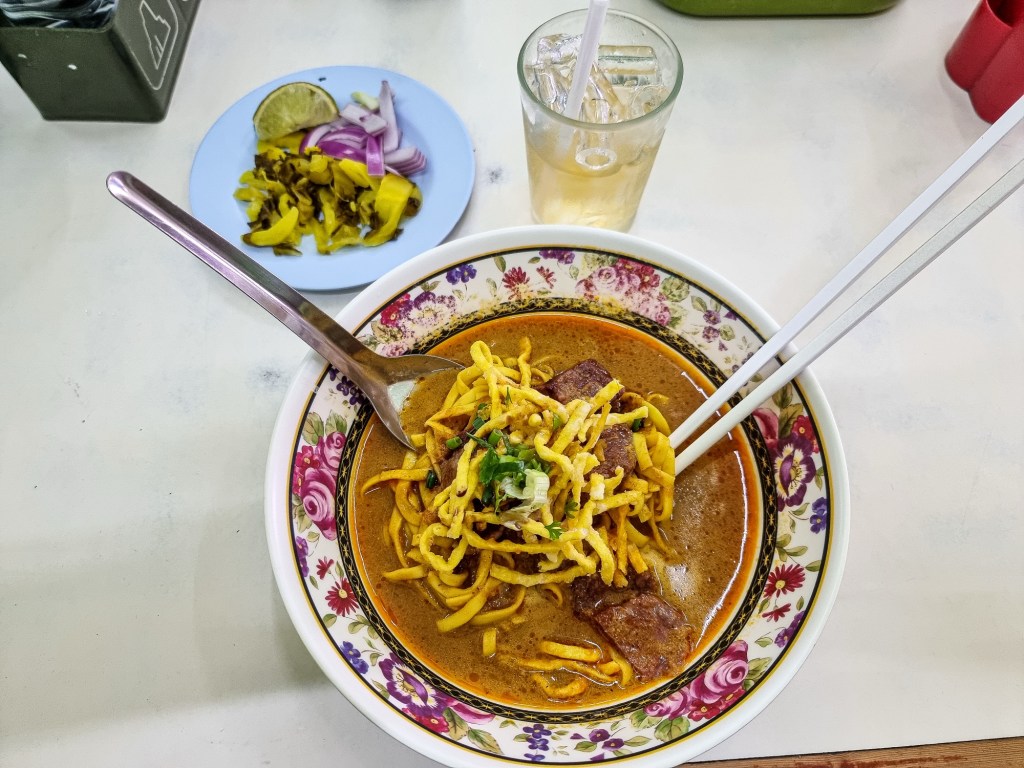
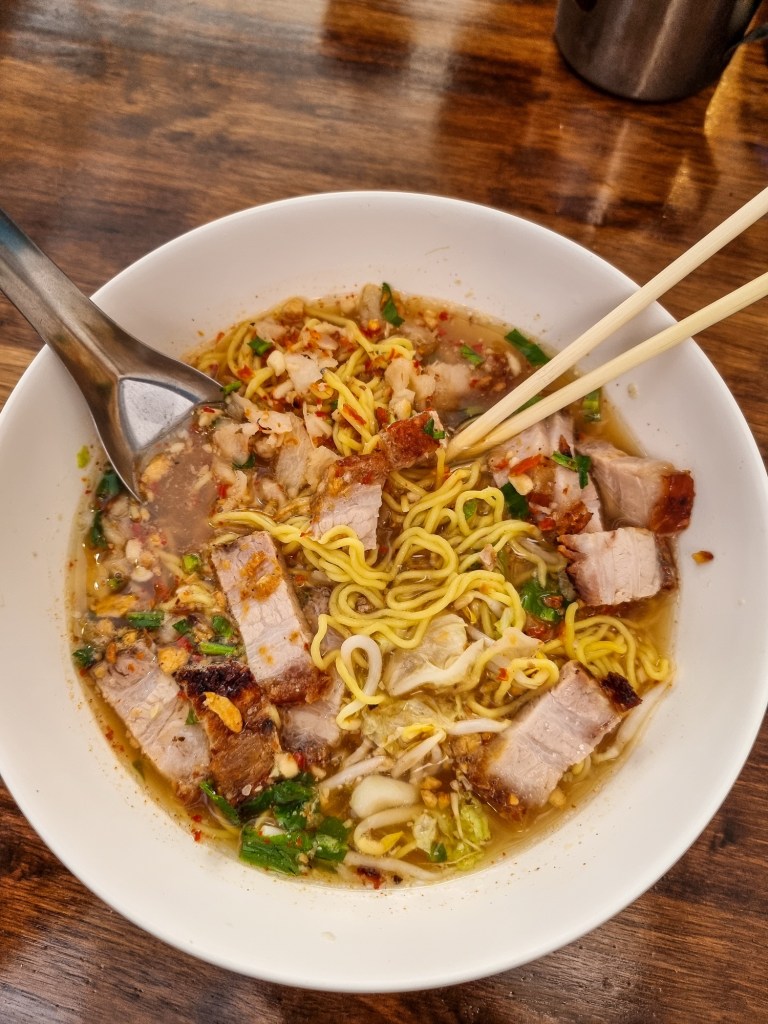
The thing I have been looking forward to the most is seeing friends, good weather and especially Thai food, I’ve been dreaming of it for weeks. What to have first? The choice is endless…curry puffs and an iced coffee won, yummy

Curry puffs filled with taro and chicken (no curry ! )
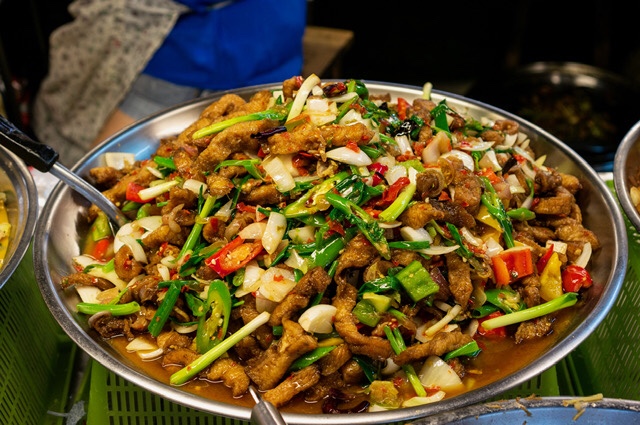
Stir fry noodles
Crispy pork and kale

We should have been in a condo but that fell through just before we arrived, luckily we got into the hotel we always stay in and back in our normal room. It feels like home. To compensate for no pool we have joined a gym in a big plush hotel, 5 minutes away. It has a 50 metre pool on the roof and comfy chairs, sorted!

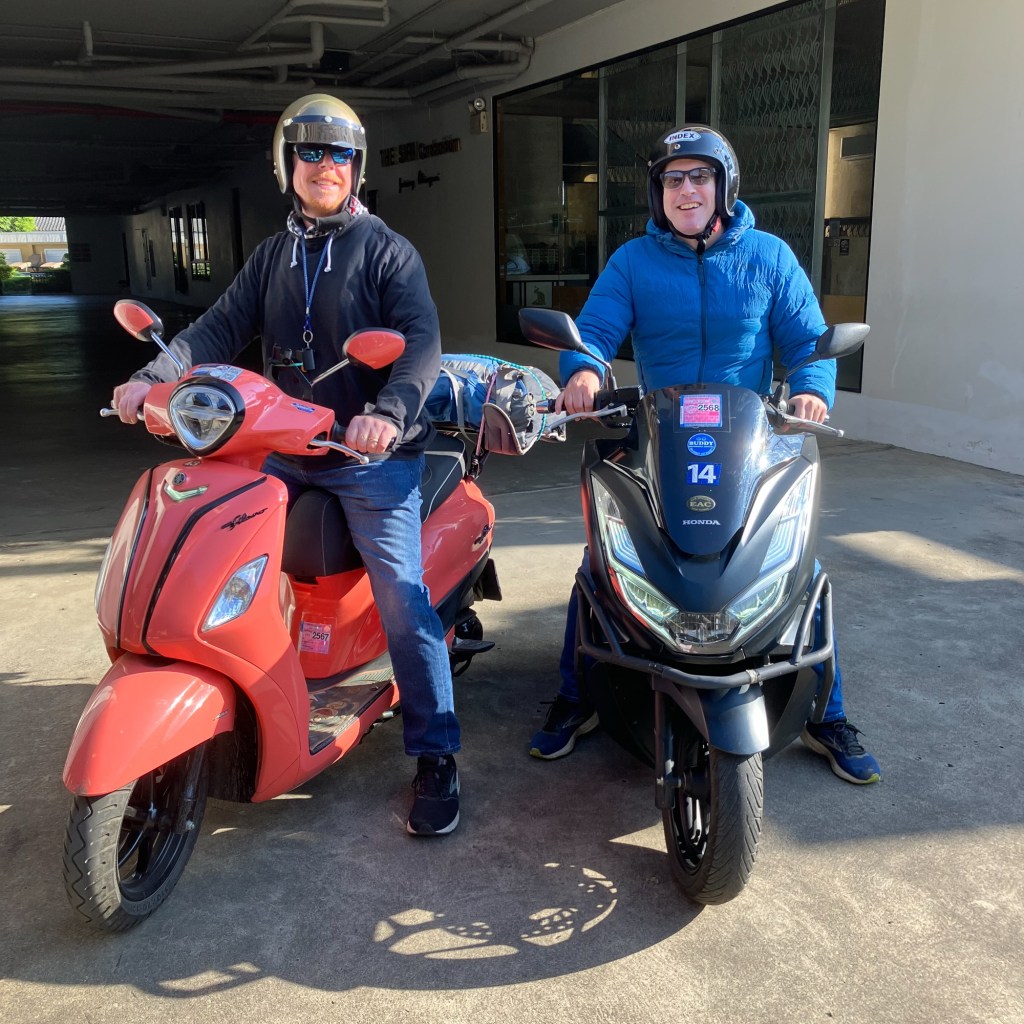
We have a new motorbike and looking forward to getting out of town into the countryside. The city is very busy and hotter than normal so mountains here we come the adventure starts here…

Happy Christmas and a happy and healthy New Year xx

Escape to Vietnam

Hội An is a city on Vietnam’s central coast known for its well-preserved Ancient Town. The former port city’s melting-pot history is reflected in its architecture, a mix of eras and styles from wooden Chinese shophouses and temples to colorful French colonial buildings, ornate Vietnamese tube houses and the iconic Japanese Covered Bridge with its pagoda.
Japanese bridge

It has a unique concentration of architectural monuments which are preserved pretty much intact. It also has a great beach and riverfront. It’s only a 2 hour flight from Chiang Mai to Da Nang and we are being picked up by car and taken to our homestay in Hoi An, 45 minutes from the airport.

The homestay is just what we wanted, slightly out of town between the old city and the beach. The family are very friendly and inviting. We have bicycles to get about and everyone speaks good English which is a bonus. We have the best room in the house overlooking the pool.

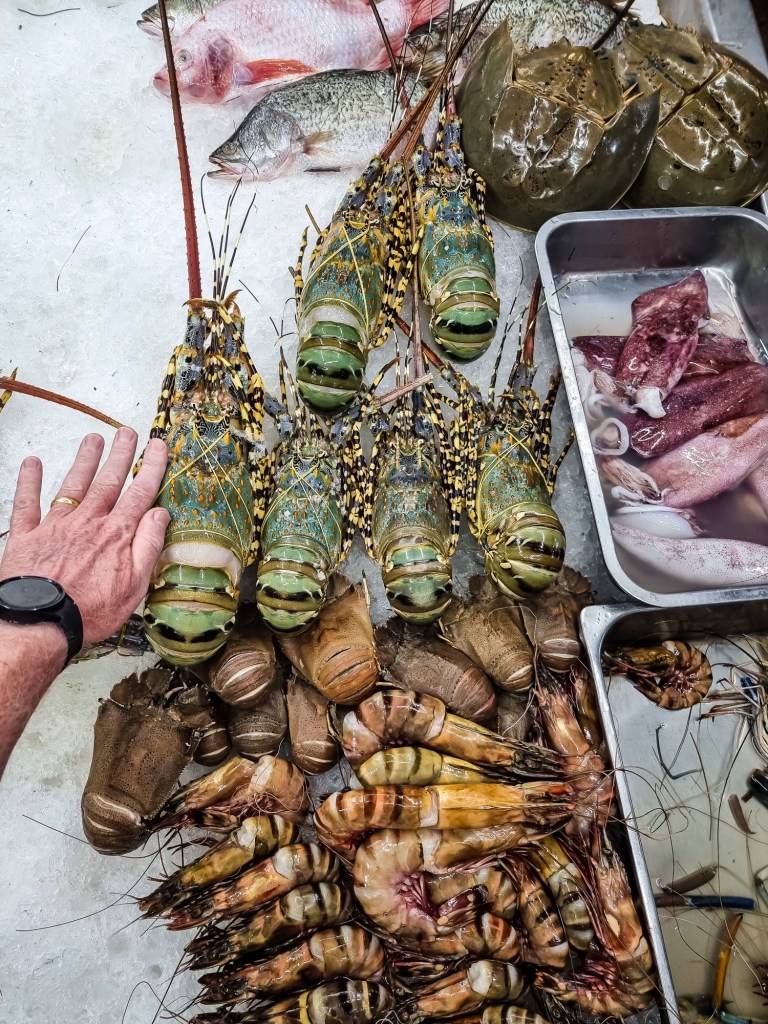
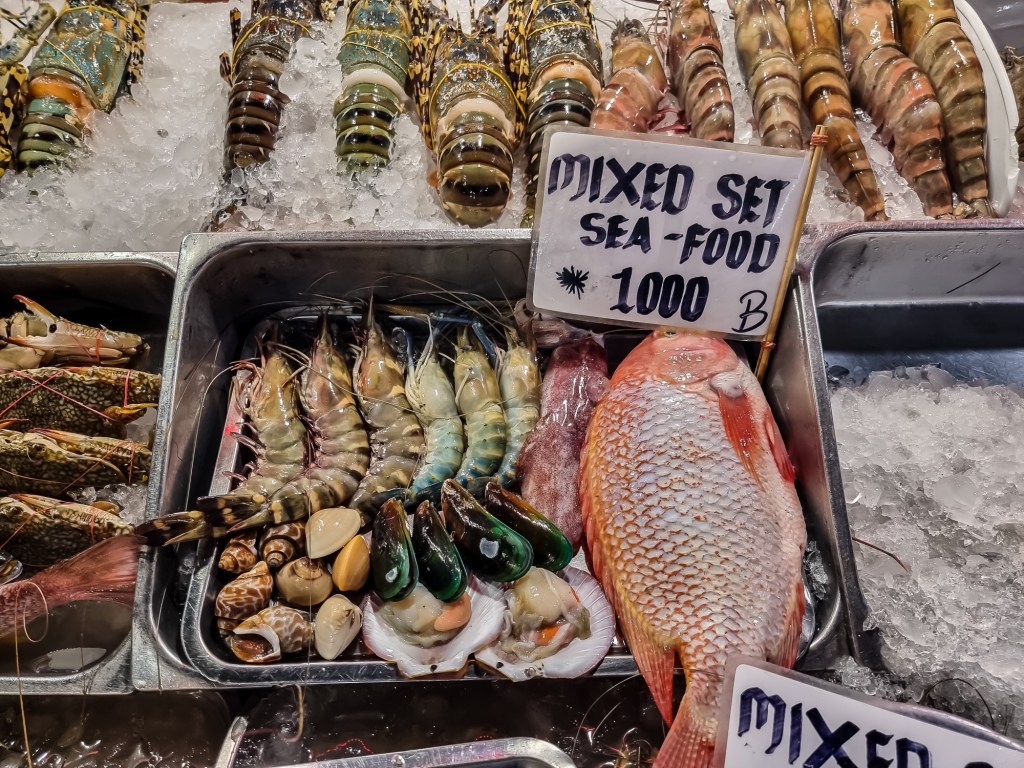
We cycled into the old town, dicing with death along the way as no one drives on the right side, they come at you from all angles, aargh. The key to staying alive is just keep going, don’t stop. Whew. We entered the old town along the riverfront passing the big open vegetable, fish and meat market and left our bikes. The loud chatter of market traders was piercing the air along with the aromas of flowers, fish and meat adding to the sensory overload. Unusual looking fish and huge prawns shimmering in big bowls of iced water ready for sale and all sorts of exotic fruit and vegetables loaded on the stalls. It was bustling and busy with people and motorbikes.

It’s very different to Thailand in many ways. In Thailand you have to find the shopkeepers to give them money, here they take no prisoners, everyone wants you to go in their shop, look at this…Madame, Madame come look. It will take some getting used to, they are very persuasive. You have to count your fingers if they give you change, they are a canny business like race….they all speak good English and not beyond trying a good sob story to get you to buy something!

The old town is pretty with an eclectic mix of buildings and architecture built on a grid pattern. The town is a fusion of indigenous and foreign cultures, principally Chinese and Japanese with later European influences and very well preserved.
It has been a UNESCO world heritage site since 1999. It was a major trading port between the 15th – 19th century and sits on the mouth of the Thu Bon River where you can have boat trips from the quayside and many cafes and bars line the rivers edge great for people watching.

Many of the small old houses in town are now souvenir, leather shops and tailors, who will knock up clothes in record time. It’s well known for its swift tailoring skills. Tiny little alleys with flowers growing over walls, small coffee shops with just a few seats enticing you in with the smell of fresh coffee. It’s enchanting.

Food is a big thing in Vietnam, there are hundreds of restaurants and street food carts on every corner. There is a huge indoor food market. Lots of noodles and rice, seafood and some weird and wonderful dishes. Spices and herbs, fragrant and aromatic rising from every small counter, makes you hungry.

The town is very different at night, it comes alive. Once you cross over the bridge to the little island where the night market is, lanterns turn it into a colourful grotto. Boats with lanterns on the river carrying tourists, little floating lighted ‘wishes’ for good luck sold by traders to drop in the river, they were everywhere.

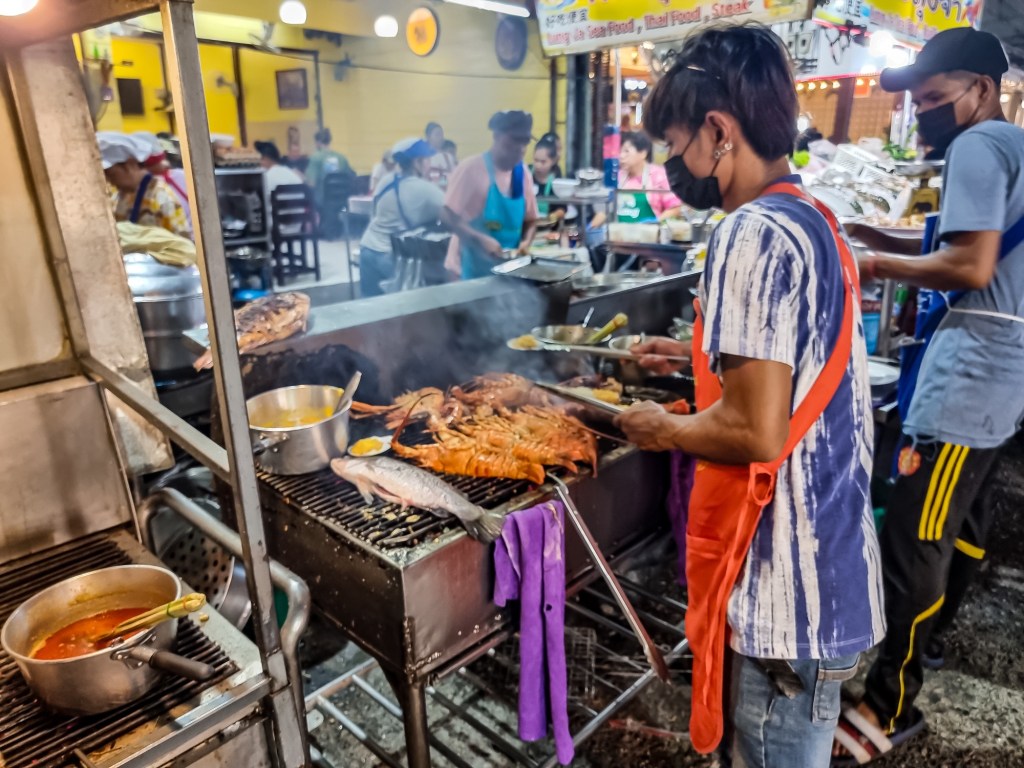
The night market was awash with colour and food. Madam, Madame come look voices trying to get you to look at their stalls or buy food. Frogs on sticks, all sorts of meat and fish, food everywhere. We found a restaurant in the heart of it all and just watched the throngs of people from all over the world looking enchanted by the spectacle.

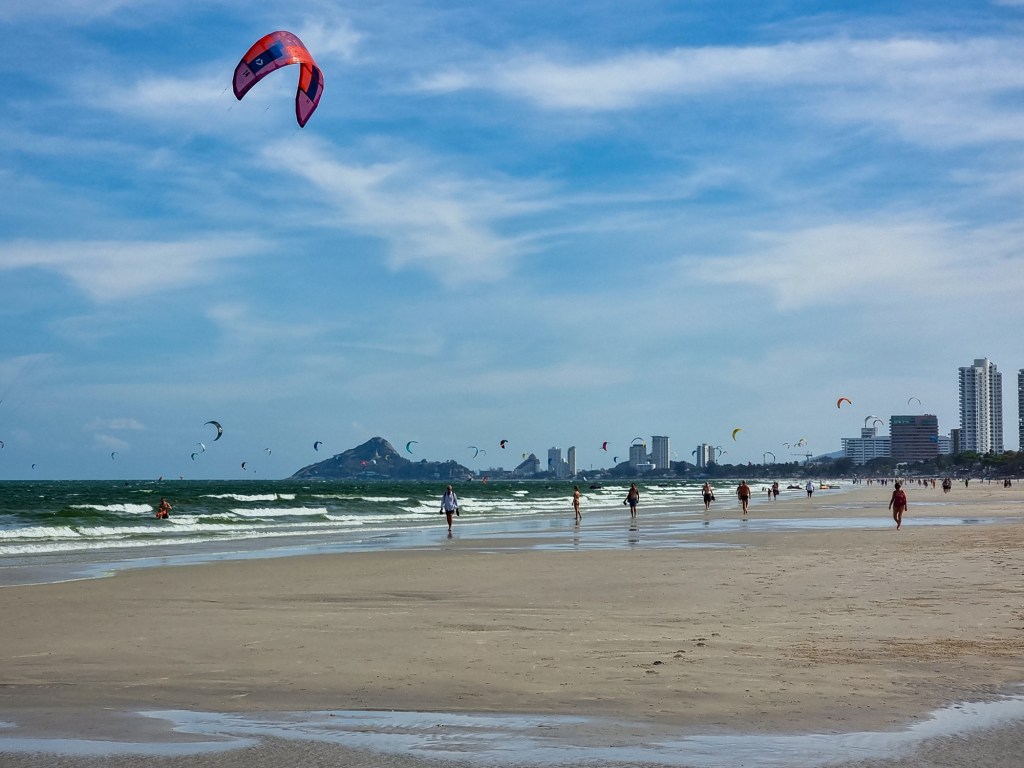
The beach is a 15 minute cycle ride from our guesthouse, we went the longer, quieter way down dirt roads to get there. Way more interesting than all the traffic. It’s a big clean beach and you rent a sun lounger, free if you eat in the restaurant.

There is still a lot more to explore here.