Well I have almost eaten my fill (for the moment) of Thai food that I have dreamed about often before we arrived in CM.
We have also managed to eat at 3 good Italian restaurants, all local, with friends. Pasta/noodles similar I know…but creamy, tomatoey loveliness. Is there a food theme here ?
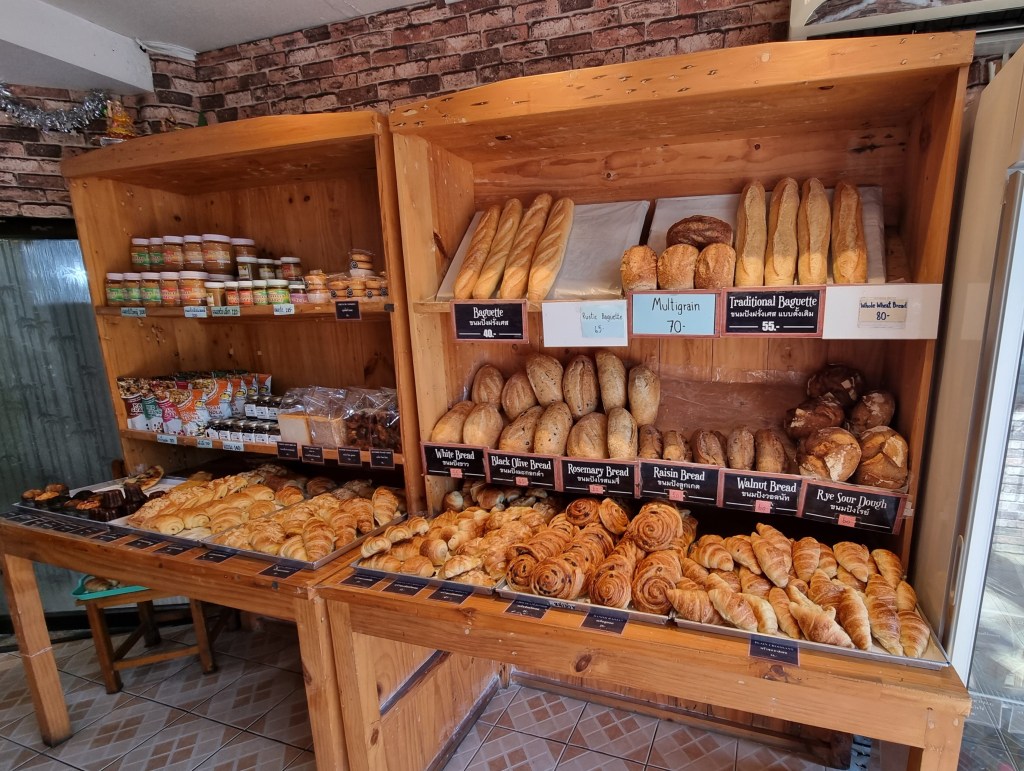
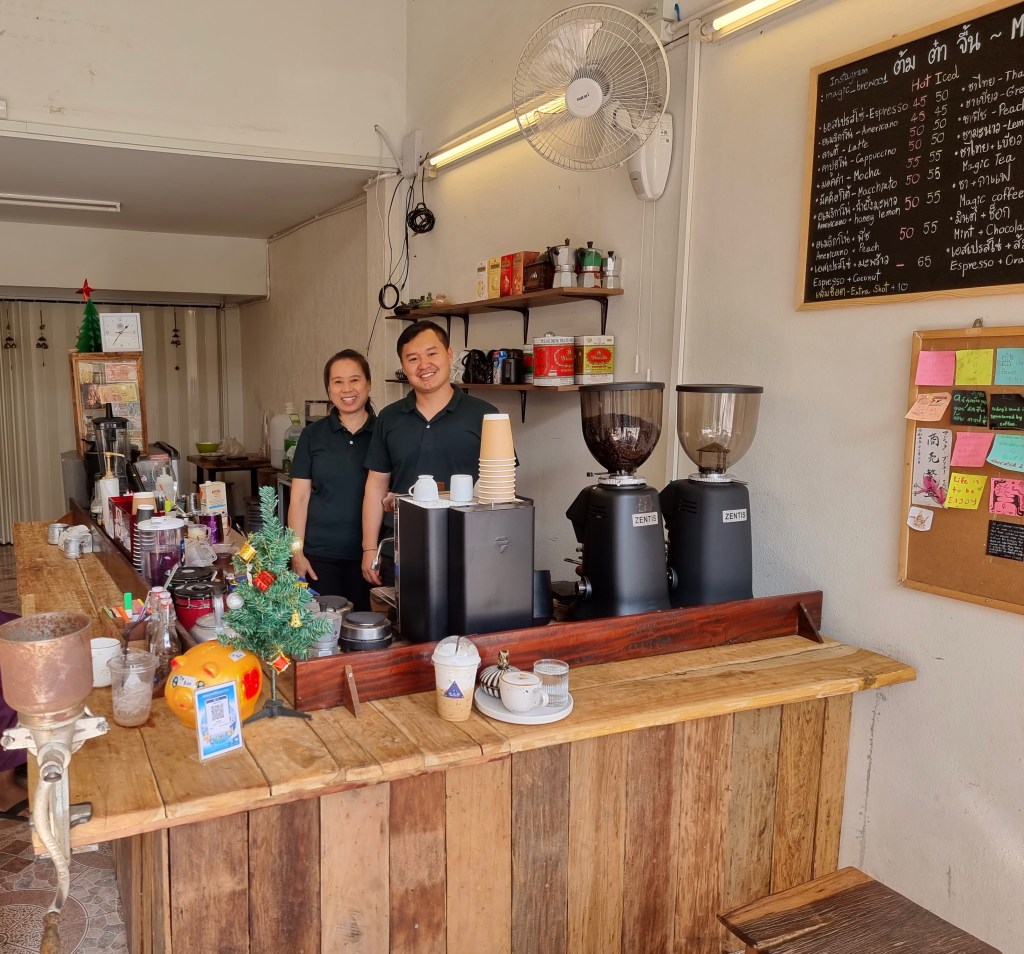
I’ve also had a bit of a crush on an excellent French bakery in the village next to our favourite coffee shop, it’s a marriage made in heaven.
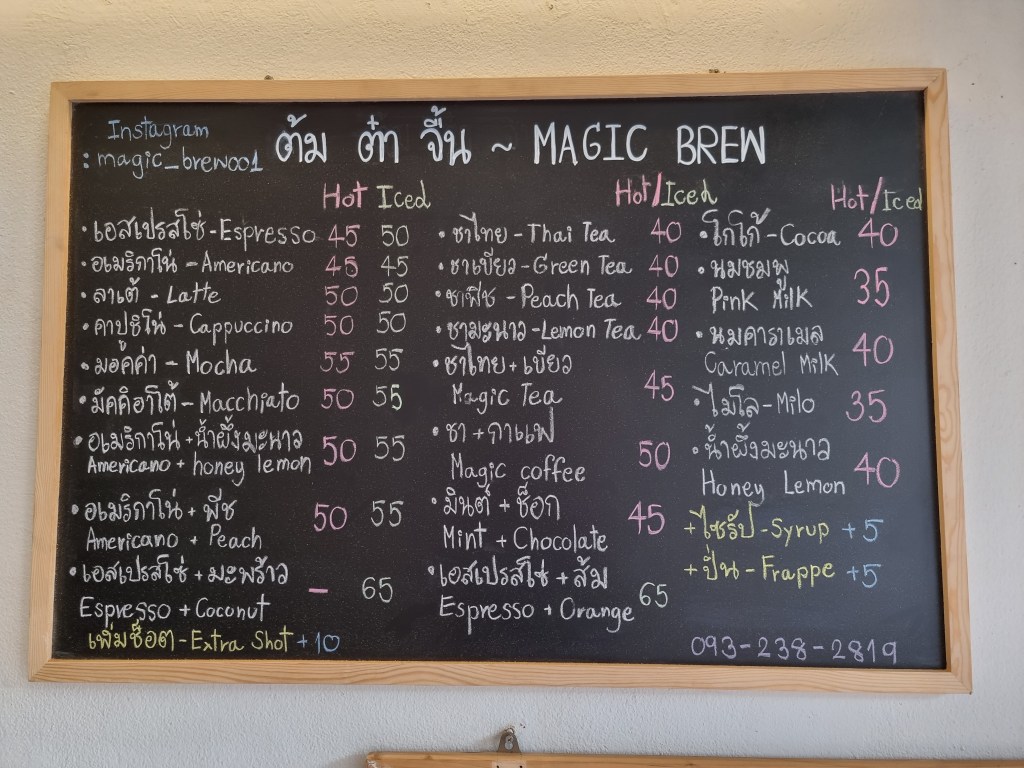
45 baht = £1
Croissants and bread as good as any I’ve ever eaten and the best coffee in town.
There is a Thai restaurant 2 minutes from our hotel which we have frequented for many years which is called Santitham Breakfast. Which in itself is a bit of a misnomer as they cook lots of different dishes.
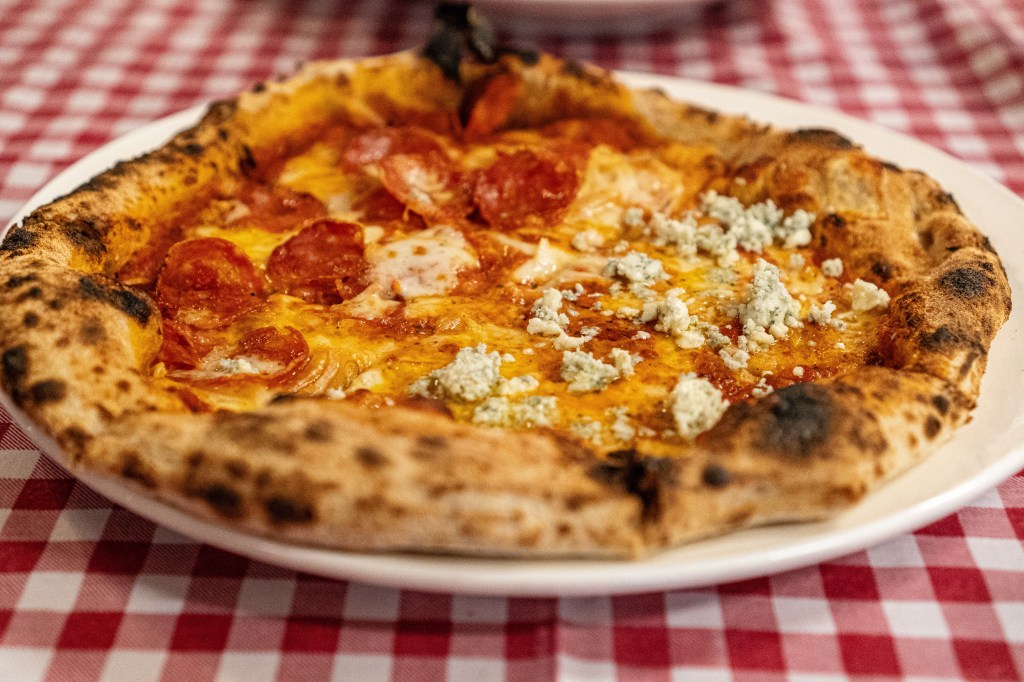
On a Friday and Saturday night he has pizza night. He has built a pizza oven and has found an Italian cheese maker in the mountains locally and a very good cured meat company.
Kong, the owner is meticulous on the quality of ingredients and his Sourdough base all hand made is excellent. He now has an enormous clientele. They are at least 12 to choose from and cost £5-6 . It’s expensive for here but they’re delicious and it’s a good sociable night.
The clientele are mostly an eclectic bunch of European, American, Aussies, Kiwi’s and a few Thais. It’s a fun night and a good change from rice and noodles…
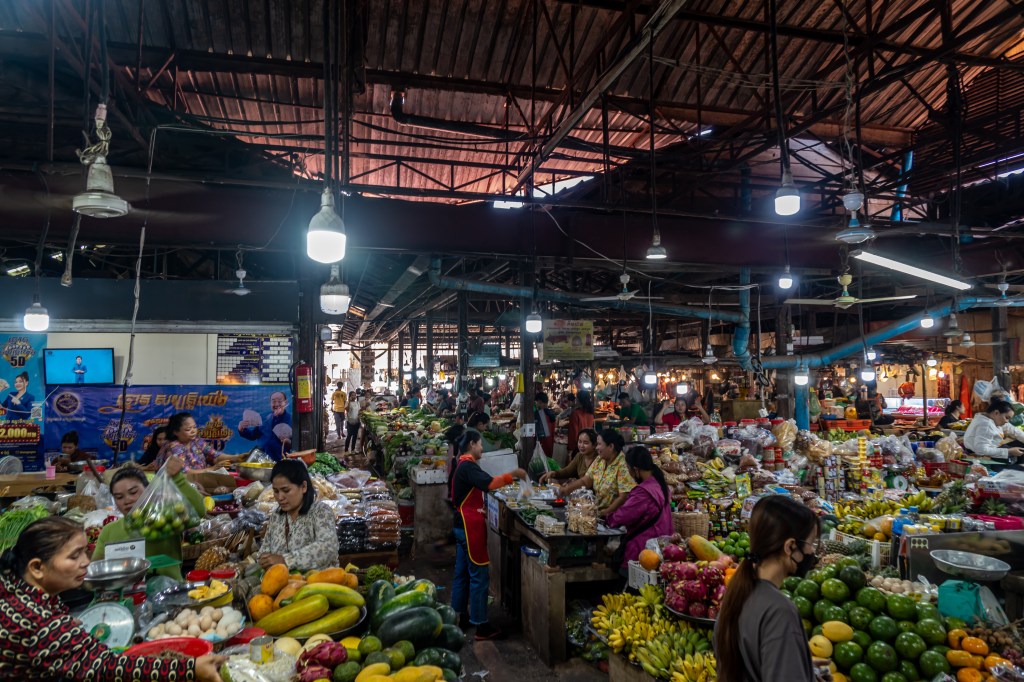
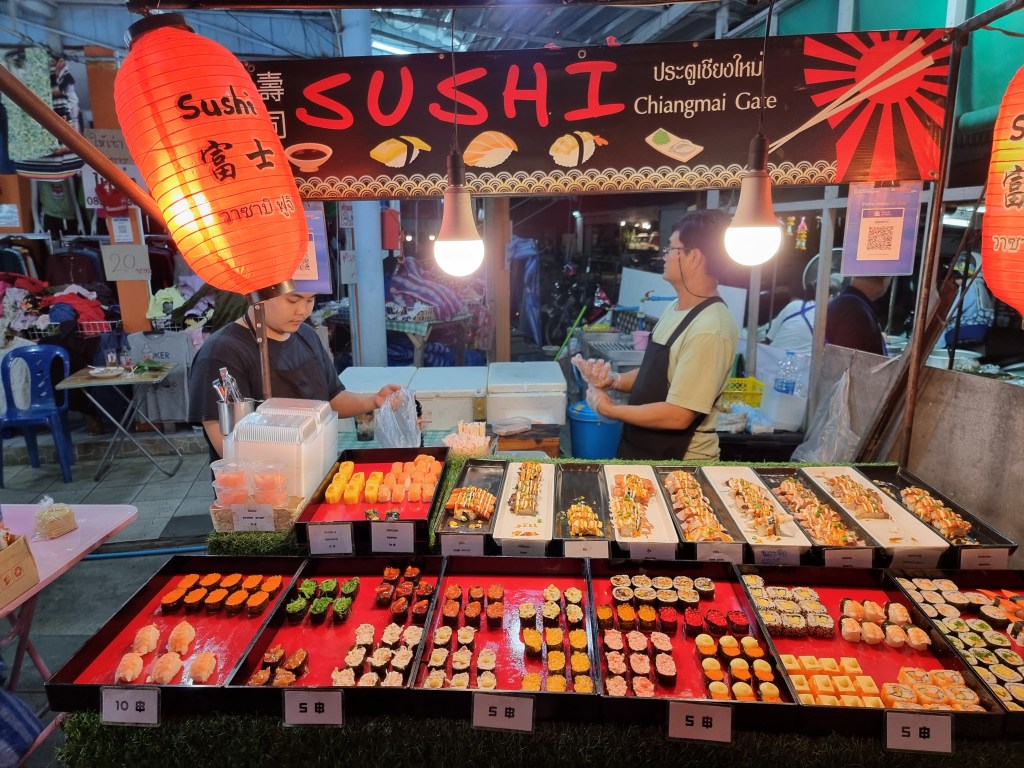
The fruit and vegetables are cheap and organic, mostly out of someone’s garden if you buy locally. A kilo of creamy avocados for 70p, bananas, pineapple cheap and plentiful. Street food like sushi or bbq meats entice you all the time. £1.50 for this snack, yummy.
Sushi and bbq chicken livers
We often have musli with fruit and yogurt or avocado/eggs on toast for breakfast we have a fridge, toaster, kettle all you need really. You can’t eat out all the time.
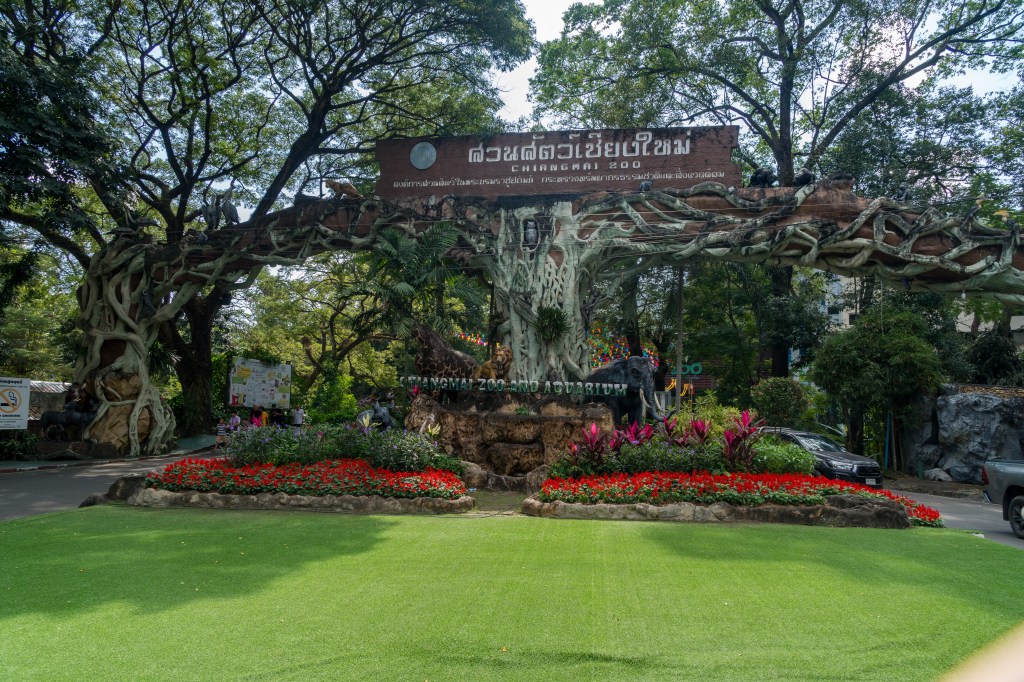
We go to the zoo every time we’re here. It was opened in the 50’s by an American survival expert who started out by looking after injured animals. It’s really big and spacious, good weather for most of the animals and reasonably well run. It’s on the road up to Doi Suthep the mountain that overlooks CM, just in the foothills.
It’s a really good long hilly walk. It takes 3-4 hours so we went early. It costs 350 baht, around £7. They have made improvements over the years but this year there were so many animals missing. There used to be 3 male lions now only 1. There were 5 female lions, now 2. All the small forest and jungle cats are no longer there.
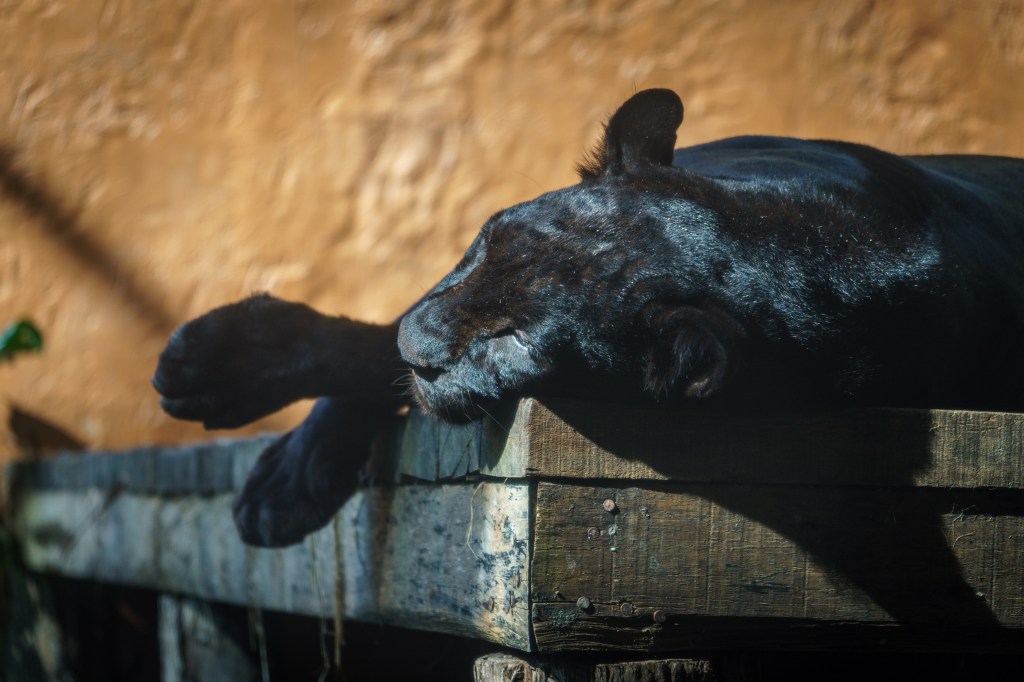
Black panther
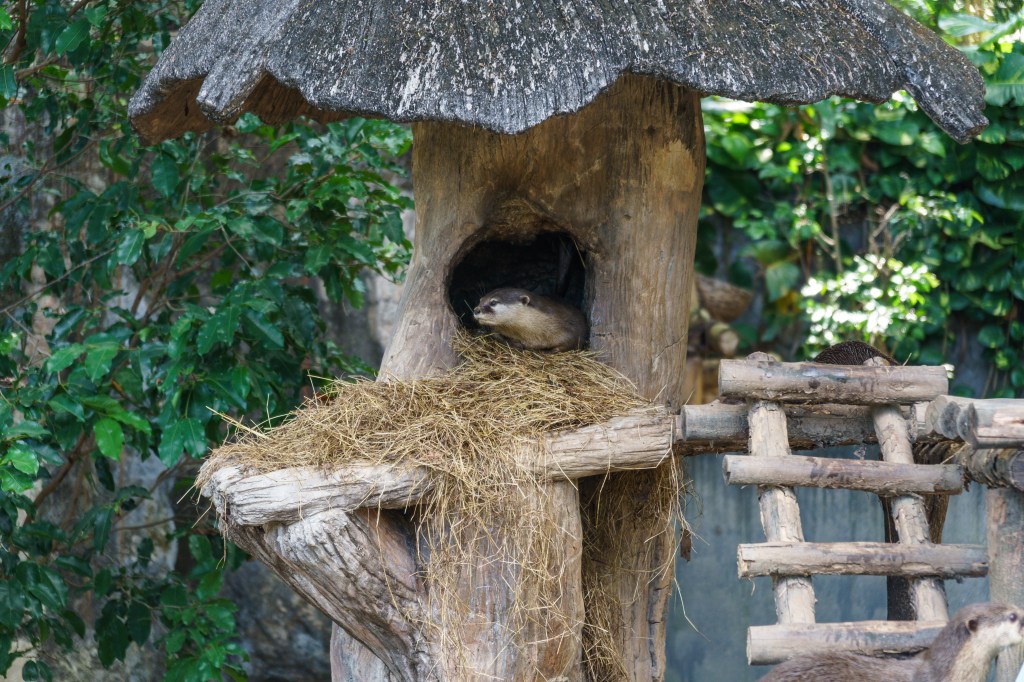
No fenic fox, meerkats and only 4 otters, used to be 30ish…
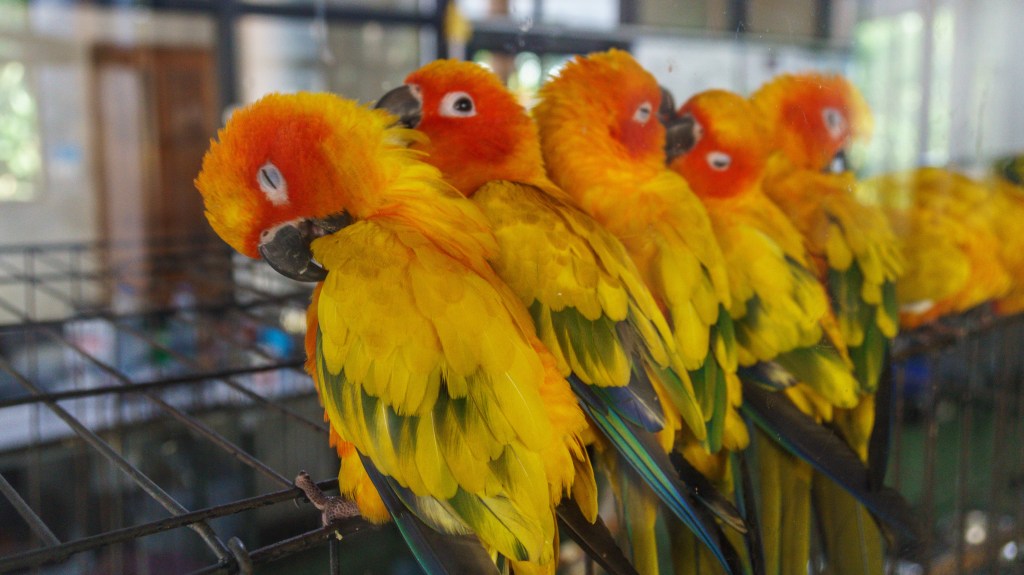
shrinkflation is happening everywhere! Apart from Parrots….these were really cute.
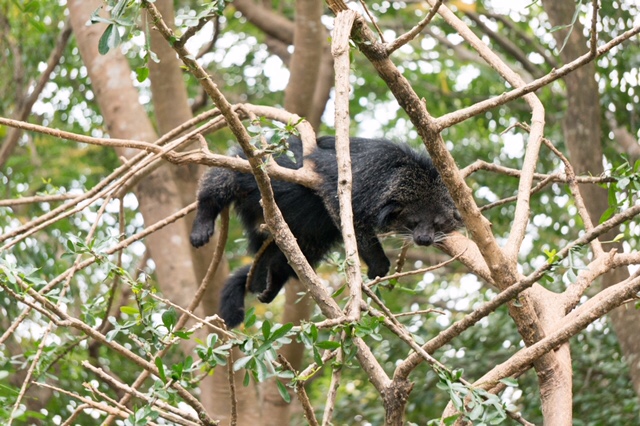
Binterong. Face of a cat, body like a bear, my favourite
At least all this walking might appease my hunger or at least stop me from coming back looking like a beached whale!
We’re back at last to our spiritual home Chiang Mai and delighted to be here. The journey was long and arduous and it takes longer every year to get over the flights but after lots of sleep we’re raring to go.
The thing I have been looking forward to the most is seeing friends, good weather and especially Thai food, I’ve been dreaming of it for weeks. What to have first? The choice is endless…curry puffs and an iced coffee won, yummy
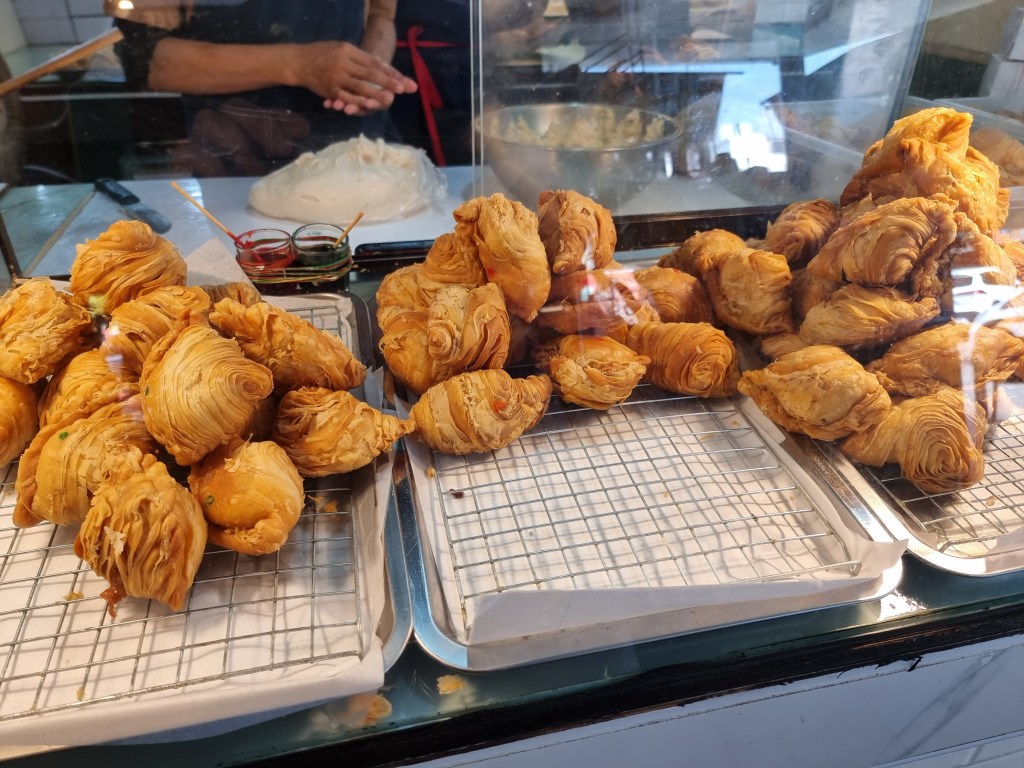
Curry puffs filled with taro and chicken (no curry ! )
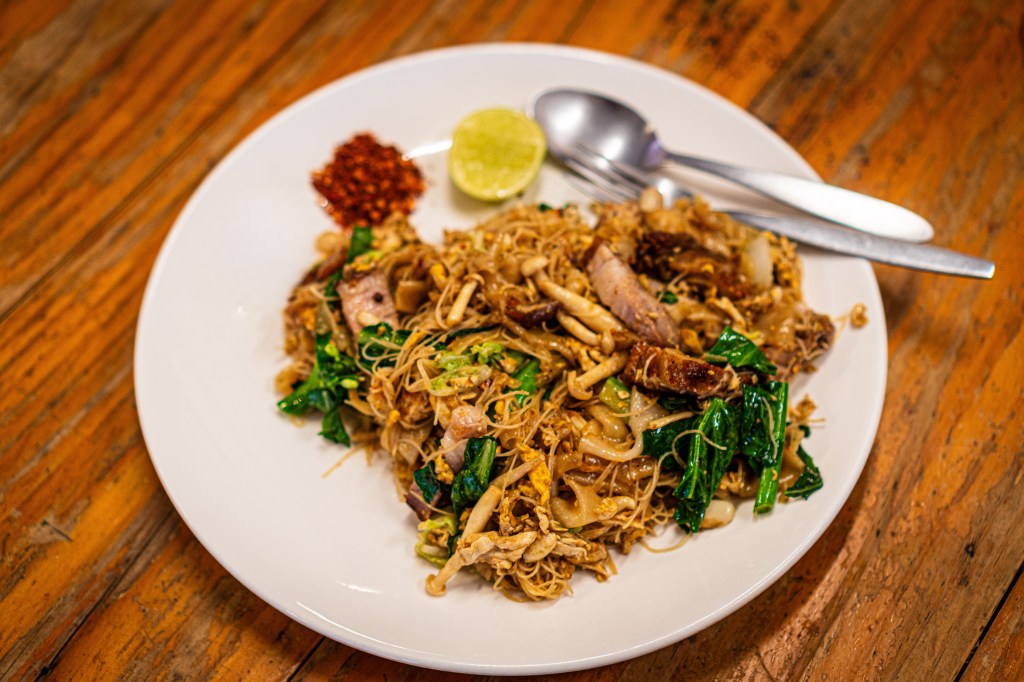
Stir fry noodles
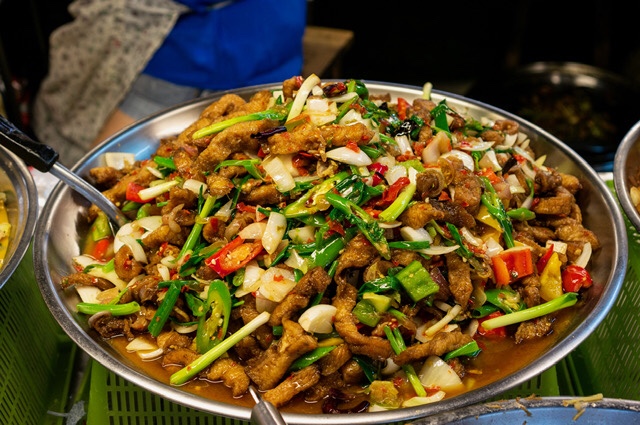
Crispy pork and kale
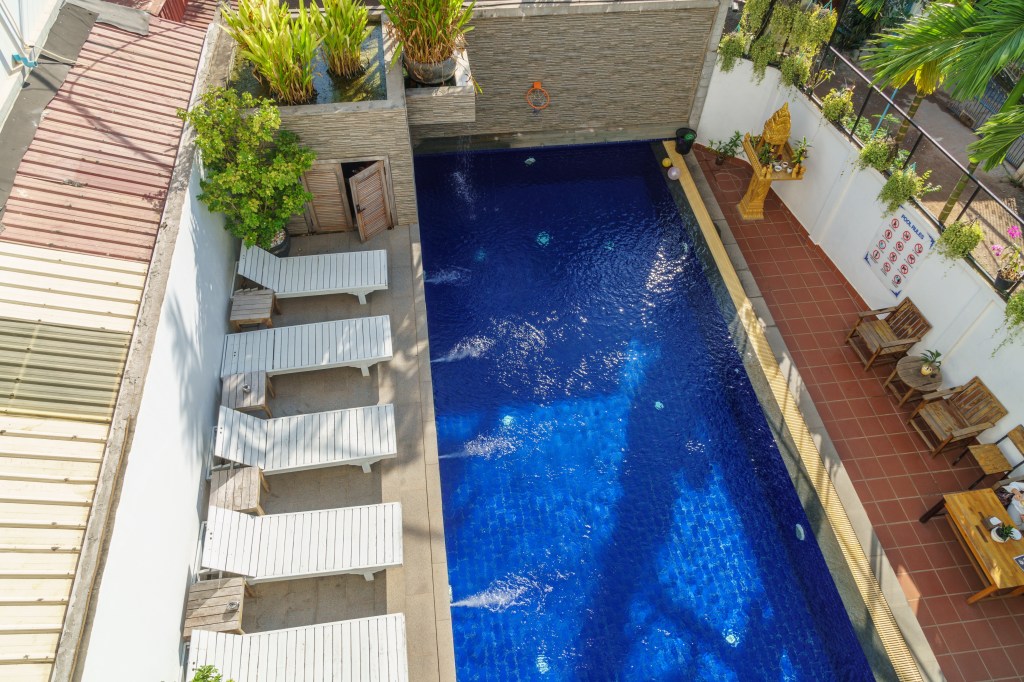
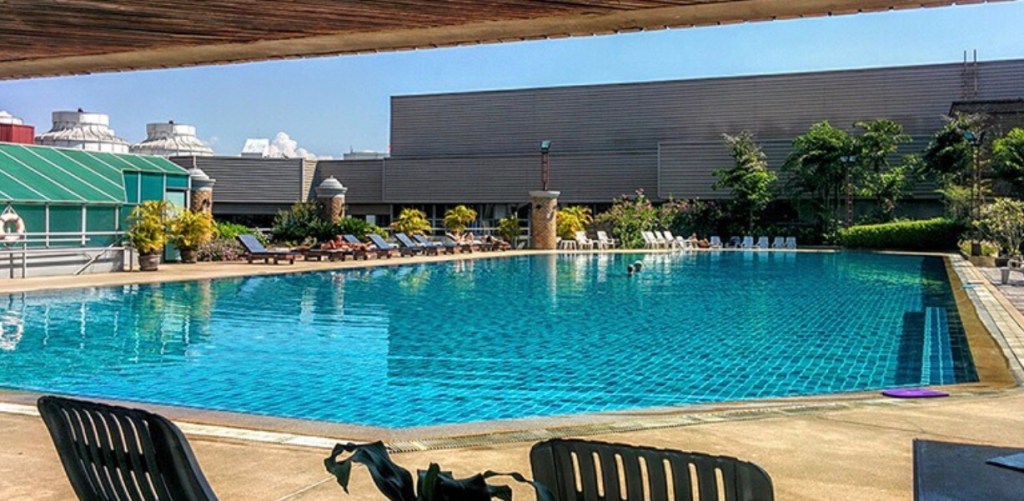
We should have been in a condo but that fell through just before we arrived, luckily we got into the hotel we always stay in and back in our normal room. It feels like home. To compensate for no pool we have joined a gym in a big plush hotel, 5 minutes away. It has a 50 metre pool on the roof and comfy chairs, sorted!
We have a new motorbike and looking forward to getting out of town into the countryside. The city is very busy and hotter than normal so mountains here we come the adventure starts here…
Happy Christmas and a happy and healthy New Year xx
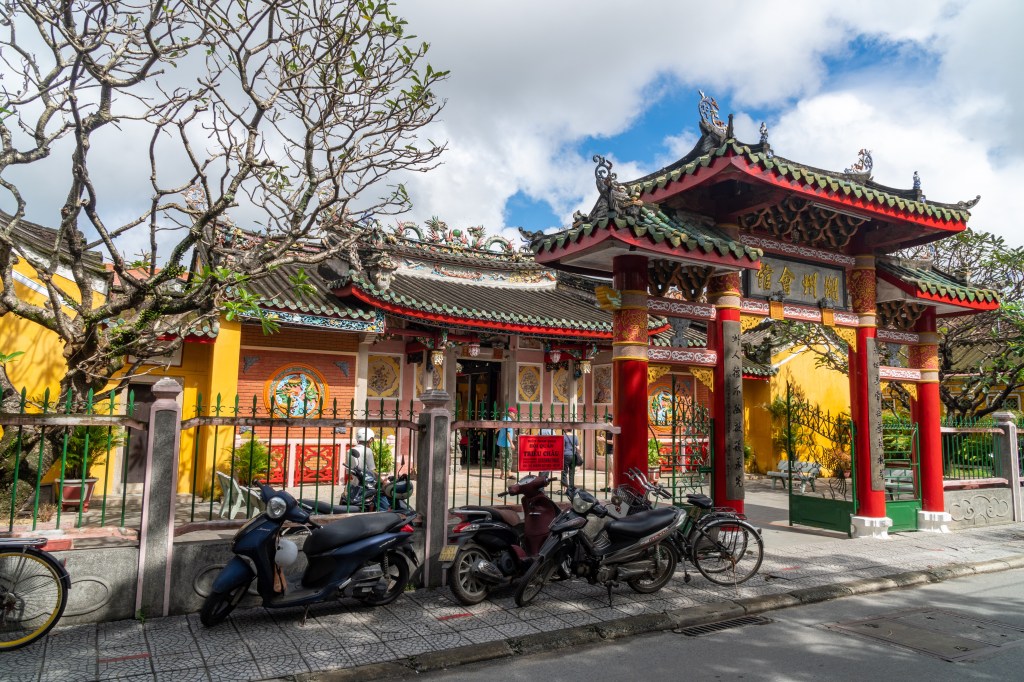
Hội An is a city on Vietnam’s central coast known for its well-preserved Ancient Town. The former port city’s melting-pot history is reflected in its architecture, a mix of eras and styles from wooden Chinese shophouses and temples to colorful French colonial buildings, ornate Vietnamese tube houses and the iconic Japanese Covered Bridge with its pagoda.
Japanese bridge
It has a unique concentration of architectural monuments which are preserved pretty much intact. It also has a great beach and riverfront. It’s only a 2 hour flight from Chiang Mai to Da Nang and we are being picked up by car and taken to our homestay in Hoi An, 45 minutes from the airport.
The homestay is just what we wanted, slightly out of town between the old city and the beach. The family are very friendly and inviting. We have bicycles to get about and everyone speaks good English which is a bonus. We have the best room in the house overlooking the pool.
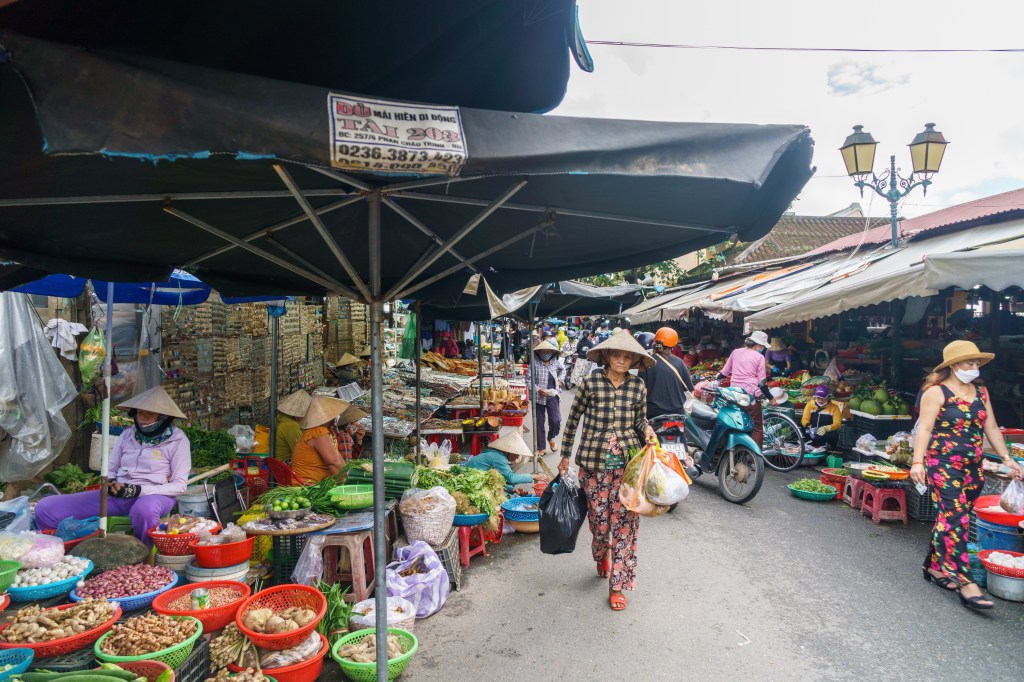
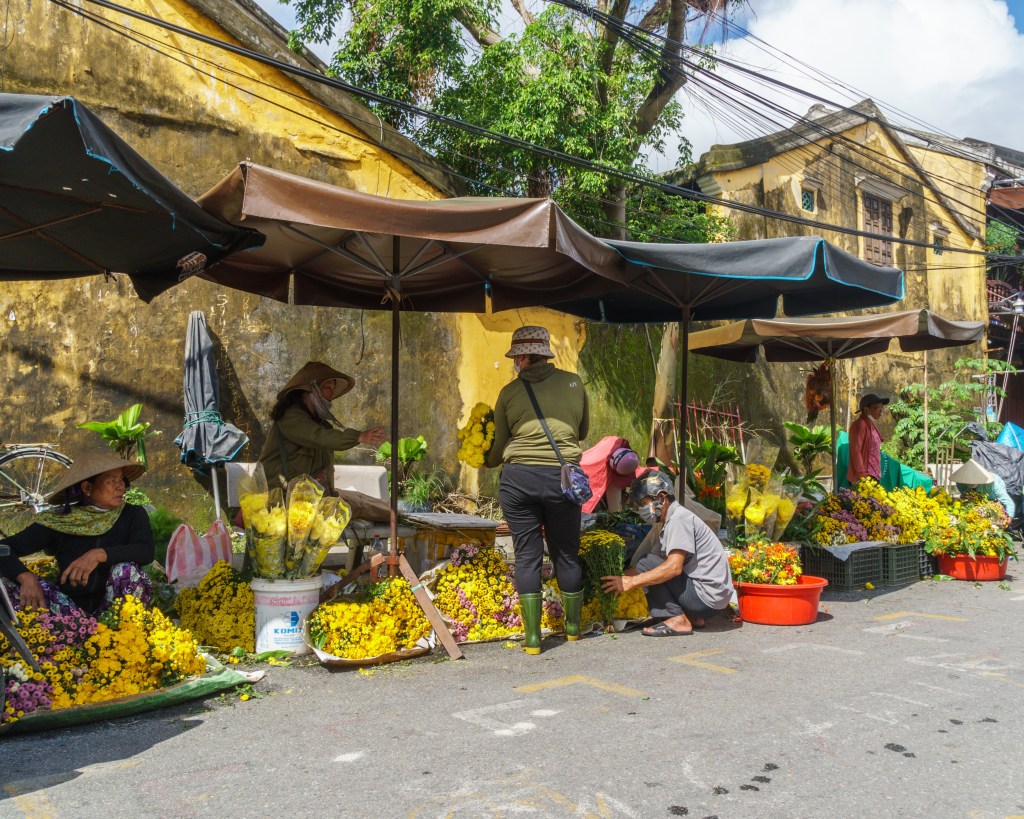
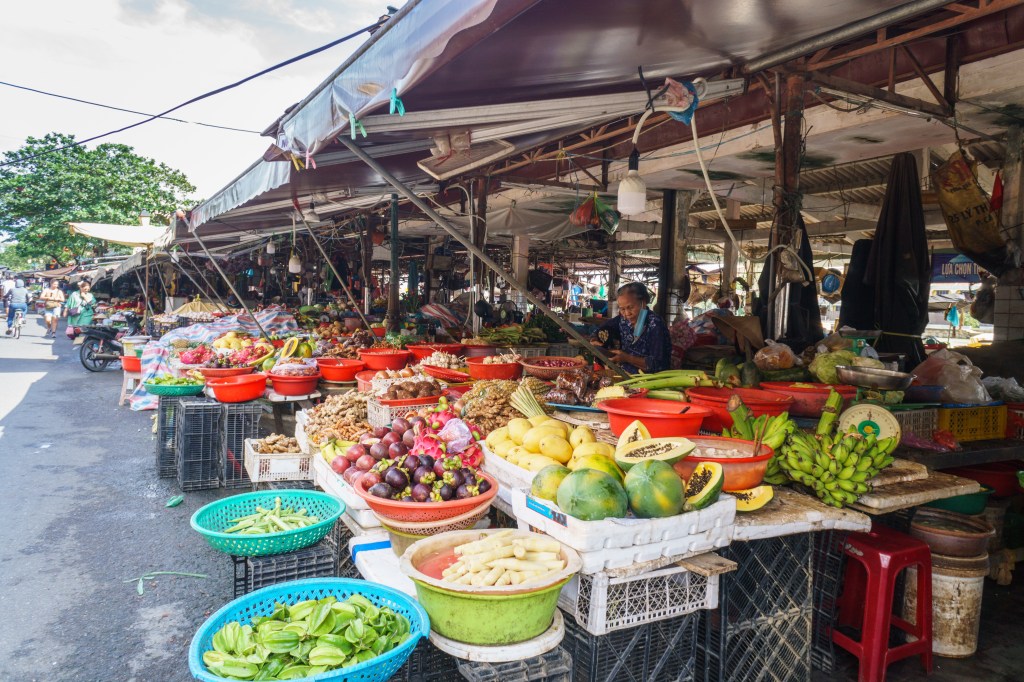
We cycled into the old town, dicing with death along the way as no one drives on the right side, they come at you from all angles, aargh. The key to staying alive is just keep going, don’t stop. Whew. We entered the old town along the riverfront passing the big open vegetable, fish and meat market and left our bikes. The loud chatter of market traders was piercing the air along with the aromas of flowers, fish and meat adding to the sensory overload. Unusual looking fish and huge prawns shimmering in big bowls of iced water ready for sale and all sorts of exotic fruit and vegetables loaded on the stalls. It was bustling and busy with people and motorbikes.
It’s very different to Thailand in many ways. In Thailand you have to find the shopkeepers to give them money, here they take no prisoners, everyone wants you to go in their shop, look at this…Madame, Madame come look. It will take some getting used to, they are very persuasive. You have to count your fingers if they give you change, they are a canny business like race….they all speak good English and not beyond trying a good sob story to get you to buy something!
The old town is pretty with an eclectic mix of buildings and architecture built on a grid pattern. The town is a fusion of indigenous and foreign cultures, principally Chinese and Japanese with later European influences and very well preserved.
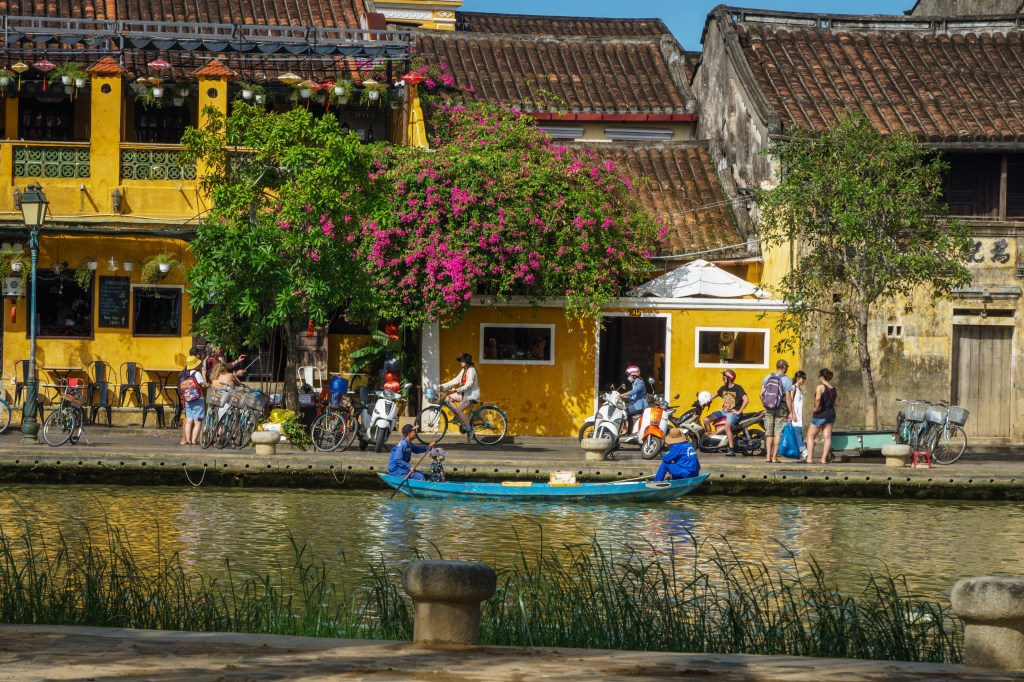
It has been a UNESCO world heritage site since 1999. It was a major trading port between the 15th – 19th century and sits on the mouth of the Thu Bon River where you can have boat trips from the quayside and many cafes and bars line the rivers edge great for people watching.
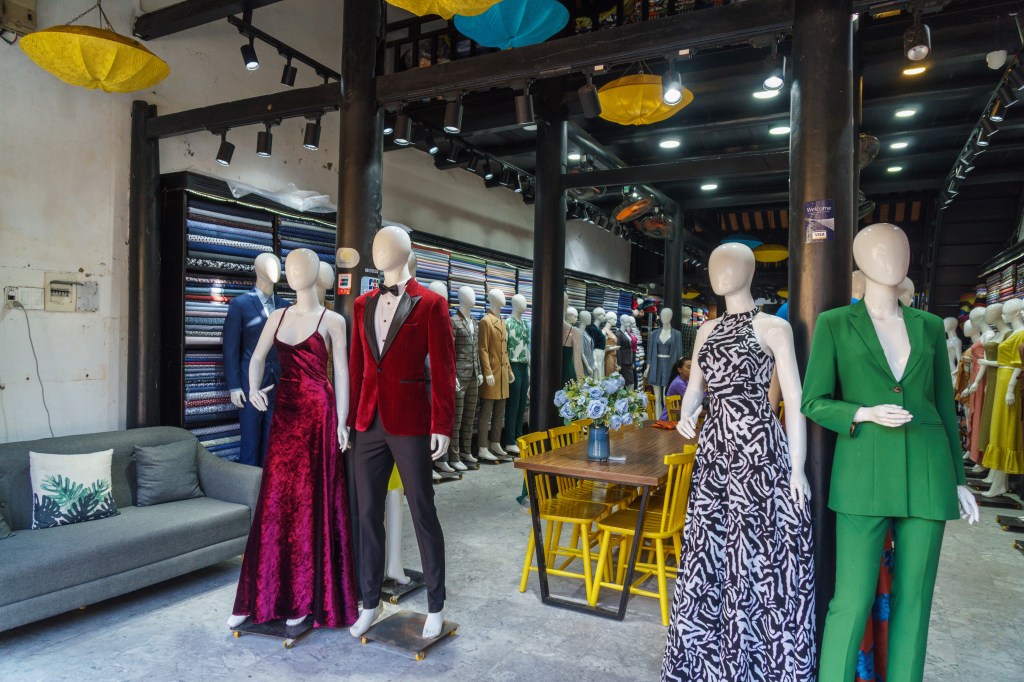
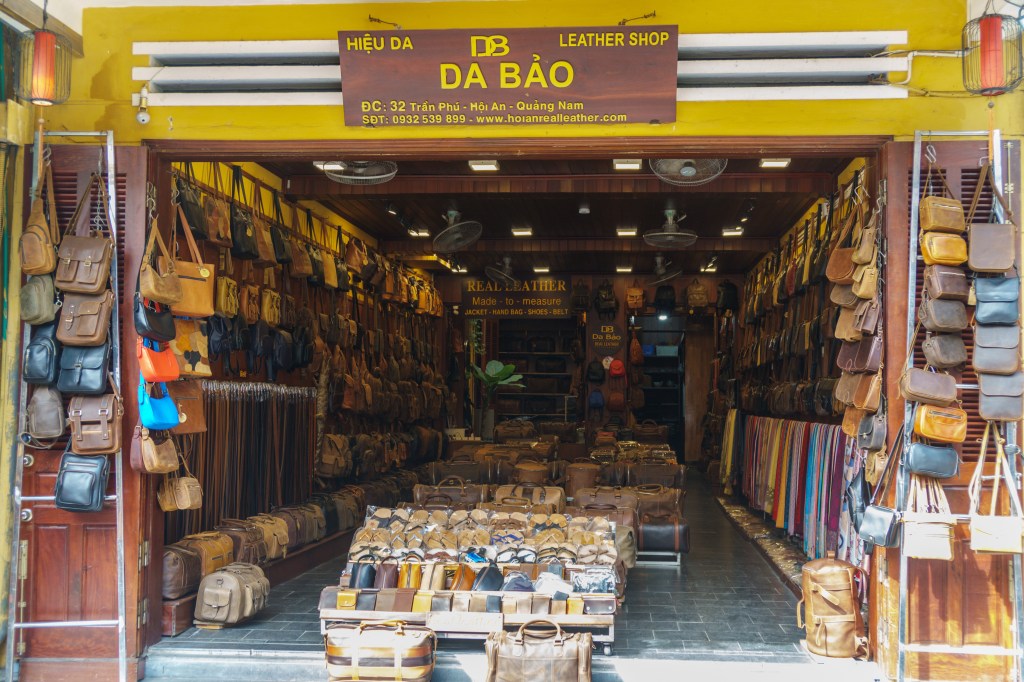
Many of the small old houses in town are now souvenir, leather shops and tailors, who will knock up clothes in record time. It’s well known for its swift tailoring skills. Tiny little alleys with flowers growing over walls, small coffee shops with just a few seats enticing you in with the smell of fresh coffee. It’s enchanting.
Food is a big thing in Vietnam, there are hundreds of restaurants and street food carts on every corner. There is a huge indoor food market. Lots of noodles and rice, seafood and some weird and wonderful dishes. Spices and herbs, fragrant and aromatic rising from every small counter, makes you hungry.
The town is very different at night, it comes alive. Once you cross over the bridge to the little island where the night market is, lanterns turn it into a colourful grotto. Boats with lanterns on the river carrying tourists, little floating lighted ‘wishes’ for good luck sold by traders to drop in the river, they were everywhere.
The night market was awash with colour and food. Madam, Madame come look voices trying to get you to look at their stalls or buy food. Frogs on sticks, all sorts of meat and fish, food everywhere. We found a restaurant in the heart of it all and just watched the throngs of people from all over the world looking enchanted by the spectacle.
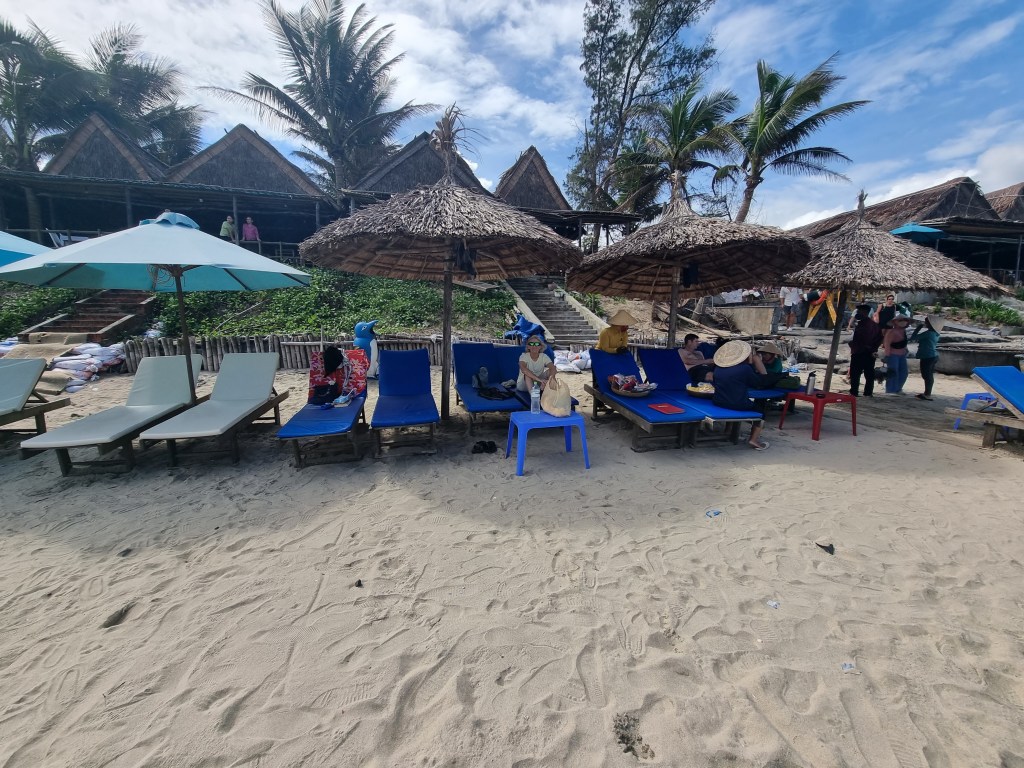
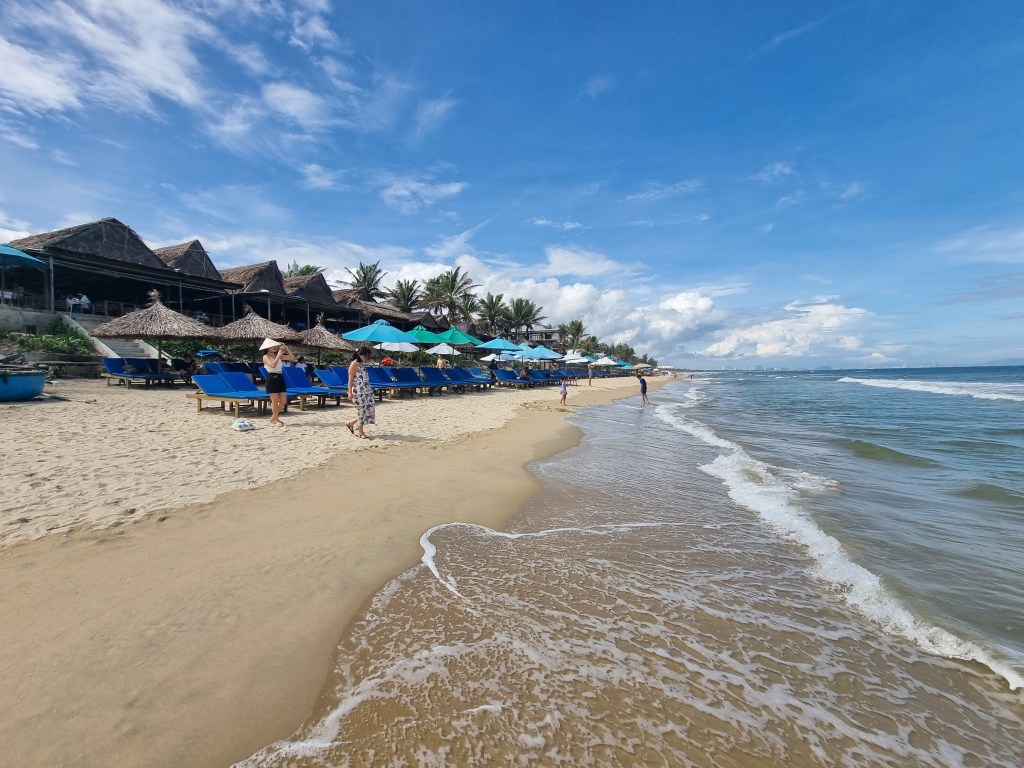
The beach is a 15 minute cycle ride from our guesthouse, we went the longer, quieter way down dirt roads to get there. Way more interesting than all the traffic. It’s a big clean beach and you rent a sun lounger, free if you eat in the restaurant.
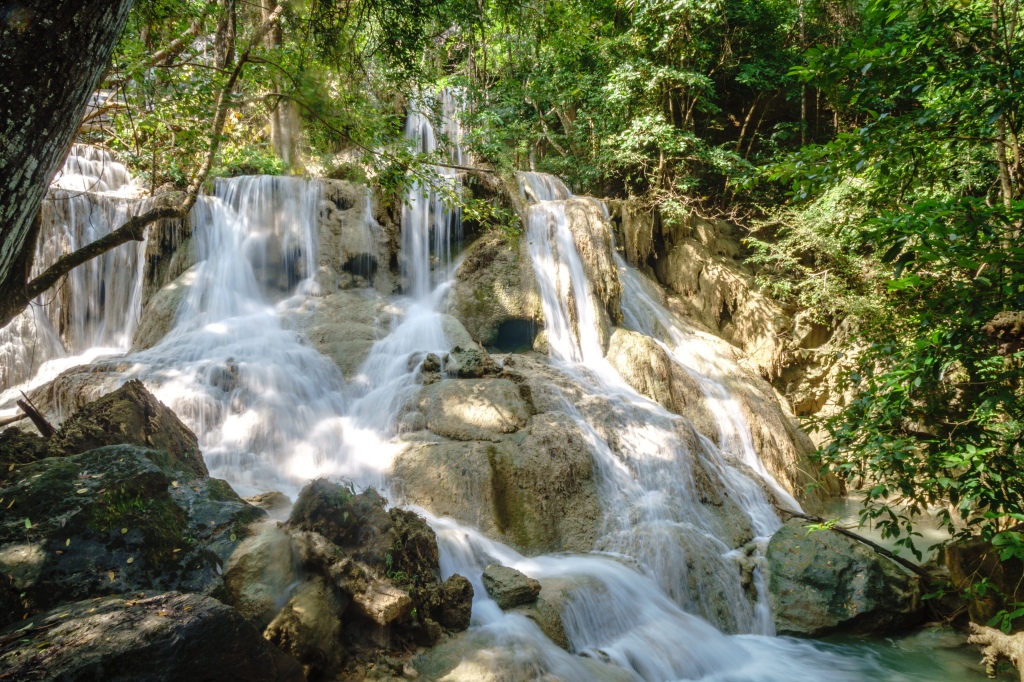
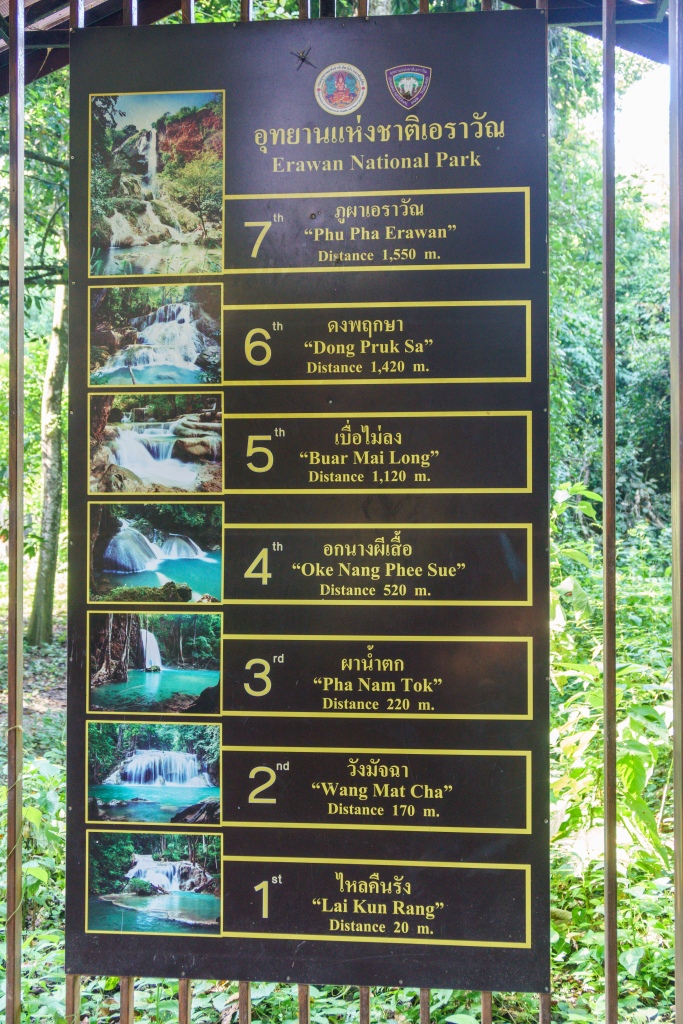
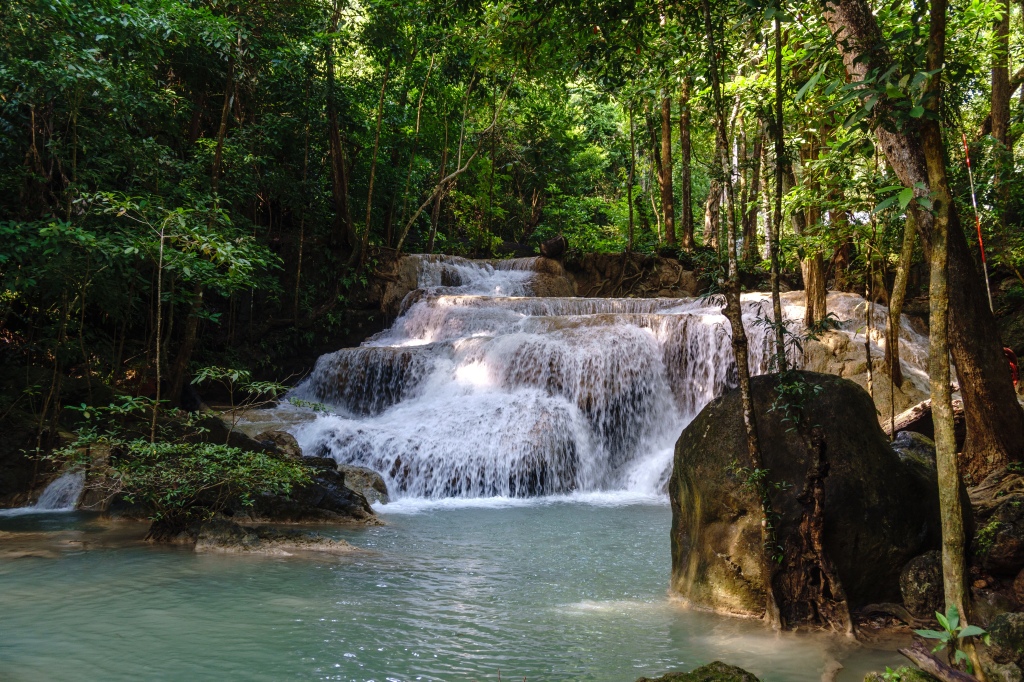
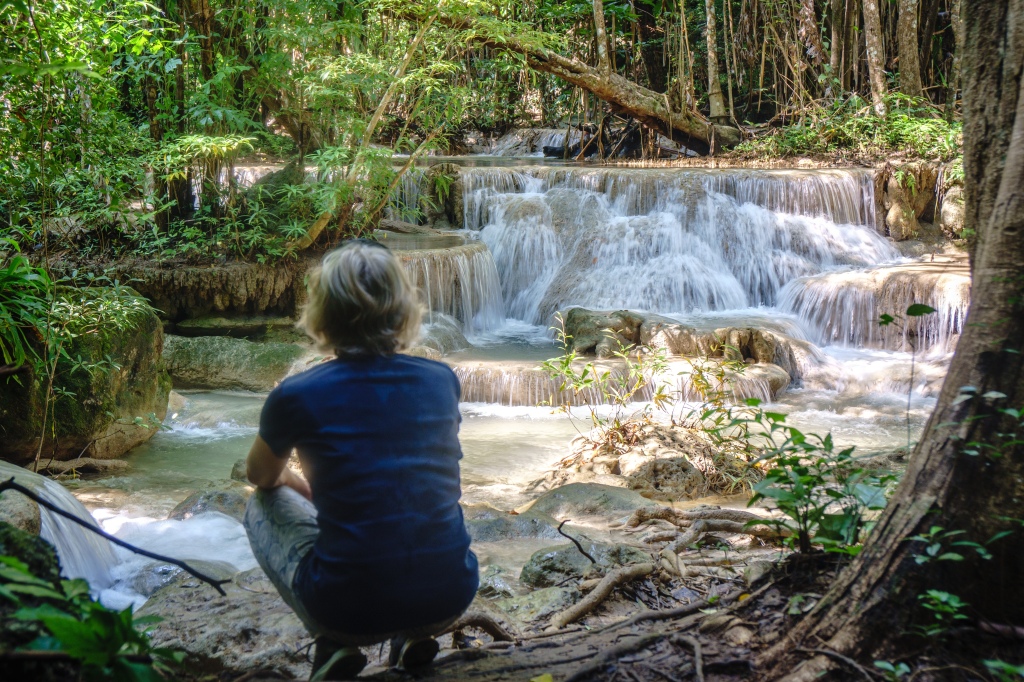
Erawan falls is one of the most impressive waterfalls in Thailand just a couple of hours away from Kanchanaburi. It sits within a large national park which has an area of 550 square kilometres. We normally arrive in Thailand in December the cooler, dry season so don’t bother with waterfalls as they are mostly disappointing, this wasn’t.
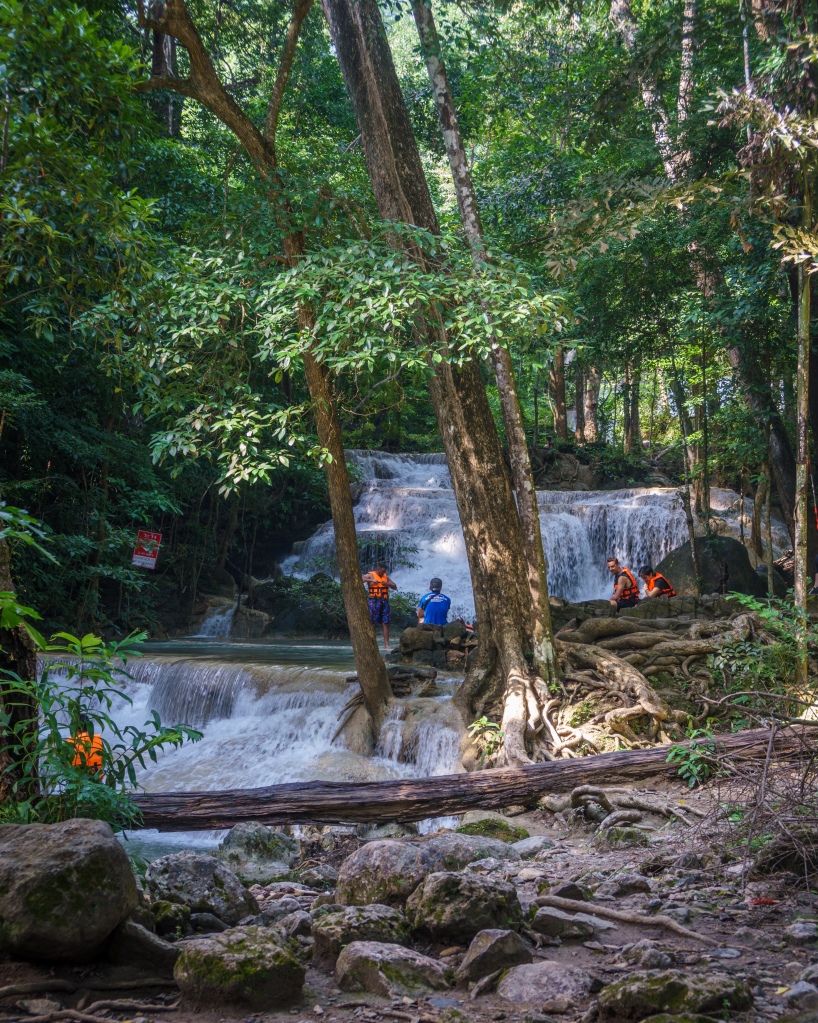
Seven tiers of waterfall tumble through the forest, and bathing underneath these crystalline waters in emerald green pools is loved by locals and visitors alike.
The first 3 tiers are easy walking but to get to the top, 2k straight up is more of a challenge.
Urmmmm
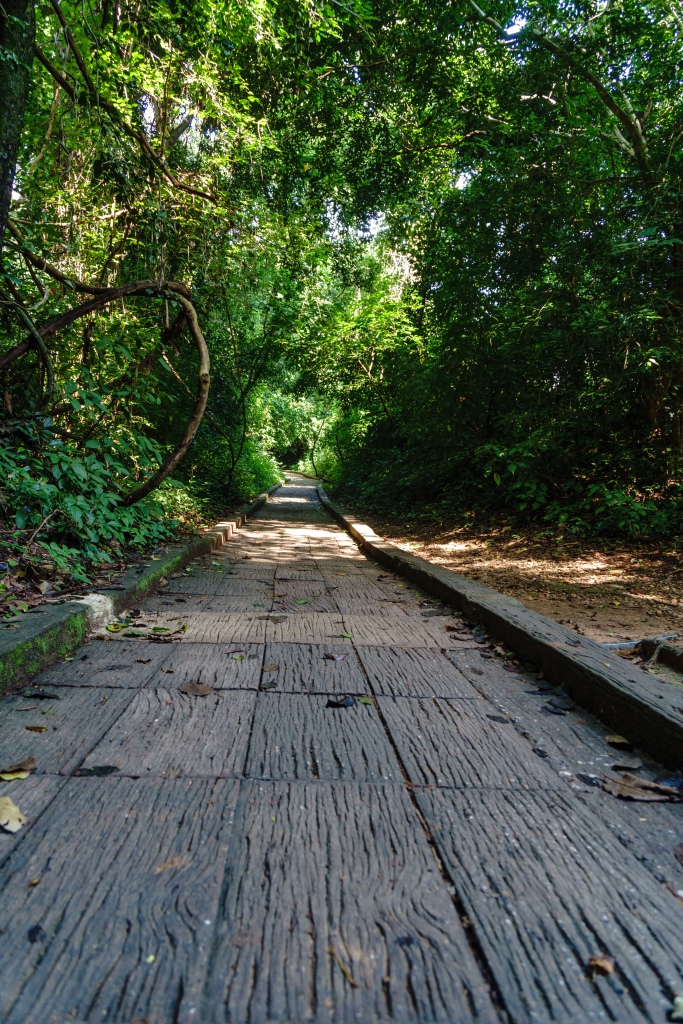
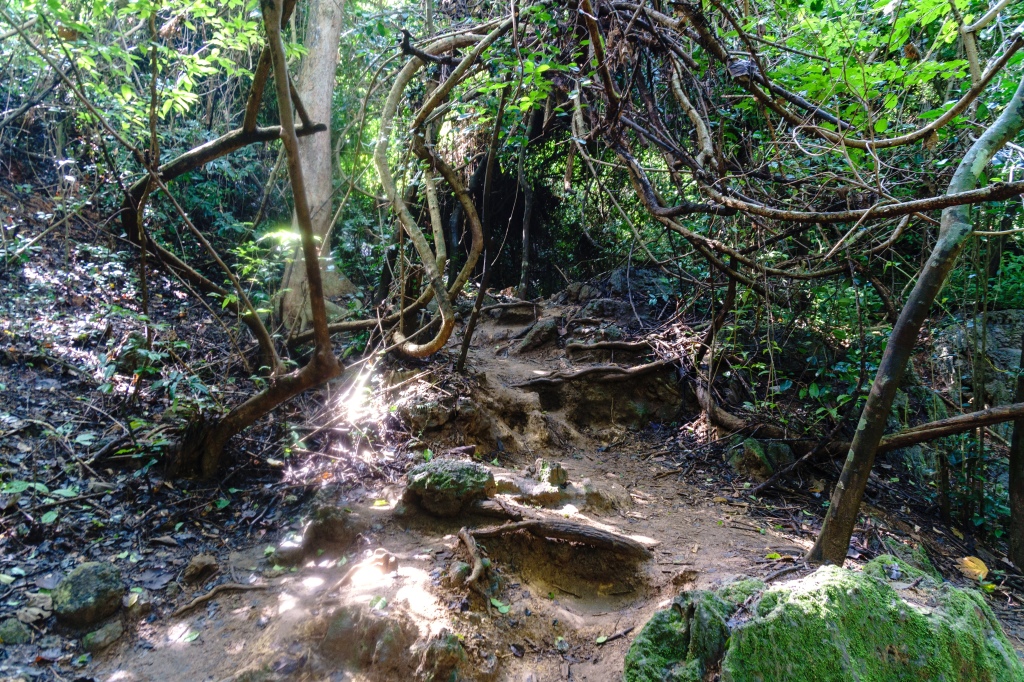
As we got higher the forest changed from deciduous to evergreen trees, the undergrowth thicker and more dense, roots and rocks tripping you up, lizards and larger insects noisily scurrying about and altogether more jungly.
We walked right up to the top level, no 7.
It was a harder climb to the very top. It was exhilarating when we finally got there. I love the air around a huge body of cascading water, clean and pure.
It’s more than the sound of rushing water or the beauty of it bouncing off the rocks.
It’s the plethora of negative oxygen ions generated by the crashing water that produces the positive effect. Invisible and unnoticeable as they’re tossed into the air, the negative ions are incredibly powerful. Breathe ‘em in and it’s like recharging your personal batteries. You feel immediately refreshed. The higher the concentration of negative ions, the better you feel.
Suitably refreshed we made our way back down to pool no 2 where people swim under one of the smaller waterfalls. They insist you don life jackets and as you put your feet in the water the fish start nibbling your toes which is a bit freaky. As you get further in they bite your legs and thighs. You have to move quickly or they are on you. I jumped about like someone possessed, as if I had stood on hot coals with lots of ‘ows’ and other words!! I’m not sure it was so enjoyable being munched by quite big fish. The water was cold but not arctic and very refreshing after the hot hike up. After a shower and dry clothes we returned back to our driver for return to the hotel.
Tomorrow the early train back to Bangkok and the airport for a flight back to Chiang Mai, can’t wait.
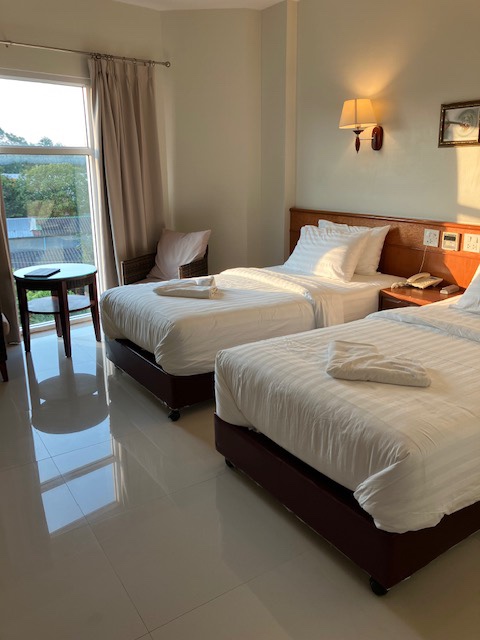
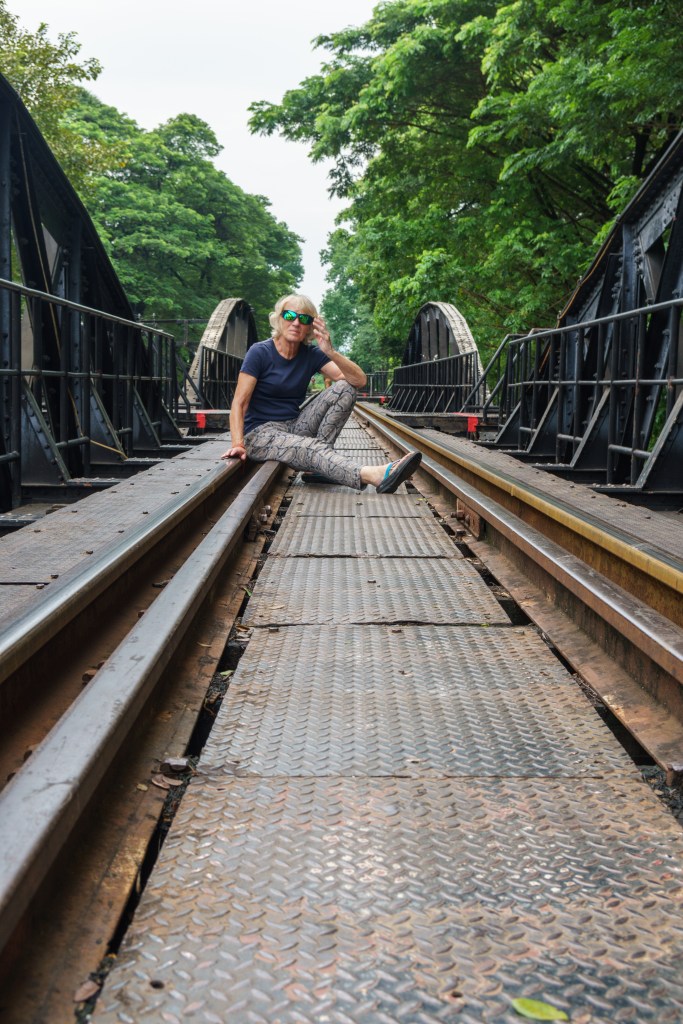
Flying back to Bangkok from Kathmandu we decided to go to Kanchanaburi, close to Burma which is where the bridge is over the River Kwai. It’s 3 hours from Bangkok on a train, we hadn’t been before and we got an amazingly cheap deal in a very good hotel for 3 nights, only £25.
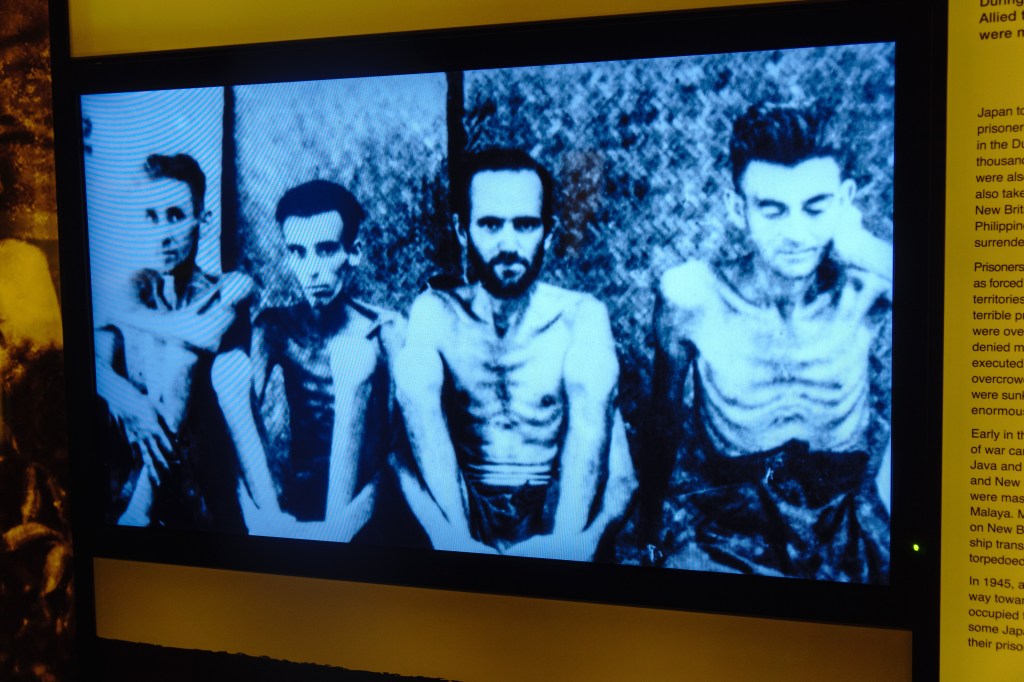
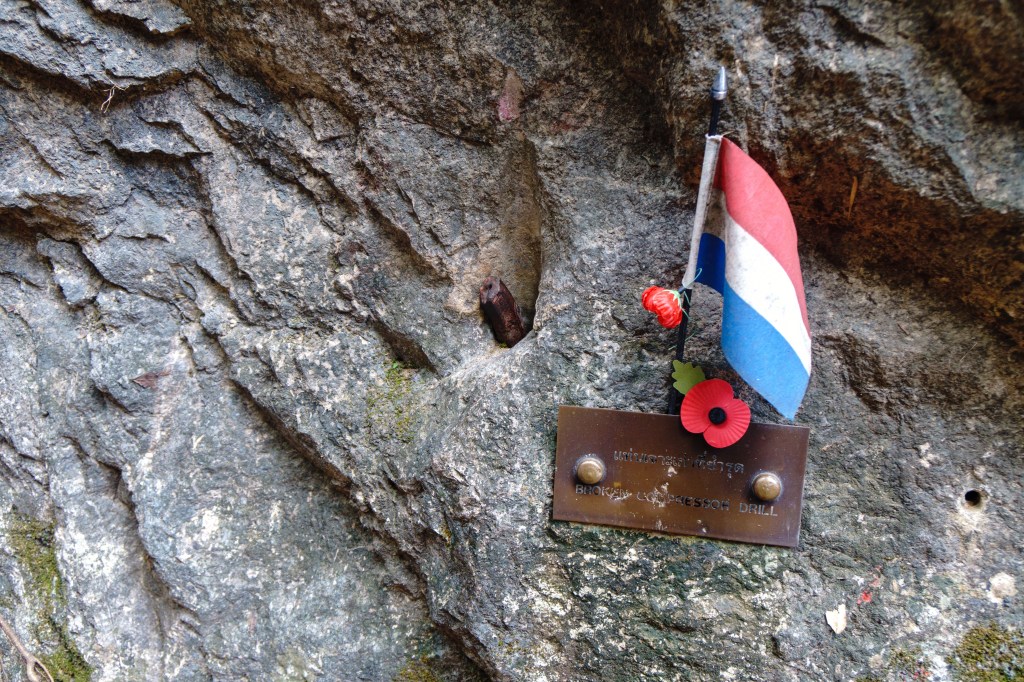
We walked along the railway line that spans the River Kwai, took some photos and then spent the morning in the local ‘Death Railway Museum’.
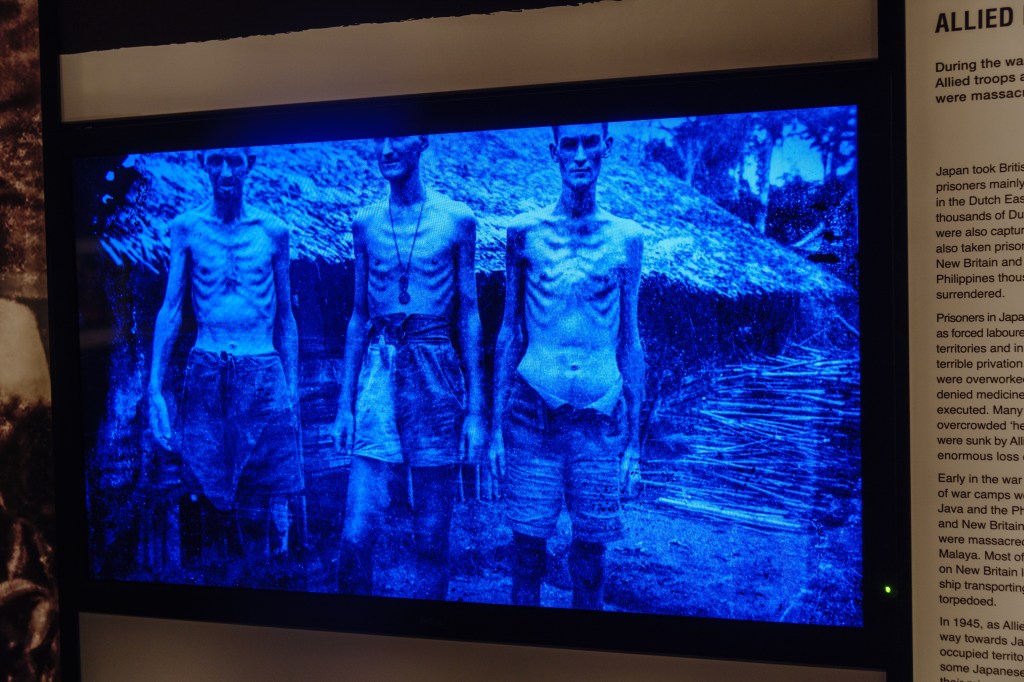
I have never been brought to tears as often in a museum. The accounts of some of the survivors on film was heart wrenching. The brutality by the Japanese and Korean guards was unspeakable. They made the men march with all their equipment for sometimes 300k. If they fell or couldn’t carry on they were whipped and left to die.
It didn’t get better when they got to Thailand. The Japanese needed to get supplies to troops fighting the English in Burma. Most of the men were British, Australian and Dutch captured soldiers.
Indians, Malaysians, Burmese and Indonesians (called the Romusha) who enlisted to work on the railway were treated even worse as they didn’t even have the support networks provided through the military hierarchy.
If you were unlucky enough, after the fall of Singapore in 1942, to be shipped to the Thai/Burmese border by railway, often 28 men in a small metal carriage, no room to sit amongst the Japanese supplies and stopping once a day if lucky. The heat was sweltering in the day and freezing at night. They were given tiny rations of maggot infested food and little water, lots of men died before reaching their destination to build what was considered an impossible railway.
There were fewer deaths in the first eight months of construction until July 1942 when the rains started.
In the wet season as the men used the latrines which was 2 bamboo poles over a stinking pit, maggots and leeches crawled up their legs. Their bamboo beds full of lice, there were no comforts not even sleep. The boots rotted off their feet as well as their uniforms and they were reduced to loincloths and bare feet. With little food it was impossible to not get sick.
Many of the men got cholera, malaria and ulcers from injuries and beatings. There was only a small unit of medics and volunteers desperately trying to care for them with little or no equipment and no medication. Often only given 1 maybe 2 days off work even if very sick. Disease thrived in these conditions, tropical and wet.
They only had basic tools, hammers, shovels and picks sometimes working 18 hours a day, beaten if they couldn’t continue. It was horrifying listening to the accounts. They were expected to move 3 cubic metres of rocks each a day after making holes in the hard rock face and then blasting the rock out. No wheelbarrows just bamboo poles and brute strength.
The ingenuity of these soldiers never ceases to amaze me. They made radios out of bits of scrap they found to try to listen out for news. They engraved their billy cans with records of events with sharpened bamboo. The medics made cannulas from bamboo and reused bottles for drips. Amazing creativity.
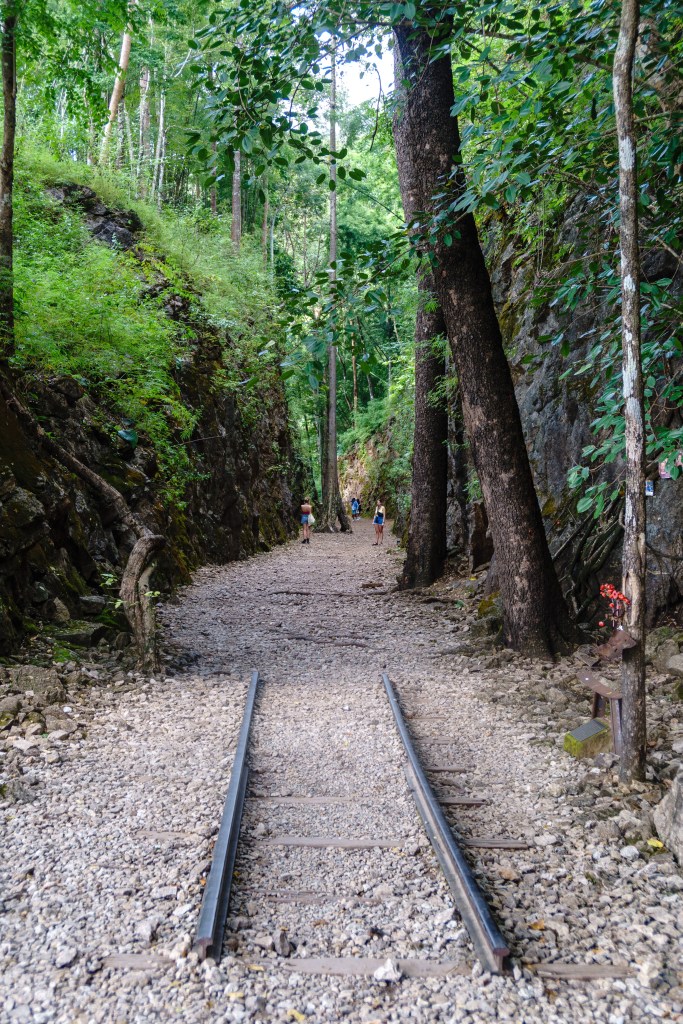
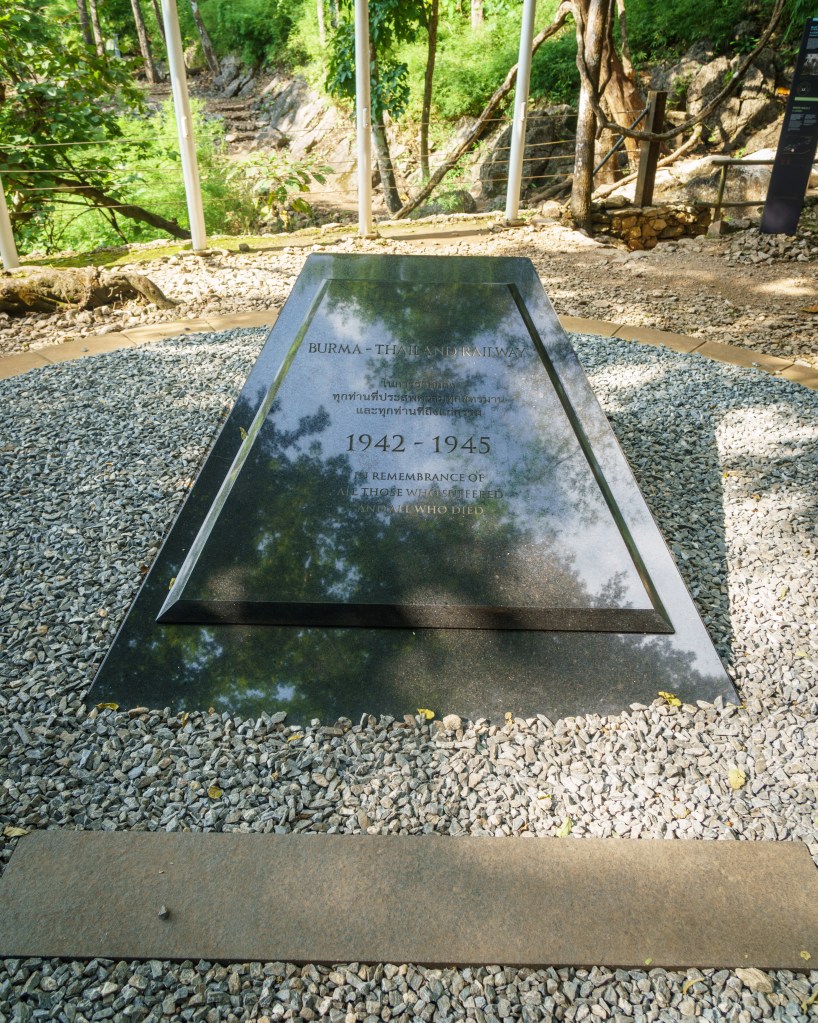
The next day we went to an Australian funded museum 2 hours away, Hellfire Pass. A lot of Australian POW were shipped from Changi in Singapore to Thailand, first by sea and then by road many stationed in camps near HellFire Pass. They were told conditions would be much better…
The museum was cleverly thought out, in a very modern building with good screens and films, all interactive.
Roll call of the dead
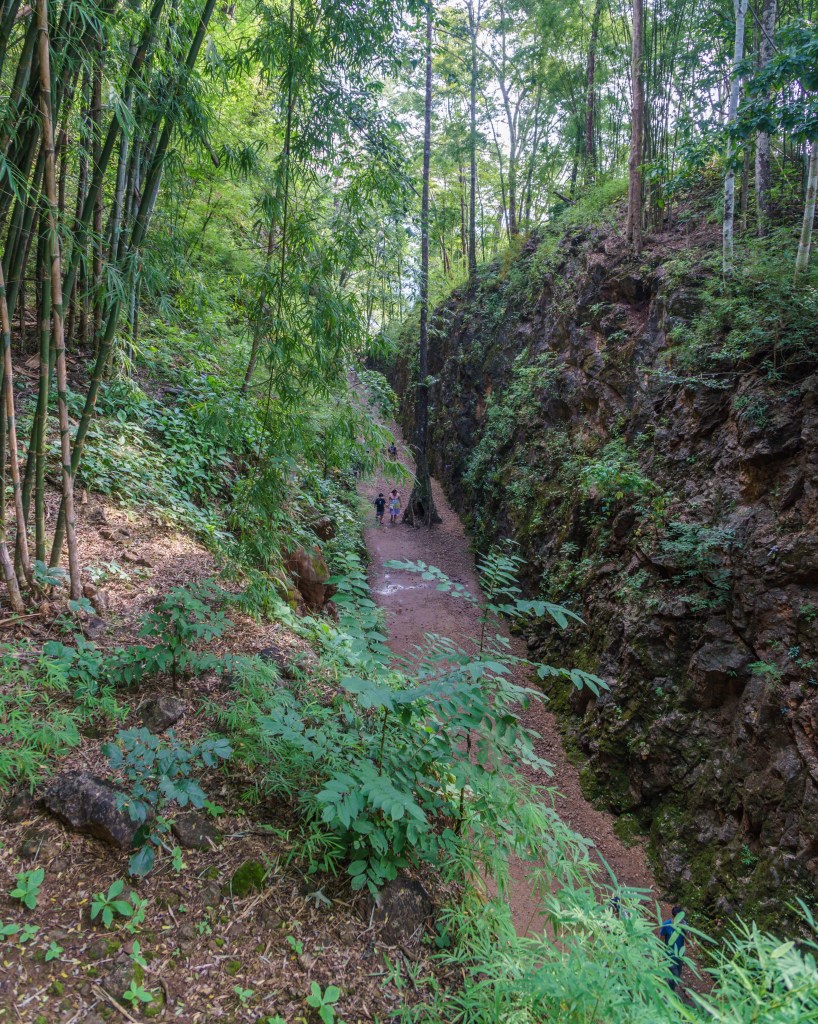
Walking around the site with audio guides, survivors telling their stories, made it come to life.
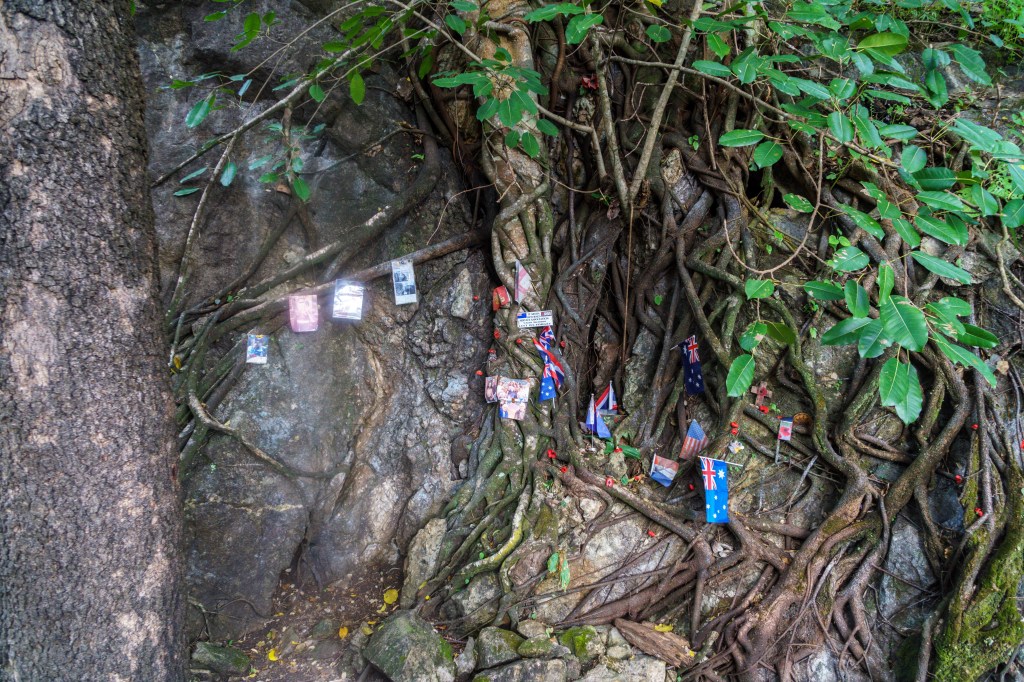
It was harrowing but so pleased we went. After the Japanese surrendered the worst perpetrators of the brutality were executed, some imprisoned for life and rightly so.
The Japanese guards although incredibly cruel in life were respectful to the dead and allowed full burials. Because the Japanese, respectfully, wouldn’t interfere with the graves, the soldiers left full reports, names, dates and lots of information which was very useful for the allied governments in Asia and the Pacific investigating the war crimes. They wouldn’t have known as much as they did without that ingenious plan. The Japanese had tried to destroy all the information and records on surrender.
The exact number of deaths isn’t known, but historians from the ANZAC Portal estimate at least 90,000 labourers and more than 12,000 POWs were killed. The grim statistics – which equate to one man dying for every sleeper that was laid on the track – led to the line being dubbed the ‘Death Railway’.
This horror lasted until 1945 when Japan surrendered. 415k of railway line was built and 600 bridges in 15 months. When the men that survived eventually came home they were emaciated bags of bones, but alive at least to tell the tale..
Hellfire pass was an incredible feat of engineering, you would have to see it to realise the immense effort it had taken. Cutting a path through rock and thick jungle with basic tools and building a working railway line. There was not one road in this impassable area.
The Australians and all the soldiers said they wouldn’t have survived this appalling time without their feelings of comradeship and ‘mates’ it was a really important aspect of their survival.
We both felt emotionally drained and unsettled at man’s inhumanity. I have seen ‘The bridge over the River Kwai ‘ film a couple of times many years ago but am definitely going to watch it again now I know more about the history. It won’t be as accurate as the reality, that would be just far too grim.
The walk down to Paseban from the tented camp took 4 hours. The last 2k was still tricky but with help from our guides we made it down safely. No more uphill walks, whoopee. We all felt it was a big achievement as none of us are dedicated walkers and unless you can afford a helicopter, there’s no other way to get this high and see the mountains. It was well worth the effort.
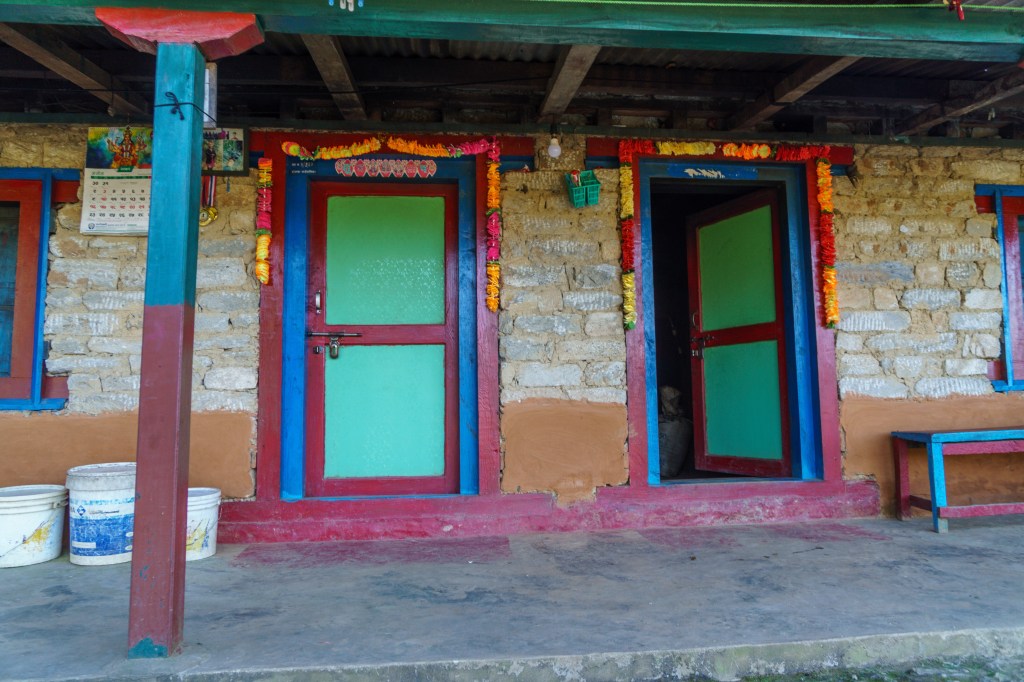
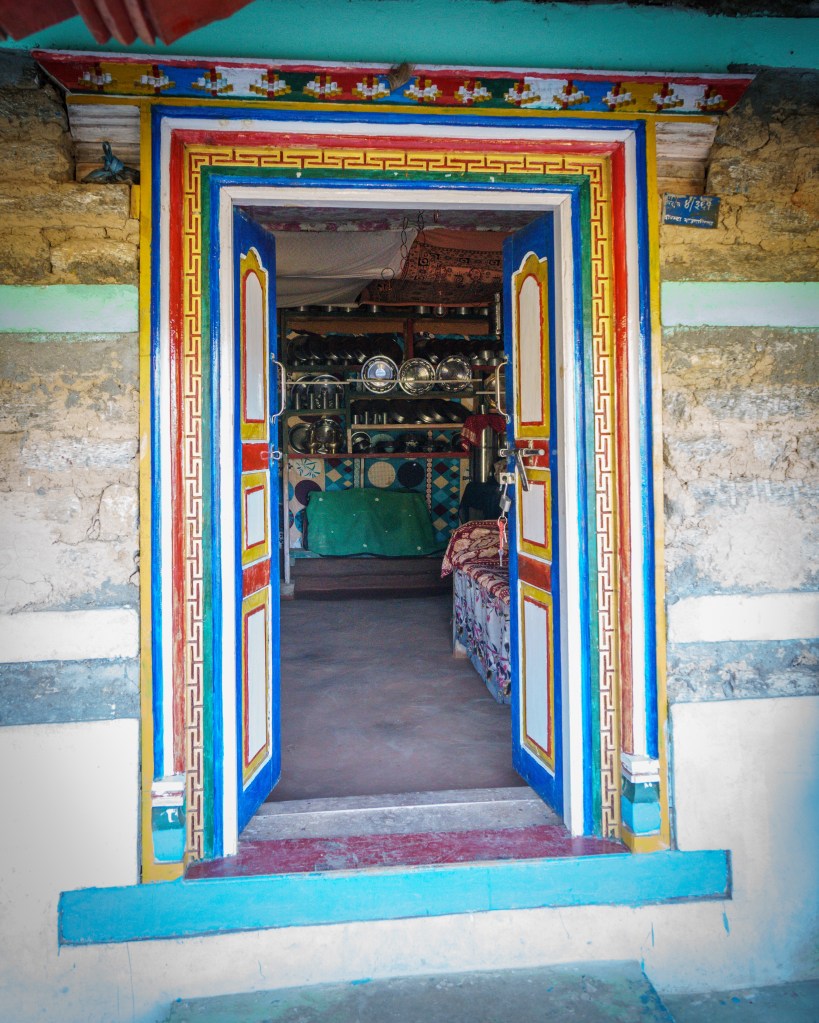
We relaxed, read, showered and just admired the view. We did a village walk and the houses were very beautifully decorated unlike many of the more basic houses of other villages.
There were lots of young teenagers and when we visited the porters house Trish bought scarves, Chris bought some beers, everyone was happy.
The porters
We had lovely food made by two lovely young cooks back at the guesthouse, they were so eager to please. We ate everything but the daal, that was it, no more, ever. Now we were dreaming of roast chicken dinners and cheese every night in our dreams.
The last evening in the guesthouse under the dark night sky full of twinkling stars and planets. The Milky Way as bold and obvious as can be, we had a big campfire. All the villagers turned up with music and their cheery personalities.
We danced all night, the teenagers treating us to TikTok dance routines. Even Chris danced. We will never forget this night it was truly magical and will be forever imprinted in our memories.
Our 2 young dancers
We took pictures of the 2 girls, porters and the guides who looked after us and after big hugs we walked for 2 hours back down to our original driver.
Chef’s, porters and guides
It took a further couple of hours to drop the guides off in their village. We all felt emotional, we can’t praise them enough. They were funny, kind, knowledgeable and genuinely nice young men. We will stay in touch.
It took several hours before we made our next hotel 2 hours from Kathmandu. The next day we returned to our favourite hotel The Shambaling.
Hosts from the Shambaling
I went all the way through their extensive breakfast menu, ate everything, yum.
Now to explore the Boudhenath stupa we were saving until our return.
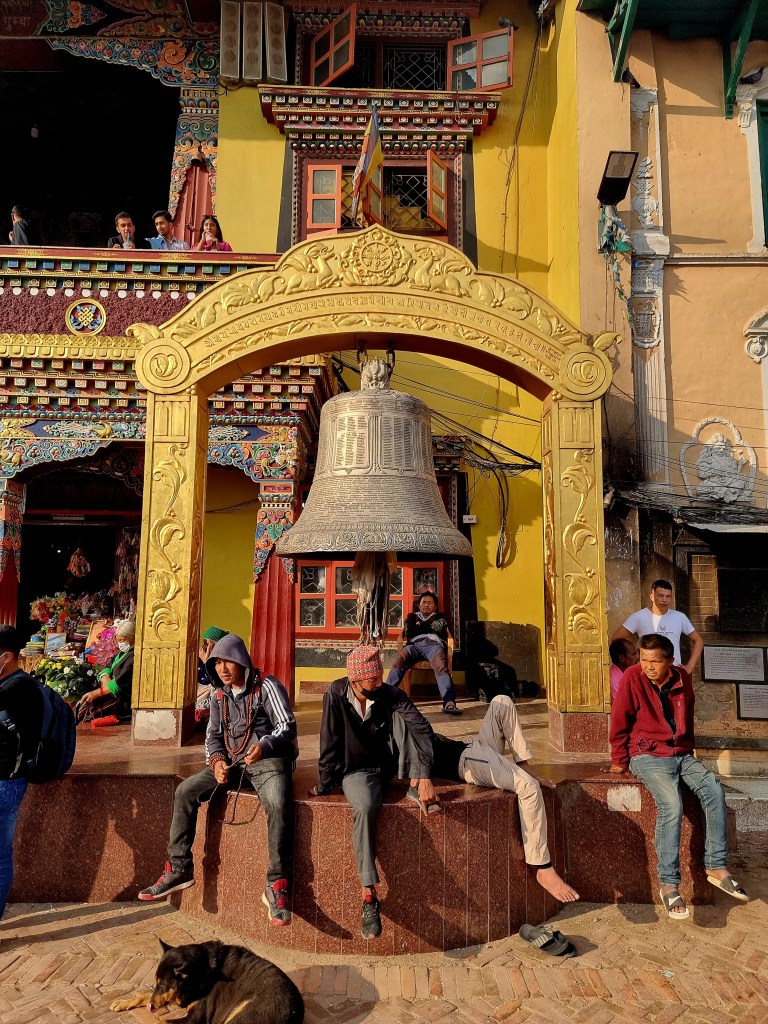
It’s the holiest and most important Stupa outside Tibet. Built around the 14th century but has roots back to 600 AD. It was on a popular trade route between Tibet and Nepal. It’s now a UNESCO world heritage site.
The giant Boudhanath stupa is a gateway to heaven serving as a horizon between the earth and sky. The base of the stupa structure consists of three large platforms decreasing in size. These platforms symbolizes the sky, whereas the circular vase supporting the semi-sphere signifies water. The eyes of Buddha painted on the stupa are diversely described as inscrutable, impassive, empathetic and shrewd. The five most promising elements representing Buddha i.e. earth, air, water, fire and space are comprised in the Stupa architecture.
There was a real buzz as you get near the stupa, it’s the biggest I have ever seen.
People circumambulate, large numbers moving slowly, 3 times around. The unmoving centre symbolises enlightenment and it’s a form of meditation. Again we were very lucky to be here on an auspicious day in the Buddhist calendar.
Even more impressive at night
Many Tibetan monks gliding along in their deep red robes, young and old mingling amongst tourists, Tibetans and Nepali people offering their blessings. Enormous prayer wheels perhaps 12 feet tall and 6 foot wide, all a red and gold blur as they constantly were spun around.
The smell of burning incense hanging in the air and the twinkling lights and aromas of the yak butter candles adding to the atmospheric feel.
We entered The Jamchen monastery, just outside the stupa, which had drawings from Buddhist texts, all over the walls, beautifully drawn.
Entering a large room full of statues of enlightened beings, no photos but many monks happy to chat. The decorations and artworks were a sight to behold. Chris and I had a blessing, we need all the help we can get..
We would come back to Kathmandu and Nepal. We love the quiet serenity of the place, the beautiful friendly nature of the people and the amazing scenery.
We left Kathmandu for a 5 hour road journey. Our Village Ways contact said the road was 70% good and 30% atrocious. After a few hours we crossed a big iron bridge over a large river and started climbing higher and higher.
We entered a small village where our driver paid a small toll fee to enter the mountain region.
We passed busses with people sat on the top, same price in or out apparently, along steep winding roads many small villages along the route. We were all thinking we couldn’t climb higher, but we did…
We entered an enormous forest and the road became thick slippy mud like a WW1 battlefield and boulders like broken teeth littering the track, fallen trees pushed to the side of an already narrow track. There were mind numbing drops and I still have the fingerprint bruises on my leg from Trish! It reminded me of a ‘Top Gear special- the worst road in the world’. We thought we had already been there in our previous journeys but now we knew they were a ‘walk in the park’ a breeze compared to this. All part of the fun.
The driver was amazing, skilled and careful, driving a 30 year old Land Cruiser with great dexterity. He got a big tip when we arrived in our village called Solambu. We were greeted by our guides Sambhu and Buddha and about 10 children aged from 3 to 10 years old who scampered excitedly ahead down the rocky path to our guesthouse.
We ate smoked buffalo, assorted veggies, rice and cucumber salad, cooked by 2 lovely village women, one of them Sambhu’s mum. It thrashed it down and we hoped it would soon pass over. Sambhu asked if we wanted alcohol, yes came the quick reply. They make it from corn and rice and the only way to describe it, is a cross between paint thinners and rocket fuel, it made your eyebrows curl..only once !
Sambhu, Buddha and our 2 amazing cooks
After breakfast once the mist had disappeared we went for our village walk. The village has 5 families with many generations, lots of siblings with their families. Women were hard at work cutting maize and hauling produce up the steep paths. All very curious of the visitors.
We stopped at the mill which grinds corn into flour, polishes rice and mills oil for all the villagers. It had a shop which sold everything a village could possibly need.
We walked up to the Buddhist temple at the top of the hill passing an enormous pig with 12 tiny 15 day old piglets and a co-operative store.
There were villagers interested in who we were and all asked us if we wanted a drink, it was 10.30 and everyone seemed already well on their way. I think it must have been the village pub! The villagers say it keeps them warm…..that’s a new one.
We went to our guide Buddha’s home, met his parents and looked at all the livestock. Cows, a pig, goats and saw a baby buffalo which was really cute.
We also met the ‘dancing granny’. She was part of the welcome party and loves to dance, she is 85 and a real character. She also tried to ply us with alcohol. She had a grip of steel from years of hard graft. There was no escape for Chris..we all had to dance with her.
Dancing granny
Sunset from one of the high ridges.
We had a long walk up to the next village, 6 hours. First walking down from 1800m to 1000m then across a wobbly bridge over the river and then up to 1500m.
Crickets on the path
Walking up from the bridge I really thought I was going to expire, it was now midday and very hot a gruelling walk. My legs turned to lead, my heart felt like it would explode it was so fast and I struggled to get air in. After a bottle of sprite and a couple of biscuits from a village shop half way up I felt much better and was able to continue. We stayed in another village overnight and the heavens opened. Torrential rain battering the tin roofs, rolling thunder slicing through the valley and the road in the village turned into a stream. We just sat and read our books.
Again the next day another brutal 6 hour walk, straight up, relentless slippy boulder strewn paths, winding our way up the mountainside.
‘Whose idea was this’ I kept asking myself, it was mine!
We left the dark, damp overgrown paths and came out onto a ‘sound of music’ open meadow hillside with a magnificent view of the mountain range.
We eventually arrived to a lovely guesthouse. It was worth the heavy legs and feeling of utter exhaustion for this moment. We were told when we reached the tented camp that the next day the view would be even better, hard to believe. We were very lucky with the weather.
Our guesthouse
We got up at 5.30 the following morning to wait for sunrise. The mountains softened into indistinct shapes by the darkness. As it became lighter, a crystal clear day, the mist hanging like lakes of marshmallow in the valleys. It’s immense, almost spiritual, with a feeling of calm and quiet that is hard to describe we just sat and looked, awestruck.
After breakfast the walk up to 2,900 metres, a 5 hour hike. Our porters came for our bags.
We knew the first 2k would be hard, steep and arduous. You just stare at your feet navigating the slippy clay and uneven rocks a twisted ankle or worse was not worth thinking about half way up a remote mountainside. The guides were exceptional, constantly helping us up tricky climbs that looked impossible. We were ecstatic when we entered the thick pine forest.
Narrow paths, not so steep with glimpses of the magnificent mountains through the trees, occasionally opening up into wide meadows.
The tinkling of yak bells, the herds grazing all around. We crazily burst into ‘ high on a hill with a lonely goatherd’ well Trish and I did, the guides looking confused but giggling.
As we got higher, towering rhododendron trees with enormous girths surrounded us. Some had been hit by lightning strikes at the top. We had arrived at the tented camp for our overnight stay. Hallelujah.
There was only 6 houses in the village, 6 friendly dogs, a shop (which was owned by our cook) and goats and chickens.
We arrived at the shop, almost the whole village was in there. We had a black coffee, bought beers and we sat. They are a friendly, jolly bunch of people who live in the harshest of conditions. They laughed at us (I’m sure), in a lovely way. Curious of the 3 blonde softies sat in their shop, it was all very good natured. We had a camp fire and put on every item of clothing we possessed.
The next morning we got up at 5 am for a 1k walk straight up hundreds of steps to the viewpoint for sunrise, 3,200m, the air is thin. This was the pinnacle of our trip. It took an hour. It was breathtaking.
It was hard to get those legs up in the air
After breakfast a 4 hour descent back down to Pasaben. We have a 2 night stay. We need it we are all really tired and everything hurts. Now we just want to sit and relax.
The trip back to Kathmandu from Chitwan took 5 hours. It was an interesting journey
Kathmandu valley is enormous and takes an hour from one side to the other. It is split into 3 large districts. The city centre is chaotic. Cars, motorbikes, trucks all delicately weaving around each other like a vehicle ballet without any traffic lights or accidents. We also noticed how much cleaner Nepal is to India.
The traffic was intense and we were pleased to eventually arrive at our boutique hotel in the Boudha district, a more upmarket part of town. The hotel was elegant and beautifully appointed with a good restaurant.
The hotel was originally a staging post for Tibetans leaving Tibet in 1959 and has been recently refurbished. It’s called The Shambaling.
The district has the most important stupa in Nepal called the Boudhanath stupa and is classed as the city’s no 1 attraction. It has a lot of history and a lot of Tibetan people live here. It’s fascinating. We are saving this until we return in a week and have more time.
We had a driver for the following day. We went to the ‘monkey temple’. It’s high on a hill, hundreds of steps up and looks over the expanse of the city.
Lots of stupas and intricate carved woodwork.
In the centre of the city is Durbar Square where the city’s Kings were crowned. There are medieval buildings, although most buildings were 17th and 18th century. It was badly hit by the earthquake a few years ago. The building that gave Kathmandu its name the Kasthamandap which was a pilgrim shelter from the 12th century but roots dating back to the 7th century was sadly largely destroyed.
A lot of it has been rebuilt and very well restored. They charge foreigners 1000 rupees (£7) to enter the square, there is a lot to see. It helps to fund the restoration. It has 3 loosely connected squares and a huge variety of wooden temples, palaces and sadly stumps of buildings lost to the earthquake. UNESCO are doing an amazing job for this historic city. It’s a fascinating place to people watch.
There is a living goddess called the Kumari Devi. She is chosen from a particular caste of Newari gold and silversmiths, picked at an early age, 4 years old. She has to meet 32 strict physical requirements including eye colour, shape of teeth and sound of her voice. The most recent Kumari, three year old Trishna Shakya took on her role in 2017.
She lives in a very intricate building in the square called the Kumari Bahal and when groups of people enter the building she comes to the window for about a minute. We were lucky to see her. There are gestapo like guards who inform you to put your hands together, bow your head and say namaste and definitely no photos. Her parents can see her in the day only, she cannot go to school and only leaves the building 7 times a year in a gilded coach drawn by men. When she menstruates that’s it, they find the next living goddess. It must be a very strange life for her.
The top window is where she appeared
We are returning to Kathmandu after the walking tour and will spend more time exploring this very interesting city.
We arrived at the resort hotel in Chitwan Nature Reserve and were greeted by the friendly hotel guide who brought us refreshments and took us to our delightful bungalow rooms.
We ate in the restaurant and were excited to find pasta, cheese and meats and lots of different foods we haven’t seen since we left the UK. Cake and good coffee put everyone in a good mood.
We thought it was just down time in a nice hotel…no, there was a full programme of events for us for the 2 days we were here.
In the late afternoon we went for a village walk. The villagers were from the Tharu community who arrived in the area from Rajasthan in the 1600’s. They had been persecuted by the majority Muslim rulers so left and settled on the Nepali plains. They live simply, in harmony with their surroundings and their Nepalese neighbours.
They rear chickens, goats, buffalo and ducks which they sell to the local community.
There is an elephant centre in Chitwan, lots of baby elephants..so cute
The next morning we went down to the river for a trip in a dugout canoe to see the 2 types of crocodiles and other wildlife along the river. It was a bit wobbly.
The big ones were lounging on the river banks looking menacing. As we travelled down the river we saw the crocs which only ate fish not tourists!
Next up a jungle walk. We only saw wild boar and samba deer. No tigers or rhinos, Trish was very disappointed. The guide pointed out plants used for medicine by the villagers and there were many different smells of decaying plant life and flowers along with the chirruping of insects and birdsong. It was an enjoyable walk
In the afternoon we had a jeep safari which was a bit like whacky races, lots of jeeps full of Indian and Nepalese tourists just wanting Instagram pictures rushing around.
We saw 5 rhino’s, dart birds, hog and samba deer and elephants.
We were all amused as we got back to the entrance that a rhino was there after everyone spent hours looking for them.
At the entrance !
We were sad to leave the next day the guide, staff, food and accommodation was excellent and we would have liked more time here.
There is a vibrant bustling town within the park which has everything you could want and more and we would like to come back. Now back to Kathmandu.
On the walk to Dalar there was a small temple along the way with a live in priest who showed us round and gave us all a blessing.
We crossed raging streams and slippery paths and eventually came to the river, swollen and fast flowing from the rain.
It is the one and only walk where we pass a shop. It sells masala chai tea and almost everything you could need from food, toiletries to sweeping brushes and a multitude of items imbetween.
We sat watching hard worked, sad looking mules who were overloaded with stone taking it up the hills and villagers passing by, almost falling off their motorbikes to look at 4 hot and sweaty looking foreigners. It was a very hot day.
Passing peoples gardens with crops drying in the hot sun, chillies, lentils and maize spread out.
All uphill, I looked like a baked tomato and we all took advantage of a spring gushing out of the roadside, washing our faces trying to cool off. It didn’t get better, a really steep climb up a ravine saw us all off. Eventually we reached Dalar and stopped at our guide Hemu’s house for tea and a sit down before eventually reaching the guesthouse.
We visited Bipin’s family, we have met them all before and again took pictures and chatted with his mum and more pictures on the steps. Our guide from last time Santosh (Bipin’s brother) was guiding elsewhere but we met his 2 young sons and his wife. The son of Kemal, another brother who Chris played badminton with last time was now a skinny bean pole of a teenager. It was lovely to share time with them.
This timeIn 2018 with Santosh our guide
We walked around the village, always the best bits.
After a hearty dinner we all slept like babies before our final walk back to Khali Estate and our last night in Binsar. It was an easy walk back.
The accommodation, the round houses in the grounds are very comfortable.
A huge troop, 50 or so, of white faced langurs descended on the house and gardens like a bunch of football hooligans. They try and steal the fruit and vegetables in the garden, the staff shouting and banging pans to deter them. Apparently they do this every few days. They ate and destroyed all the stunning cosmos flowers in the garden and ran across the tin roofs sounding like galloping horses. They were fun to watch.
The staff at Khali
The next day we left for a 4 hour drive to Kathgodam station. There had been a Hindi festival called Dussehra which had been going on for days. Floats and cars with dozens of people all in their colourful finery and loud music making the journey much longer. Every temple en route had flags, music and much jollity going on.
At this point we didn’t have confirmation for all our train tickets. We had 2 in second class AC and 2 in 3rd class AC and that’s how it stayed. Chris and I said we would take the 3rd class. When we got to the station at 9pm my heart sank, it was the longest, scruffiest train I’d ever seen. There were big families with acres of luggage and lots of unsavoury looking single men. We would be in a 6 berth open carriage for 16 hours. Fortunately a lovely young Indian couple and 2 older business men were with us and it was fine. I slept all night from 10-6, they even swapped a bunk with Chris.
Trish and Ingrid fared less well as they had a very pushy, shouty Indian lady who really invaded their space and wanted their seats. Trish gave her what for the following morning.
The views from the train along the tracks was heart wrenching. Along the river it looked like all the poorest people we had seen in Delhi had been transported, beaten up, covered in grime and living in rubbish strewn hovels. There were festering pools of water, children in filthy rags and mangy dogs. Scenes from a poverty stricken region of rural India, the stuff of nightmares and utter desperation.
We eventually got to Gorukpur a real skanky looking border town which has the longest station platform in the world.
Fortunately our guide Sunil met us and got us past the incredibly insistent and grabby hawkers, porters and tuk tuk drivers. We crossed the border, much paperwork on the Indian side and easy peasy into Nepal. We were taken to a nice hotel in Lumbini, Buddhas birthplace, for the evening for some brief R&R before our next long car journey.
The roads were appalling, there had been a typhoon in Thailand and Vietnam which had left major flooding, and this was the tail end of it passing over. Huge pot holes and rivers of water on the roads, passing landslides and flooded towns and houses.
The enormous rivers we passed, brown with glacial mud. It took forever. We were on our way to Chitwan wildlife reserve and National park, a 6 hour drive.
We arrived at the most beautiful resort hotel. Lush tropical gardens, swimming pool and lovely staff. This is more like it.